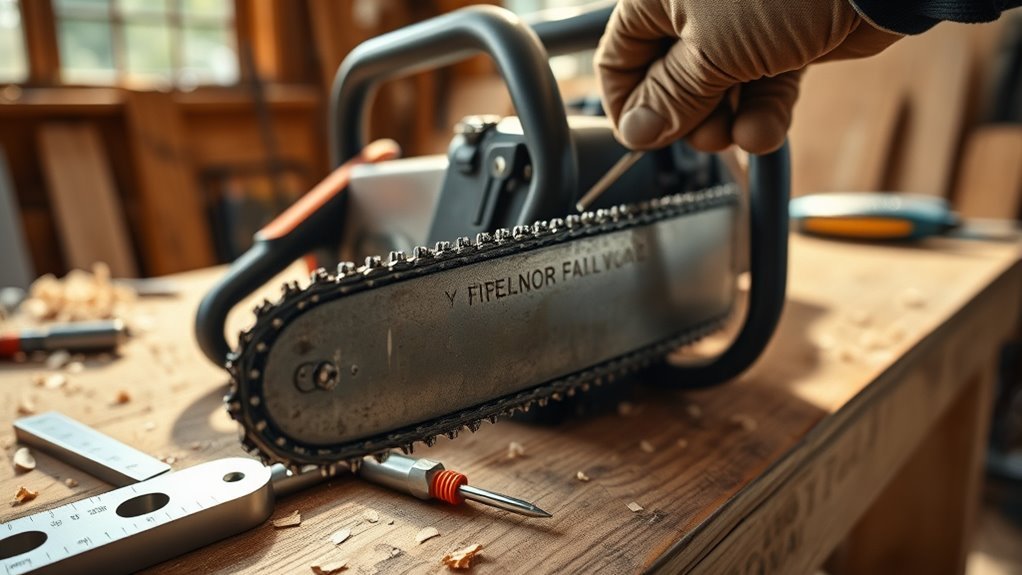
How to Tune a Chainsaw in 5 Easy Steps
To tune your chainsaw properly, start by warming up the engine. Let it idle gently for a few minutes on a stable surface with proper lubrication. This helps the engine reach the right temperature and ensures smooth adjustments.
Next, adjust the idle and low-speed screws. Your goal here is to get a smooth idle without the chain moving at all. It might take a few tries, but don’t rush it.
Once that’s set, rev the engine and fine-tune the high-speed screw. Listen carefully and tweak it until any screaming or unusual sounds disappear. This step is key for a smooth running chainsaw.
After that, adjust the fuel mixture. Aim for a smooth throttle response so your chainsaw reacts well when you press the gas.
Finally, check the chain’s position and tension. Make sure it’s tight enough to run smoothly but not too tight to cause damage. Follow these steps, and you’ll have your chainsaw tuned like a pro in no time!
Key Takeaways
- Warm up the chainsaw engine by idling gently for 3-5 minutes. Make sure it’s on a stable surface and properly lubricated.
- Next, adjust the idle and low-speed screws. Start by turning them about 1-1.5 turns out. This helps get a smooth idle and responsive acceleration.
- Now, rev the engine at full throttle. Tune the high-speed screw until you get rid of any screaming or surging sounds.
- After that, fine-tune the low-speed screw. You want a smooth, steady throttle response without any hesitation or rough acceleration.
- Finally, check the chain position, tension, and idle speed. This ensures smooth starts and proper lubrication every time.
Warm Up the Chainsaw Engine
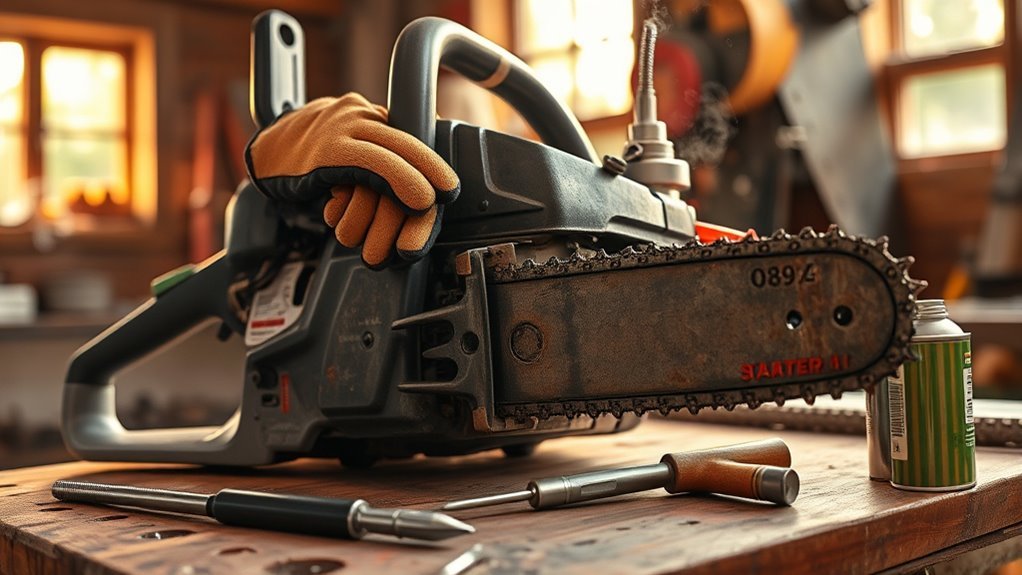
How do you prepare your chainsaw engine for tuning? Start by making sure the air filter and muffler are clean because clogged parts can disrupt the warm-up process.
Place your chainsaw on a stable surface and check that the chain is properly lubricated. Now, start the engine and let it idle gently for about 3 to 5 minutes to reach the ideal operating temperature.
Set your chainsaw on a stable surface, ensure chain lubrication, and let it idle gently for 3 to 5 minutes.
Avoid revving the engine excessively during this time to prevent overheating. Keep the engine running at a smooth, consistent idle until it feels steady and responsive.
This careful warm-up ensures the engine is ready for precise tuning adjustments and helps maintain your chainsaw’s performance and longevity.
Adjust the Idle and Low-Speed Screw

Once your chainsaw engine is warmed up, you can start adjusting the idle and low-speed screws to fine-tune its performance. Begin by turning the idle screw clockwise to increase RPM or counterclockwise to lower it, aiming for a smooth idle where the chain stays still.
For the low-speed screw, adjust it to ensure the engine accelerates smoothly from idle without stalling or bogging down. Start both screws about one to one and a half turns out from fully seated and make small tuning adjustments based on engine response.
Listen carefully for steady idle speed and smooth operation. Properly setting these screws is essential for effective chainsaw tuning and peak performance of your outdoor power equipment.
Rev the Engine and Tune the High-Speed Screw
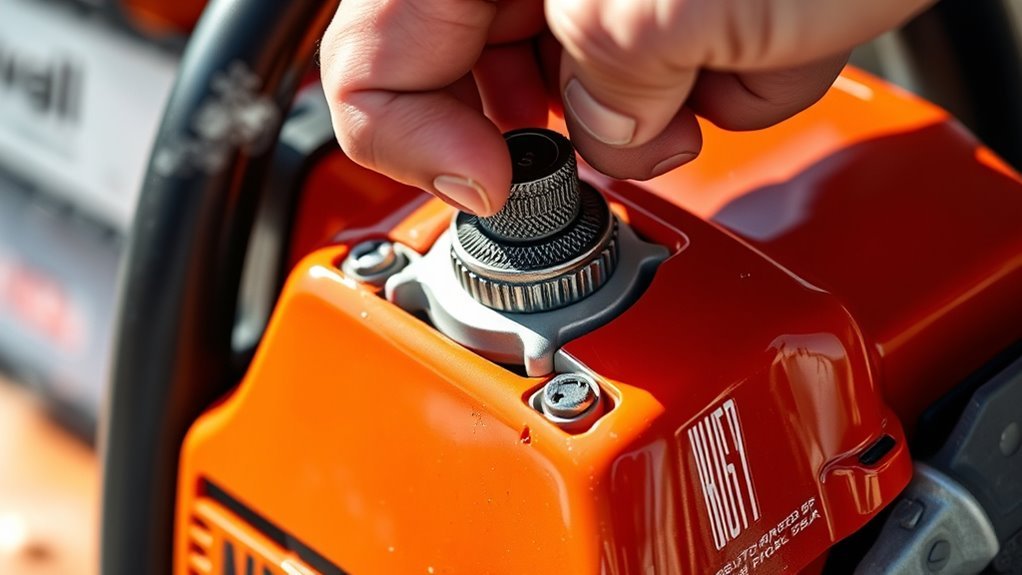
Why does your chainsaw emit a high-pitched scream at full throttle? This sound indicates the engine is running too lean at high speed. To fix this, first rev the engine to wide open throttle (WOT) and listen carefully.
If you hear the scream, loosen the high-speed screw (H screw) by a quarter turn and rev again. Tighten the screw gradually until the engine runs smoothly without surging or screaming.
Make sure the chain stays still at idle before adjusting for accurate tuning. Fine-tune the high-speed screw in small steps to get maximum power safely.
| Adjustment Step | What to Do |
|---|---|
| 1. Rev engine to WOT | Listen for high-speed scream |
| 2. Loosen H screw | If screaming, turn screw out ¼ turn |
| 3. Rev engine again | Check for smoother sound |
| 4. Tighten H screw | Until no scream or surging |
| 5. Fine-tune | Small increments for power |
Fine-Tune the Mixture for Smooth Acceleration
Although you’ve tuned the high-speed screw, you’ll need to fine-tune the low-speed screw next to guarantee smooth acceleration.
Start by adjusting the mixture through the low-speed screw: turn it clockwise to lean the mixture or counterclockwise to enrich it. Listen closely as you apply rapid throttle—the engine should rev smoothly without bogging down or stalling.
Adjust the low-speed screw to fine-tune mixture; clockwise leans, counterclockwise enriches for smooth throttle response.
A rough or hesitant acceleration means the mixture still needs tweaking. Keep adjusting in small increments, testing after each change, until the chainsaw responds promptly with a steady, consistent sound.
This careful fine-tuning ensures your mixture delivers ideal throttle response, letting your saw accelerate cleanly and reliably every time you need it.
Verify Chain Position and Recheck Settings
Before you finalize your tuning, make sure the chainsaw chain sits correctly on the guide bar and is properly tensioned. It’s essential to verify chain tension to guarantee safe and efficient operation.
Once you adjust the carburetor, recheck these settings carefully:
- Confirm the chain doesn’t move at idle, indicating correct idle speed and proper tension.
- Verify the chain brake is disengaged so the chain can move smoothly when revved.
- Recheck the chain starts smoothly and runs without hesitation after tuning.
- Regularly inspect the chain’s sharpness and lubrication to maintain ideal chain tension and performance.
Frequently Asked Questions
How to Properly Adjust a Chainsaw Chain?
You loosen the guide bar nuts, then turn the tensioning screw to snug the chain against the bar without sagging.
Pull the chain; it should snap back smoothly, ensuring it’s neither too loose nor too tight.
This way, you keep everything running safely and smoothly.
How Do You Tune a Carburetor Perfectly?
You tune a carburetor perfectly by adjusting the low and high screws incrementally, listening for smooth acceleration and steady RPMs.
Use a tachometer to verify proper engine speed, then fine-tune until the engine runs without stalling or sputtering. It’s a bit of trial and error, but patience pays off!
What Is Included in a Chainsaw Tune-Up?
Did you know a poorly tuned chainsaw can reduce fuel efficiency by up to 30%?
A tune-up includes adjusting carburetor jets, setting idle speed, and cleaning filters. It also involves inspecting spark plugs and replacing worn parts for peak performance.
Keeping your chainsaw in top shape not only boosts efficiency but also extends its life. So, regular tune-ups are definitely worth it!
How to Tell if a Chainsaw Is Running Too Lean?
You’ll know your chainsaw’s running too lean if it screams high-pitched, overheats quickly, stalls under throttle, or has a white spark plug.
Watch for rough idling and loss of power too—they’re clear warning signs.
If you notice any of these issues, it’s a good idea to check the fuel mixture and carburetor settings.
Running too lean can damage your chainsaw, so catching it early helps keep things running smoothly!
Conclusion
So, now that you’ve mastered tuning your chainsaw—because who doesn’t dream of playing mechanic with a roaring, razor-sharp beast—you’re officially ready to slice through wood (and maybe your patience) like a pro.
Just remember, if it starts sounding like a dying robot instead of a chainsaw, you might want to revisit these steps. Chainsaw tuning is all about keeping your tool running smoothly and efficiently, so regular adjustments are key.
Otherwise, happy chainsawing—because nothing says “fun” like fine-tuning a gas-powered noise machine! With these easy chainsaw tuning steps, you’ll enjoy better performance, longer engine life, and safer cutting every time you fire it up.