How to Store a Chainsaw Safely and Properly
To store your chainsaw safely and properly, start by giving it a good clean to remove any debris. This step is crucial because leftover dirt and sawdust can cause damage over time.
Next, drain all the fuel from the tank to prevent gum buildup, which can clog your engine. Run the chainsaw briefly after draining fuel to clear out the carburetor lines.
Then, either drain or clean the oil reservoirs. Don’t forget to apply a light coat of bar and chain oil to keep rust at bay.
If you have a cordless chainsaw, remove the batteries and store them separately in a cool, dry place.
Finally, find a ventilated, dry spot to store your chainsaw—somewhere away from heat, dust, and moisture. Following these simple steps will help maintain your chainsaw’s performance and extend its lifespan.
Key Takeaways
- Clean the chainsaw thoroughly, removing dirt, sawdust, and oil residues to prevent corrosion and buildup.
- Drain all fuel and oil from the chainsaw and run it briefly to clear the carburetor and fuel lines.
- Apply a light coat of bar and chain oil to the chain and guide bar for rust protection before storage.
- Store the chainsaw in a dry, well-ventilated, and secure location away from heat, moisture, and flammable materials.
- Remove the battery from battery-powered chainsaws and keep it separately in a cool, dry place to preserve battery life.
Preparing Your Chainsaw for Storage
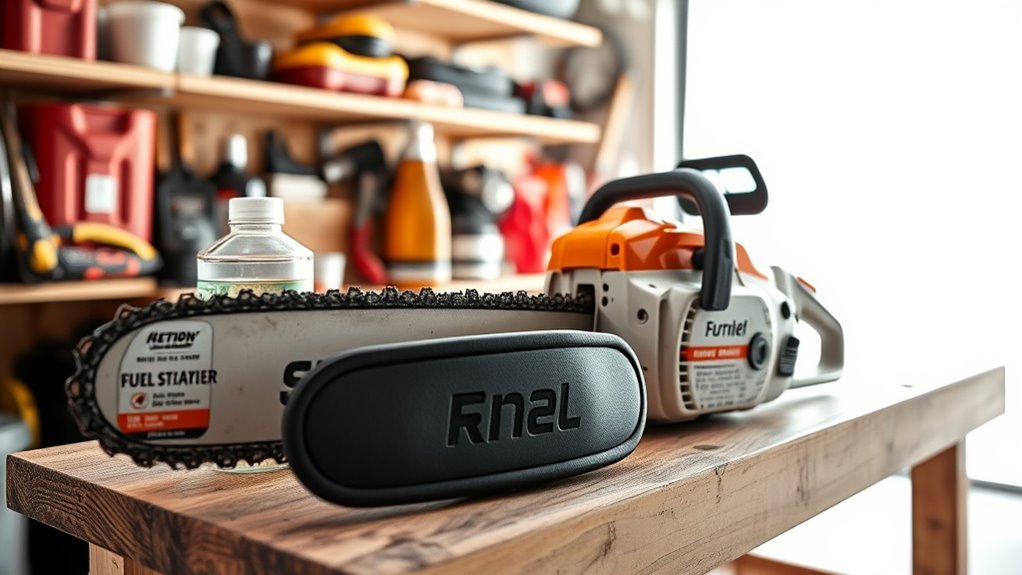
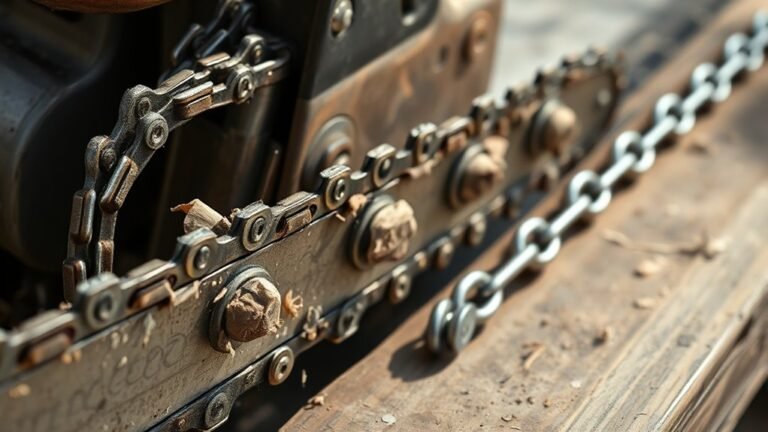
Before you store your chainsaw, make sure you clean off all debris, sawdust, and oil buildup to prevent corrosion and damage. Using the saw leaves residue on the chainsaw chain and bar, so carefully clean and inspect them.
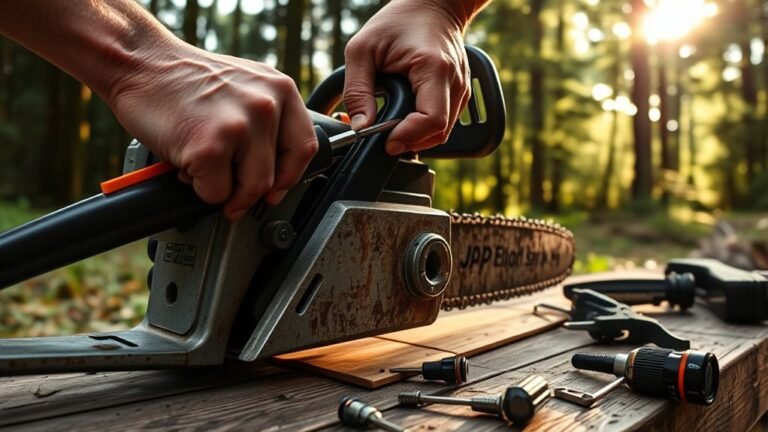
Remove the chain and guide bar, then apply a light coat of bar oil to protect against rust. Check for any oil leaks around the chainsaw, as this can cause issues during storage.
The best way to store your chainsaw is in a dry, cool place. Make sure the chain is lubricated but not overly greasy.
Properly cleaning and oiling the chain and bar helps maintain your chainsaw’s performance and extends its lifespan. This way, it’ll be ready for the next time you need it.
Draining the Fuel System Properly

Since fuel can deteriorate and cause damage during storage, you should always drain your chainsaw’s fuel tank completely. Begin by emptying the tank in a safe, well-ventilated area, storing the fuel in approved containers.
Next, run the chainsaw at idle until it stops, clearing residual fuel from the carburetor and fuel lines. Don’t forget to remove the fuel filter and any leftover fuel from the carburetor to prevent leaks and gum buildup.
Make certain every part of the fuel system—tank, lines, and carburetor—is fully emptied before long-term storage. Properly draining the fuel system helps avoid leaks, engine damage, and costly repairs, keeping your chainsaw in top condition until you’re ready to use it again.
Managing the Oil System to Prevent Leaks
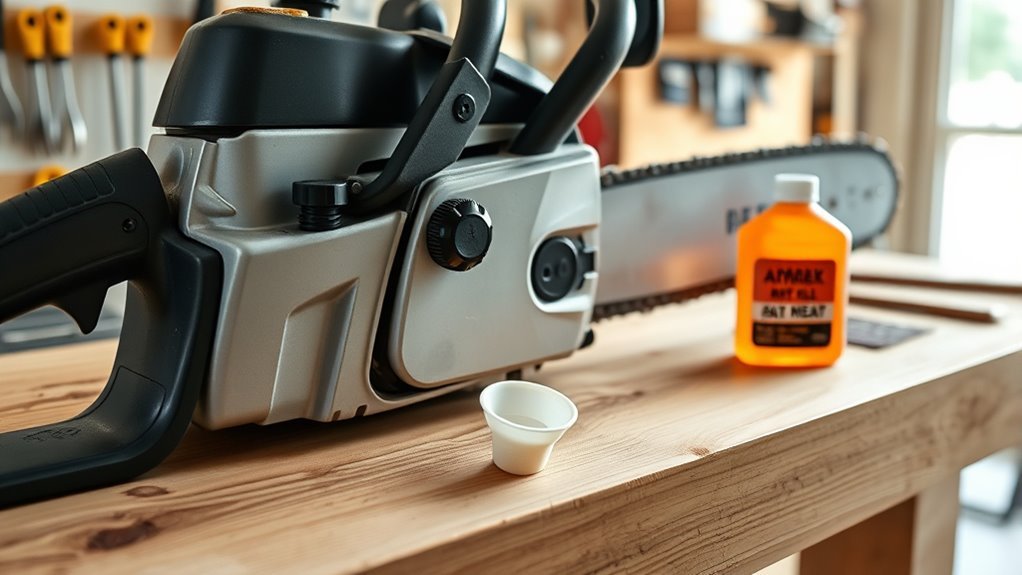
Just as you need to fully drain your chainsaw’s fuel system to prevent damage and leaks, managing the oil system properly is equally important. Neglecting this can cause oil leaks, gum buildup, and messy storage areas.
To keep your chainsaw in top shape, follow these steps:
- Drain and clean the bar and engine oil reservoir completely before storage.
- Use high-quality, sticky bar and chain oil during regular use to minimize leaks.
- Tighten oil caps securely to avoid accidental spills during storage.
- Store the chainsaw vertically with a towel or catch tray underneath to catch any residual oil.
Taking these precautions helps prevent leaks and keeps your storage area clean and safe. It’s a simple routine, but it really makes a difference!
Storing Battery-Powered Chainsaws Safely
When storing a battery-powered chainsaw, you should remove the battery and keep it in a cool, dry place to prevent damage and unnecessary drainage. Make sure the chainsaw is clean and free of debris before storage to avoid corrosion and buildup.
Store the battery separately in a well-ventilated area, away from direct sunlight and extreme temperatures. Both the chainsaw and battery need a dry environment to prevent rust and electrical issues.
Regularly check the battery’s charge level during storage and recharge it as needed to maintain ideal performance. By following these steps, you’ll extend the life of your chainsaw and battery while ensuring they’re ready for use when you need them next.
Choosing the Ideal Storage Location
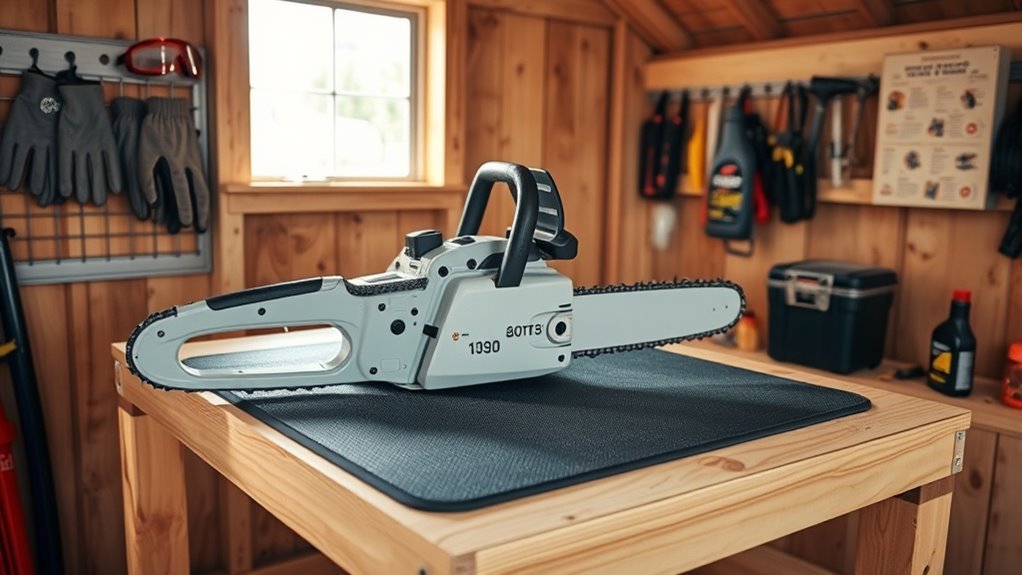
You’ll want to store your chainsaw in a dry, well-ventilated space like a garage or shed to keep it safe from moisture and rust.
Avoid leaving it outside or in damp areas where damage can occur. Make sure it’s placed securely—either hung up or set on a stable surface—to keep things organized and prevent accidents.
Dry, Ventilated Spaces
A dry, well-ventilated space is essential for storing your chainsaw safely and preventing rust or corrosion. You want to keep your chainsaw in a spot like a garage, shed, or barn where air flows freely and moisture can’t settle.
Avoid damp, enclosed areas that encourage mold or internal moisture buildup. Protect your chainsaw from direct sunlight, rain, and high humidity to maintain its condition.
Here’s how to do it right:
- Choose a dry location with good airflow to prevent rust.
- Keep the space free from leaks, standing water, and excessive humidity.
- Use a breathable cover to shield the chainsaw from dust while allowing air circulation.
- Regularly inspect the area for moisture and clean it to preserve your tool’s integrity.
Avoid Outdoor Exposure
Although storing your chainsaw outdoors might seem convenient, it exposes the tool to damaging elements like rain, UV rays, and fluctuating temperatures that can degrade its parts.
You should avoid keeping your chainsaw in open spaces where sunlight can cause plastic handles to weaken and heat to build up, risking fuel evaporation and component damage.
Instead, store it in a dry, sheltered spot like a garage, shed, or barn to shield it from moisture and harsh weather.
Make sure the area is well-ventilated to prevent humidity buildup, which can cause rust and corrosion.
If you must store the chainsaw outdoors temporarily, use a protective cover or wrap to guard against dust, dirt, and weather.
That way, your tool stays in good working order.
Secure, Organized Placement
Where should you store your chainsaw for both safety and convenience? Choose a dry, sheltered spot like a garage, shed, or barn to avoid rust and corrosion. Make sure it’s easy to reach for regular maintenance—ideally at waist level or on a dedicated shelf.
Keep it away from direct sunlight, high humidity, and extreme temperature changes to protect its parts. Also, avoid placing it in high-traffic areas to prevent accidental damage.
For secure, organized placement, consider these tips:
- Use wall or ceiling hooks to hang the chainsaw safely.
- Opt for specialized storage racks to keep it upright.
- Ensure the storage area is well-ventilated but shielded from harsh weather.
- Place it where you can quickly check and maintain it regularly.
Protecting Your Chainsaw From Dust and Moisture
When you store your chainsaw, keeping it protected from dust and moisture is essential to maintain its performance and longevity. Choose a dry, sheltered spot away from direct sunlight to prevent moisture buildup and UV damage.
Cover your chainsaw with a protective cover or plastic wrap to shield it from dust and airborne debris during long-term storage. Surround it with old towels or cloth to absorb any moisture and prevent rust on metal parts.
Make sure the storage area has good ventilation and low humidity to reduce corrosion and mold risks. Regularly check your chainsaw for dust or moisture, and clean or dry it thoroughly when needed.
Doing these simple things will help keep your chainsaw in top shape until you’re ready to use it again. It’s all about giving your tool the care it deserves!
Regular Maintenance While in Storage
You’ll want to check your chainsaw regularly for leaks, rust, or any damage to keep it in good shape. Cleaning it thoroughly and applying lubricant to the chain and guide bar will prevent corrosion while it’s stored.
Staying on top of these tasks guarantees your chainsaw is ready to go when you need it next. It’s a simple routine that saves you time and hassle later on. Just a little care goes a long way!
Routine Inspection Checks
How often should you inspect your chainsaw during storage? It’s best to check it at least once a month. Doing this helps you catch any issues early on.
Regular inspections prevent rust, corrosion, and damage that might develop over time. Focus on these key areas to keep things in good shape:
- Examine the fuel system for stale fuel or leaks. Replace or stabilize the fuel as needed.
- Check the chain, guide bar, and sprocket for wear or debris. Address any problems promptly.
- Make sure the air filter is clean and free from dust or oil buildup. This keeps the engine running smoothly.
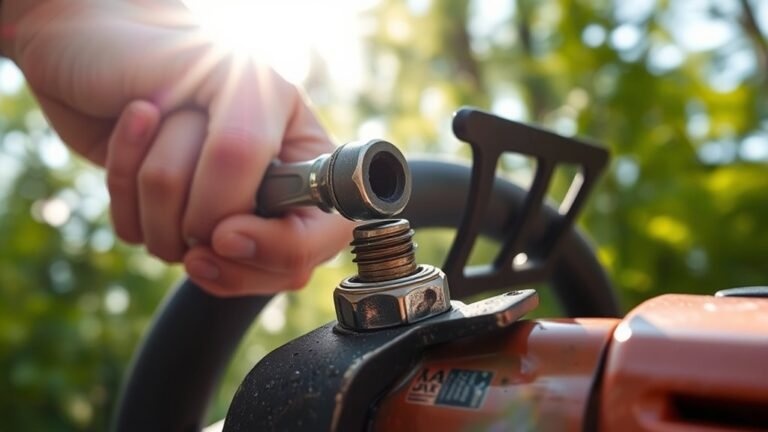
- Tighten all bolts, screws, and fasteners. This stops them from loosening during storage or use.
Doing these routine checks will keep your chainsaw ready for action. Plus, it helps extend its lifespan.
Lubrication and Cleaning
Why does regular lubrication and cleaning matter during chainsaw storage? It prevents rust, corrosion, and buildup that can damage your saw or affect its performance.
Before storing, clean the bar, chain, and air filter using a soft brush or cloth to remove dirt, sawdust, and debris. Apply a light coat of bar and chain oil to protect against rust.
Don’t forget to check and tighten any loose nuts or screws to keep the saw safe and intact. Periodically run the chainsaw at idle or manually move the chain to spread lubrication evenly and prevent parts from seizing.
Frequently Asked Questions
Are Chainsaw Chains Sharp Out of the Box?
Yes, chainsaw chains are sharp right out of the box because manufacturers grind them precisely for immediate cutting.
That said, you should regularly inspect and sharpen the chain. This keeps it effective and safe during use.
How Long Can a Chainsaw Sit With Gas in It?
A chainsaw can sit with gas in it for about 30 days before the fuel starts to degrade.
If you want to keep it stored longer, it’s a good idea to use a fuel stabilizer.
Or, you can simply drain the tank to avoid any engine issues. This helps keep your chainsaw running smoothly when you need it next.
How to Place a Chain on a Chainsaw?
You’ll first turn off the chainsaw and disconnect the spark plug.
Then, align the chain’s drive links with the sprocket. Place it over the bar nose, fit it in the groove, and tighten the tension gradually.
It’s pretty straightforward once you get the hang of it! Just take your time to make sure everything is lined up properly.
How Often Should You Put Bar Oil in a Chainsaw?
You should add bar oil every 15 to 30 minutes of continuous use, or whenever the oil level drops below the minimum mark.
Always check before starting and use the manufacturer’s recommended oil for best results. It’s a simple step that really helps keep your chainsaw running smoothly.
Conclusion
Think of your chainsaw as a trusted companion—when you care for it properly, it’s ready to roar back to life whenever you need it. By draining fuel, managing oil, and choosing the right storage spot, you’re wrapping it in a protective shield, like a knight’s armor against rust and wear.
Keep it clean and maintained, and your chainsaw will stand guard, sharp and dependable, ready to tackle any task when called upon again. Proper storage is key to prolonging its life and ensuring safety.
So, when you’re done using your chainsaw, remember to store it safely and properly. This means draining the fuel, lubricating the chain, and keeping it in a dry, secure place. Doing this not only protects your tool but also keeps you safe. By following these simple steps, your chainsaw will stay in great shape and be ready to perform whenever you need it.