How to Do Measure Chainsaw Bar Length in 7 Easy Steps
To measure your chainsaw bar length accurately, start by securing the saw on a stable surface so it won’t move. This makes the process safer and easier.
The chainsaw bar length is important because it determines the cutting capacity and helps you choose the right replacement bar or chain.
Next, find the tip of the bar—the very end of the cutting edge. Then, locate the bar attachment point where it connects to the power head.
Use a tape measure to measure straight from the tip to the attachment point along the top edge. Make sure your tape is flat and straight to get an accurate measurement.
Record your measurement, then round up to the nearest even number for standard sizing.
Following these steps will help you get the correct bar length every time. Keep reading for more detailed tips on precise measuring!
Key Takeaways
- Place the chainsaw on a stable surface with the power off. Make sure to remove the battery or unplug it for safety.
- Identify the tip of the chainsaw bar. This is the furthest cutting edge point, so ensure it’s fully visible and accessible.
- Locate the bar attachment point near the power head. That’s where the bar connects to the chainsaw body.
- Use a tape measure from the bar tip straight along the top edge to the attachment point. Keep the tape flat and aligned for an accurate reading.
- Record the exact measurement in inches. Then, round up to the nearest even number for compatibility.
Secure the Chainsaw on a Stable Surface
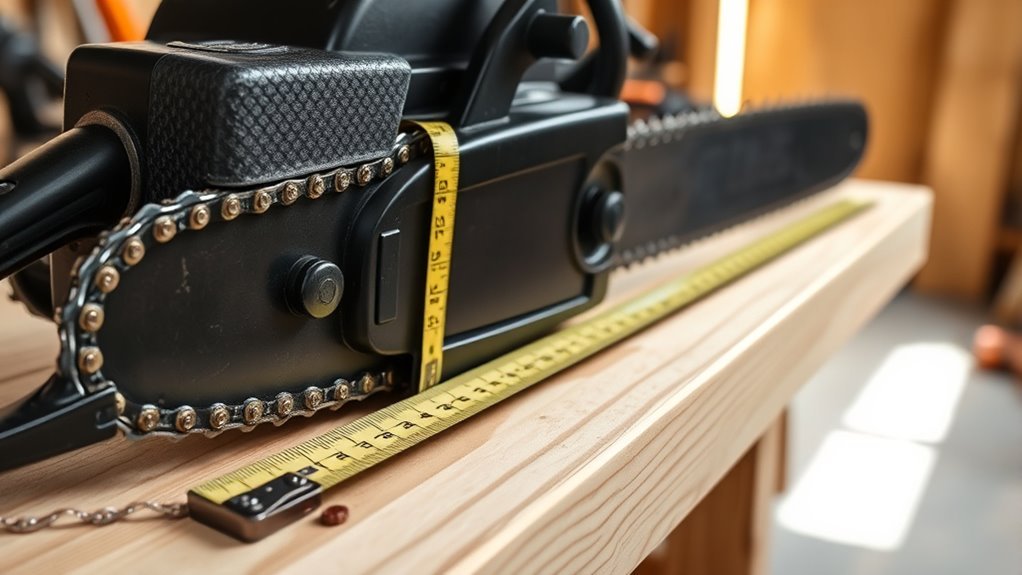
Before measuring the chainsaw bar, make sure you place the chainsaw on a flat, stable surface to prevent any movement. You’ll want to guarantee the chainsaw is turned off and unplugged, or the battery is removed, to keep things safe.
Once powered down, support the chainsaw firmly so it stays steady while you measure. Position it so the bar’s tip is visible and easy to access, avoiding awkward angles that might cause slipping.
Keep the chainsaw steady and the bar tip clearly visible to ensure safe, accurate measurements.
If the chainsaw tends to move, use clamps or blocks to secure it in place. This setup prevents accidents and helps you get an accurate measurement.
Taking these steps ensures you measure the bar length precisely without risking injury or damage to the chainsaw.
Locate the Tip of the Chainsaw Bar

With the chainsaw secured steadily, you can now focus on finding the tip of the chainsaw bar. The tip is the furthest point at the end of the cutting edge, extending beyond the chain sprocket.
Depending on your bar model, it’ll either have a rounded or squared end. Carefully observe the end of the bar to spot this distinctive shape—some bars even have markings to help you identify it.
Pinpointing the tip is vital because it serves as one endpoint when measuring the bar length accurately. Make sure you’re looking at the very end of the bar itself, not the chain or any attachments.
Once you’ve located the tip, you’re ready to move on to the next step in measuring your chainsaw bar length.
Identify the Bar Attachment Point on the Power Head

When you turn your attention to the front of the chainsaw, you’ll find the bar attachment point where the bar and chain secure to the power head. This area is typically located near the front of the engine housing.
Look closely for screws or bolts that fasten the bar to the saw; these are usually easy to spot around the motor housing. The bar’s tip extends beyond this attachment point, so it’s important to clearly identify where the bar connects to the power head.
Recognizing this spot helps you measure the bar’s full length accurately, from the tip all the way back to where it’s secured. Knowing this connection point is essential before moving on to measuring the bar itself.
Use a Tape Measure to Measure the Bar Length
Although measuring the chainsaw bar length might seem straightforward, you’ll want to position your tape measure carefully at the bar’s tip and extend it straight along the top to where it attaches to the power head.
To get an accurate measurement, make sure the tape measure lies flat and is taut. Avoid bending or slack, as this can distort the length.
Once you reach the attachment point, note the measurement precisely. This figure determines your bar size, and you should round up to the nearest even number if necessary.
Keep these tips in mind: Place the tape measure precisely at the bar’s tip. Extend it straight and flat along the top edge. Record the length at the bar’s attachment start for accuracy.
This method ensures you measure the bar correctly every time.
Measure From the Tip to the Attachment Point
Start by placing your tape measure at the very tip of the chainsaw bar. Then, identify where the bar attaches to the saw, avoiding any sprocket or protrusions.
Measure straight along the top to get the usable length you need. It’s pretty straightforward once you know where to start and stop. Just take your time and be precise!
Start at Bar Tip
How do you guarantee an accurate measurement of your chainsaw bar length? Start by measuring from the very tip of the bar. This ensures you capture the full length used for cutting.
Use a flexible tape measure and run it along the top edge of the bar, keeping it straight and aligned with the center for consistency. Stop measuring right where the bar meets the power head, but don’t include the attachment area itself.
Recording your measurement in inches will help you match the correct chain size.
Keep these points in mind:
- Begin exactly at the bar tip for accuracy
- Use a flexible tape measure aligned centrally
- End measurement where the bar connects to the power head, excluding attachment parts
Identify Attachment Point
When you measure from the tip of the chainsaw bar to the attachment point, you’ll get the exact length needed to fit your saw properly. Start by placing the tape measure at the bar’s tip and run it along the top edge, keeping it straight and flat.
Stop measuring exactly where the bar connects to the saw’s body—not including the sprocket nose or attachment hardware. Record this measurement as the bar length for an accurate fit.
| Step | Action |
|---|---|
| Start Point | Bar tip |
| Tape Placement | Along top edge, straight & flat |
| End Point | Where bar attaches to saw body |
| Exclusions | Sprocket nose & attachment area |
Measure Usable Length
Although measuring a chainsaw bar might seem straightforward, you’ll need to focus on the usable length—from the tip of the bar to where it attaches to the power head—to get an accurate reading.
This means measuring only the section that actually contacts the wood, excluding any mounting areas. Grab a tape measure, align it straight along the bar’s edge, and measure from the very tip back to the front of the power head where the bar begins to attach.
Make sure the tape is taut and properly aligned for precision.
Keep these tips in mind:
- Measure in inches and round up to the next even number if needed.
- Avoid including the attachment or mounting portion in your measurement.
- Use a tape measure rather than estimating by eye.
Record the Measurement Accurately
Since accuracy is essential, you’ll want to use a flexible tape measure to follow the curve of the chainsaw bar precisely from its tip to where it connects to the power head. Make sure the tape lies flat against the bar, tracking every bend to avoid an incorrect reading.
Once you have the measurement, record it in inches, noting the exact length before making any adjustments. Double-check your measurement by repeating the process to ensure consistency and avoid mistakes.
Finally, write down the measurement clearly and keep it handy. This precise record will be invaluable when purchasing or replacing the chain, ensuring you get the right fit for your chainsaw without any guesswork.
Round Up to the Nearest Even Number for Standard Sizes
Because chainsaw bars come in even-numbered lengths like 18, 20, and 24 inches, you should always round your measurement up to the nearest even number. If you measure a bar length that falls between two standard sizes, rounding up guarantees proper fit and performance.
For example, a 23.5-inch measurement should be rounded to 24 inches. This practice helps maintain compatibility between the chain, guide, and bar, promoting safe and efficient cutting.
Before finalizing, always verify the rounded size against your chain’s specifications to avoid mismatches during installation.
Key points to remember:
- Chainsaw bars are only made in even lengths.
- Always round measurements up, never down.
- Confirm the rounded length matches your chain requirements.
Frequently Asked Questions
How to Figure Out Chainsaw Bar Length?
You figure out chainsaw bar length by measuring from the tip of the bar to where it meets the saw’s body. Then, round to the nearest even number.
Check for markings on the bar, but always confirm with a tape measure. It’s the best way to be sure you’ve got the right length.
What Is the Actual Length of a 20 Inch Chainsaw Bar?
Think of a 20-inch chainsaw bar as a ruler—it measures about 20 inches from tip to where it attaches.
You’ll find it’s nearly spot-on, ensuring your chains fit just right without a hitch.
How to Measure Bar Size?
You measure bar size by placing a tape measure from the tip of the bar to where it connects with the saw, excluding the overlapping part.
Round up if needed to match standard bar lengths for compatibility and safety. It’s pretty straightforward once you know where to measure from!
How to Calculate Chainsaw Chain Length?
If you’re counting links anyway, multiply that number by the pitch, then divide by 25.4.
Don’t forget to include drive links to get your chainsaw chain length—easy math that ensures a perfect fit every time.
Conclusion
Measuring your chainsaw bar length accurately helps you find the right replacement or accessories. Did you know that chainsaw bars commonly come in even sizes ranging from 12 to 24 inches? This standardization makes it easier to pick the perfect fit once you’ve measured from the tip to the attachment point.
By following these simple steps, you’ll guarantee your chainsaw performs efficiently and safely every time you use it. Keep your measurements precise and your cuts clean!
Remember, knowing how to measure chainsaw bar length correctly is key to maintaining your saw’s performance. Whether you’re replacing a worn-out bar or shopping for new accessories, accurate measurement ensures compatibility and safety. So take your time, measure carefully, and enjoy smooth, hassle-free cutting with your perfectly fitted chainsaw bar.