
How to Start a Flooded Chainsaw Step by Step
If your chainsaw is flooded, don’t worry—it happens to the best of us. First, turn off the chainsaw and remove the spark plug to release any excess fuel trapped inside the cylinder. Make sure to dry the spark plug thoroughly before putting it back in place.
Next, pull the starter cord several times with the choke off and throttle fully open. This helps clear out any leftover fuel causing the flooding.
Also, double-check that you’re using fresh fuel and that your air filter is clean. These simple steps will prevent your chainsaw from flooding again.
By following this easy step-by-step process, you’ll get your flooded chainsaw running smoothly in no time. Keep reading for more handy tips to maintain your chainsaw and keep it in great shape!
Key Takeaways
- Remove the spark plug to release excess fuel and vent the flooded cylinder before attempting to start.
- Pull the starter cord several times with the spark plug removed to expel raw fuel from the combustion chamber.
This helps clear out the excess fuel that’s causing the flooding.
– Dry the spark plug thoroughly and inspect it for damage or fouling, replacing if necessary.
You want to make sure the spark plug is in good shape before putting it back in.
– Reinstall the dry spark plug, set the choke off, open the throttle fully, and pull the starter cord to start.
This should help your chainsaw fire up without flooding again.
– Use minimal primer bulb pulls and keep the air filter clean to prevent future flooding during startup.
A clean air filter and careful priming go a long way in avoiding this problem.
Recognizing the Signs of a Flooded Chainsaw

If your chainsaw emits a strong gasoline smell around the engine and spark plug area, it’s likely flooded. This fuel smell often comes with a wet spark plug soaked in raw fuel, signaling excess fuel in the combustion chamber.
When you try to start it, you’ll notice sputtering, coughing, or it might be completely difficult to start. The flooded engine may also produce excessive smoke or raw fuel dripping from the exhaust or carburetor.
Additionally, the starter cord might feel stiff or resistant because fuel floods the cylinders, making the engine hard to turn over. Recognizing these signs early helps you avoid further damage and prepares you to take the right steps to get your chainsaw running smoothly again.
Preparing Your Chainsaw for Restarting

Before you try restarting, make sure your chainsaw is turned off and cooled down for safety. Check the fuel level, and remove the spark plug to let out any excess fuel that might be causing flooding.
It’s important to inspect the spark plug for moisture or damage. Clean or replace it if needed to guarantee a smooth start. That way, you avoid any unnecessary hassle when you fire it up again.
Check Safety Settings
Although restarting a flooded chainsaw can be tricky, you should always engage the chain brake and make certain the saw is off before proceeding. First, confirm the safety switch or kill switch is set to the “on” or “run” position so the engine can start properly.
Next, check that the choke is off or open to avoid adding extra fuel to the combustion chamber. Set the throttle to fully open or the “fast” position to help clear excess fuel during startup.
Finally, ensure the spark plug is dry, correctly gapped, and securely installed. These safety settings protect you and support the engine’s efficient startup, preventing further flooding and potential damage.
Always double-check before moving forward to restart your chainsaw safely. It’s better to be safe than sorry!
Inspect Fuel And Spark
Since a flooded chainsaw often results from fuel or spark issues, you should start by inspecting the fuel quality and spark plug condition. First, check that your fuel tank contains fresh gasoline mixed correctly to avoid flooding the carburetor.
Next, remove the spark plug and inspect it for wetness or fouling—signs of excess fuel in the cylinder. Clean the spark plug if it looks dirty or fouled, and verify the spark plug gap is correct; replace it if damaged.
Also, ensure the air filter is clean to maintain a proper fuel mixture. Before restarting, dry the spark plug thoroughly and clear any remaining fuel from the combustion chamber.
These steps help prepare your flooded chainsaw to start smoothly without repeated flooding. It’s all about making sure the fuel and spark systems are in good shape before you try again.
Removing and Drying the Spark Plug
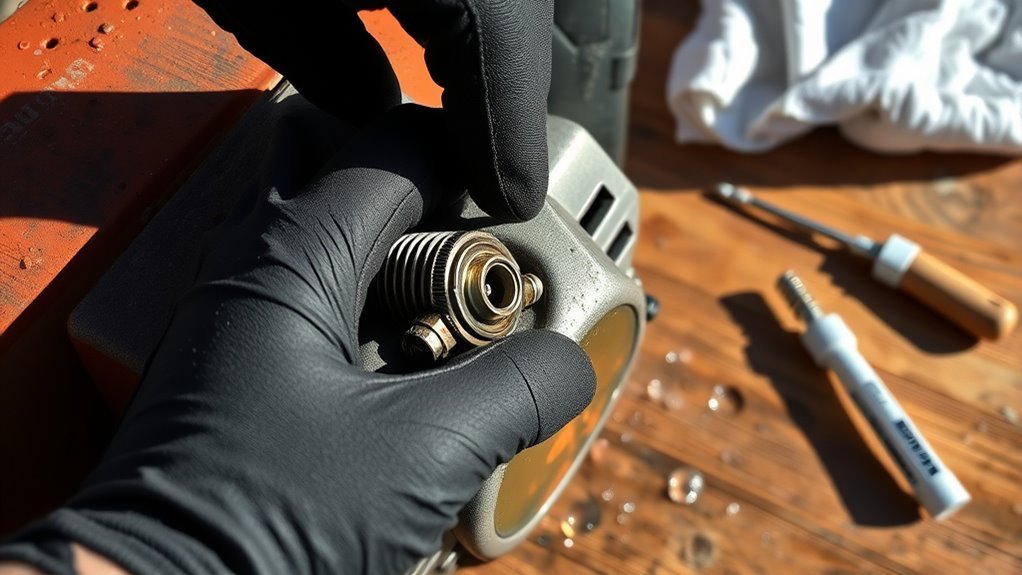
First, you’ll need to remove the spark plug using the proper wrench to safely access it. Check if the plug is wet or fouled.
Then dry it by wiping or using compressed air. Making sure the spark plug is completely dry before reinstalling helps prevent misfires when you start your chainsaw.
Spark Plug Removal
How do you safely remove and prepare a spark plug when your chainsaw is flooded? First, grab a spark plug socket or the correct wrench to carefully remove the spark plug without damaging it.
Once removed, inspect the spark plug closely for signs of fuel, flooding, black fouling, or corrosion. These issues can prevent proper ignition.
Visualize this process: a shiny spark plug socket gripping the plug firmly, wet fuel droplets clinging to the spark plug threads, and corrosion and black deposits obscuring the electrode.
If the spark plug looks heavily fouled or wet, you’ll need to dry or replace it before trying to restart. Handling the spark plug correctly ensures your chainsaw’s ignition system is ready to fire up again.
Drying Techniques
Although removing the spark plug is an essential first step, drying it thoroughly is what prevents your chainsaw from flooding again.
After you remove the spark plug, inspect it carefully for fuel saturation—look for wetness or a gasoline smell. Next, dry the spark plug using a clean cloth or let it air dry for several minutes to remove excess fuel and moisture.
It’s critical to dry thoroughly to prevent re-flooding. Once dry, reinstall the spark plug, ensuring it’s properly seated and tightened to manufacturer specs before you try starting the chainsaw again.
| Step | Action |
|---|---|
| 1. Remove | Use wrench/socket tool |
| 2. Inspect | Check for moisture/fuel |
| 3. Dry | Air dry or wipe clean |
| 4. Confirm | Ensure spark plug is dry |
| 5. Reinstall | Tighten properly to specs |
Clearing Excess Fuel From the Cylinder
Why does your chainsaw struggle to start after flooding? Excess fuel in the cylinder stalls ignition and prevents proper compression.
Chainsaws struggle to start after flooding because excess fuel disrupts ignition and compression.
To clear this, first remove the spark plug. This lets you vent the cylinder and release trapped fuel. Next, pull the starter cord multiple times to expel the excess fuel from inside the cylinder.
Once cleared, dry or wipe the spark plug thoroughly before reinstalling it. A clean, dry spark plug ensures the best ignition performance.
Also, check the fuel tank and drain or reduce fuel if needed to avoid reflooding.
Visualize the process:
- Removing the spark plug with a wrench
- Pulling the starter cord repeatedly
- Wiping the spark plug clean and dry
Following these steps clears excess fuel, setting you up for a smooth restart.
Proper Starting Techniques to Unflood the Engine
When your chainsaw is flooded, you’ll want to turn off the choke and open the throttle fully before starting. This helps the excess fuel escape and clears the rich fuel/air mixture causing the flood.
Next, pull the starter cord multiple times with the throttle wide open and no choke engaged to vent out the flooded mixture from the cylinder. If your chainsaw still won’t start, remove the spark plug to inspect it.
Dry the spark plug thoroughly to eliminate any fuel residue and ensure proper ignition. After drying, reinstall the spark plug and repeat pulling the starter.
This process clears the flood and restores normal combustion. Following these proper starting techniques will help you unflood the engine efficiently and get your chainsaw running smoothly again.
Preventative Measures to Avoid Future Flooding
To keep your chainsaw running smoothly and prevent future flooding, you need to follow proper starting procedures and maintain key components regularly.
Avoid overpriming by pressing the primer bulb only as recommended and pulling the starter cord just 1-3 times with the choke set correctly. A clean air filter guarantees proper airflow, optimizing the fuel mixture and reducing flooding risk.
Once the engine sputters, turn the choke off and keep the throttle open to help clear excess fuel.
Focus on these steps to prevent flooding:
- Check and clean the air filter before each use
- Use fresh fuel and store it properly
- Avoid excessive priming and limit starter cord pulls
Following these tips will keep your chainsaw ready and reliable. Just a little care goes a long way!
Frequently Asked Questions
How to Clear a Flooded Chainsaw Engine?
You clear a flooded chainsaw engine by removing the spark plug, letting excess fuel escape, drying or replacing the plug.
Then, pull the starter cord with the choke off and throttle wide open. After that, reinstall the plug to restart the chainsaw.
It’s a pretty straightforward process once you get the hang of it! Just take it step by step and you’ll be up and running in no time.
Why Won’t My Electric Chainsaw Start?
If your electric chainsaw won’t start, don’t throw in the towel just yet.
First, check the battery’s charge and make sure it’s got enough power. Then, verify that all connections are tight and secure.
Also, take a moment to inspect for moisture or any faulty wiring—that’s often the root of the problem.
Sometimes it’s just a simple fix, so don’t give up too soon!
How to Start a 4 Wheeler That Is Flooded?
Turn off the choke and open the throttle fully. Remove the spark plug to dry it out or replace it if it’s wet.
Pull the starter cord several times to clear out any fuel. Then, reinstall the spark plug and start the engine with the throttle fully open.
How Can I Unflood a Lawn Mower Engine?
Just like clearing a stuffy nose, you’ll want to remove the spark plug and let the excess fuel drain.
Then dry the plug, open the throttle, and pull the starter cord to breathe life back into your mower.
Conclusion
Think of your flooded chainsaw like a stubborn door stuck in the rain—just a little patience and the right steps will get it swinging smoothly again.
By recognizing the signs, drying the spark plug, and clearing excess fuel, you’re giving your saw a fresh start.
Remember, just like a well-oiled hinge, regular care prevents future jams. Follow these steps, and you’ll be cutting through wood instead of frustration in no time.
Starting a flooded chainsaw doesn’t have to be a hassle. With the right approach, like drying the spark plug and clearing out excess fuel, you can get your chainsaw running smoothly again. Consistent maintenance is key to avoiding floods and keeping your chainsaw ready for action. Stick to these simple steps, and you’ll spend less time troubleshooting and more time cutting wood efficiently.