Why Won’t My Chainsaw Start and How Do I Fix It
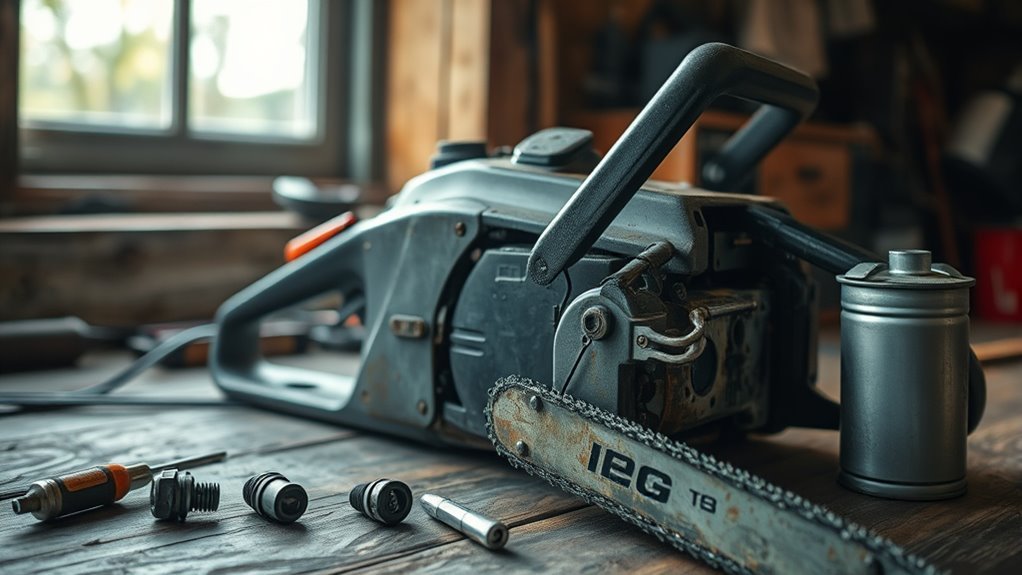
If your chainsaw won’t start, don’t worry—it’s a common issue that can often be fixed with some simple checks. First, take a look at the spark plug. Make sure it’s not fouled or damaged, and check if it’s sparking properly. This little part is crucial for ignition, so a quick inspection can save you a lot of frustration.
Next, move on to the fuel system. Old fuel can cause problems, so drain it out and replace the fuel filter if it looks clogged. Always use fresh fuel mixed correctly according to your chainsaw’s specifications. It’s amazing how much a difference clean, well-mixed fuel can make.
Also, don’t forget the air filter. A dirty air filter can choke the engine and prevent starting. Clean or replace it as needed.
When starting your chainsaw, use the choke and priming bulb if it’s cold. These simple steps often get your saw running again quickly.
If your chainsaw still won’t start, low compression or internal engine damage might be the culprit, and that’s when you’ll need professional help. Keep reading for more detailed fixes and tips to get your chainsaw reliably starting every time.
Key Takeaways
- Check for stale or contaminated fuel and replace it with fresh, properly mixed fuel to prevent carburetor clogging and starting issues. It’s surprising how often old gas causes problems!
- Inspect and clean or replace the spark plug, ensuring the electrode gap is correct and a strong spark is present. A quick spark check can save you a lot of frustration.
- Clean or replace the air filter to ensure proper airflow and avoid engine choking during startup. A dirty filter can really hold things back.
- Follow correct starting procedures: use choke and primer bulb properly depending on engine temperature to avoid flooding or hard starting. Getting this right makes all the difference.
- If basic troubleshooting fails or low compression is suspected, seek professional help to diagnose internal engine damage or rebuild the carburetor. Sometimes it’s best to call in the experts rather than guess.
Common Reasons Your Chainsaw Fails to Start
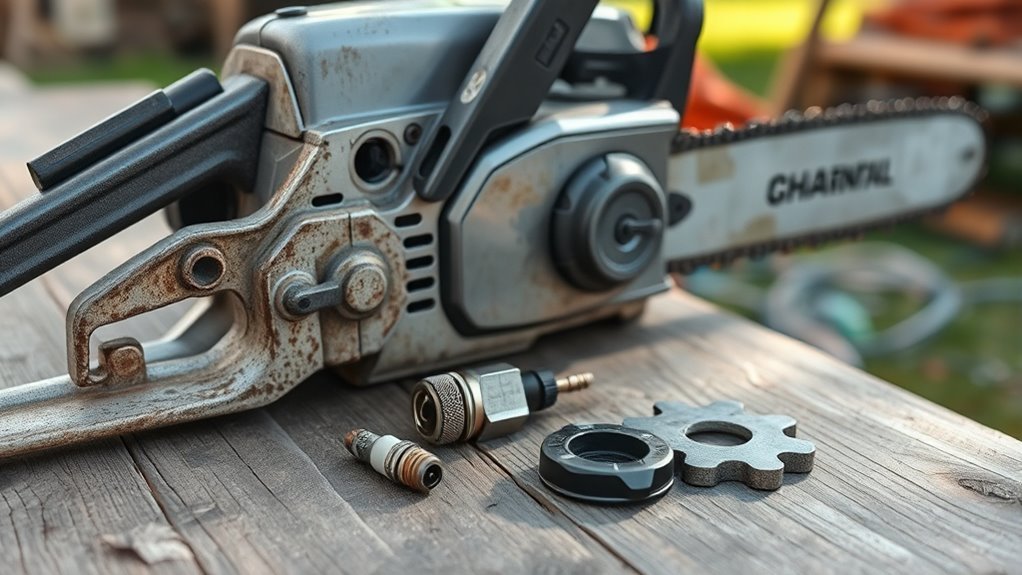
If your chainsaw won’t start, the first thing you should check is the fuel—either the tank is empty or the mixture has gone stale. Old fuel can clog the carburetor, restricting the flow of fuel and air, which prevents the engine from firing.
Make sure you use fresh fuel mixed correctly to avoid these issues. Also, improper starting procedures like not engaging the choke or failing to prime the carburetor can keep your chainsaw from sparking to life.
While a dirty air filter or a faulty spark plug can cause problems, focus first on ensuring the carburetor receives the right fuel and air mixture. Addressing these common reasons often gets your chainsaw running smoothly again.
How to Check and Replace the Spark Plug
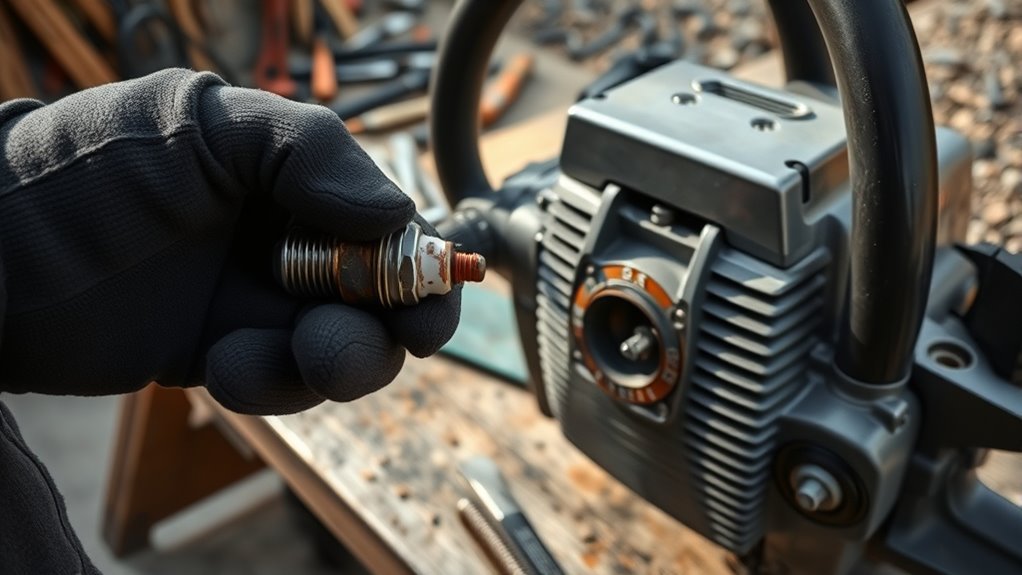
Start by removing the spark plug and checking its condition for cracks, fouling, or corrosion.
Next, measure the electrode gap with a feeler gauge and adjust it to the recommended size.
Finally, replace the plug with a quality one if it’s worn or damaged to keep your chainsaw running smoothly.
Inspect Spark Plug Condition
How do you know when your chainsaw’s spark plug needs attention? Start by removing the spark plug using a spark plug wrench. Inspect the electrodes closely for fouling, cracks, or any damage that might hinder ignition.
Fouling, often caused by carbon buildup, prevents the spark plug from firing properly. If the electrodes look dirty, clean them gently with a wire brush or fine sandpaper to restore good conduction. However, if the spark plug shows significant wear or damage, it’s best to replace it.
After cleaning or replacing, reinstall the spark plug firmly and reconnect the spark plug wire. Test for a strong blue spark by grounding the plug against the engine while pulling the recoil. This ensures proper ignition and helps your chainsaw start reliably.
Measure Electrode Gap
Why does maintaining the correct electrode gap matter for your chainsaw? The electrode gap affects the spark plug’s ability to create a strong spark, which is essential for reliable engine starting.
To measure the electrode gap, first remove the spark plug using a spark plug wrench. Then, inspect the gap with a feeler gauge.
Most chainsaws require a gap between 0.025 inches (0.6 mm) and 0.030 inches (0.8 mm). If the gap is too wide, gently bend the electrode to close it to the recommended size.
However, if the electrodes are rounded, corroded, or you can’t set the gap accurately, it’s best to replace the spark plug. Regularly inspecting and adjusting the electrode gap keeps your chainsaw running smoothly.
Replace With Proper Plug
Before replacing the spark plug, make sure your chainsaw is turned off and cooled down. Then, remove the plug using a spark plug wrench.
Inspect the spark plug’s electrode for wear, fouling, cracks, or corrosion. If it’s damaged or excessively dirty, you need to replace it with the proper plug—preferably an OEM or equivalent part—to guarantee reliable ignition.
Check the spark plug gap with a feeler gauge; it should be around 0.020 to 0.030 inches (0.5 to 0.75 mm), depending on your model.
After installing the new spark plug, reconnect the spark plug wire securely. Test for a strong blue spark by holding the plug against the engine while pulling the starter cord.
Inspecting and Cleaning the Fuel System
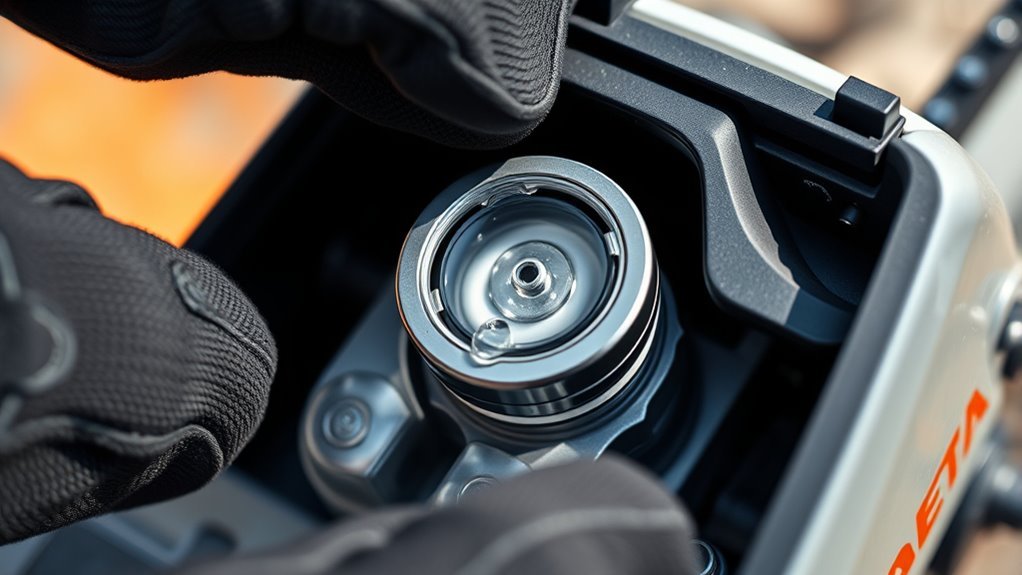
A clean and well-maintained fuel system keeps your chainsaw running smoothly and prevents common issues like hard starting or stalling. Start by checking for old fuel; if it’s been stored over 30 days, it can cause carburetor clog from varnish buildup.
Next, inspect the fuel filter inside the tank—replace it if it looks dark or clogged to ensure proper fuel flow. Always use fresh fuel mixed at the correct ratio, typically 50:1, to avoid poor combustion.
Finally, make sure your fuel is free of dirt, debris, and water, because contaminants can block fuel passages. Following these steps keeps your chainsaw’s fuel system clean and reliable.
- Remove and replace the fuel filter if clogged
- Drain and refill with fresh fuel
- Avoid using old fuel stored over 30 days
- Keep fuel free from contaminants
Proper Starting Techniques for Different Conditions
Before you start your chainsaw, always engage the chain brake to keep things safe. This little step can really help prevent accidents.
When the engine is cold, close the choke fully and prime the carburetor before pulling the starter cord several times. It might take a few pulls, but that’s totally normal.
For warm starts, open the choke halfway and skip priming to get your saw running smoothly. This way, you won’t flood the engine, and it’ll fire up quicker.
Cold Engine Starting Steps
When starting a cold engine, you’ll want to set the choke lever fully closed and pump the primer bulb 5 to 10 times to fill the carburettor with fresh fuel. Follow these steps to get your chainsaw running smoothly:
- Ensure the oil reservoir is filled to maintain proper lubrication.
- Set the choke lever to the fully closed position to restrict air intake.
- Pump the primer bulb 5–10 times to draw fuel into the carburettor.
- Pull the starter cord slowly until the engine fires, then gradually open the choke to allow the right air-fuel mix.
If the engine struggles to start, just repeat these steps and double-check your saw’s starting position and oil level. Following the manufacturer’s cold start instructions guarantees success every time.
Warm Engine Starting Tips
Although starting a warm chainsaw engine usually requires less effort, you’ll want to open the choke fully or turn it off since the engine no longer needs a rich fuel mixture. Skip priming the carburetor on a warm engine unless your manual says otherwise.
When pulling the starter cord, do so gently to avoid flooding because the spark easily ignites the already vaporized fuel. If your saw struggles to start when warm, check the plugs and ignition system—they’re essential for quick ignition.
Also, inspect the air filter to ensure it’s clean and not restricting airflow. If the saw overheats, let it cool briefly before following the warm engine starting procedure again.
These warm engine starting tips help keep your chainsaw running smoothly in varied conditions. Just a few simple checks can make all the difference!
Diagnosing Ignition and Compression Issues
If your chainsaw won’t start, you’ll want to check both the ignition and compression systems first. Start by inspecting the spark plug for damage or fouling, as it’s critical for ignition.
When your chainsaw won’t start, begin by checking the ignition and compression systems, especially the spark plug condition.
Then perform a spark test by holding the spark plug near the cylinder and pulling the starter cord; no spark means an ignition system issue. Next, measure compression with a gauge—it should read between 90-110 psi.
Low compression suggests worn piston rings or damaged seals. Here’s what you should do:
- Remove and inspect the spark plug for wear or carbon buildup.
- Conduct a spark test to verify the ignition system.
- Use a compression gauge to check cylinder pressure.
- Identify low compression as a sign of internal engine wear.
Catch these issues early to avoid costly repairs. It’s way easier to fix problems before they get worse!
When to Seek Professional Help for Repairs
Even after you’ve checked the fuel, spark, and filters, some chainsaw problems demand professional attention. If your chainsaw won’t start despite new spark plugs and a fresh fuel supply, the issue might be a faulty coil or magneto, which requires expert testing.
Extended storage with old fuel often clogs the carburettor, needing professional cleaning or rebuilding. Internal engine damage, such as piston ring failure or low compression, is difficult to diagnose and repair without specialized tools and experience.
When you’re unsure or uncomfortable with complex repairs, it’s safer to consult a qualified technician. They can accurately identify issues, prevent further damage, and ensure your chainsaw runs safely and efficiently, saving you time and costly mistakes.
Frequently Asked Questions
How Do You Know if You Flooded Your Chainsaw?
You know you flooded your chainsaw if it smells strongly of fuel. The spark plug looks wet or blackened, and it won’t start despite multiple pulls.
The engine may sputter or backfire too. Sounds familiar? That’s usually a clear sign you’ve got a flooded engine on your hands.
How to Get a Stubborn Chainsaw to Start?
Did you know 70% of chainsaw startups fail due to fuel issues?
To get yours going, prime the carburetor, verify the choke’s set right, and pull the starter cord firmly with the chain brake disengaged.
It might take a few tries, but stick with it! Soon enough, your chainsaw will roar to life.
Why Is My Chainsaw Dying When I Give It Gas?
Your chainsaw dies when you give it gas because the carburetor might be clogged, the air filter dirty, or the fuel mixture off.
Check and clean these parts, replace stale fuel, and inspect the spark plug for issues.
Sometimes, just a little maintenance can bring your chainsaw back to life!
Why Are Chainsaws so Difficult to Start?
Chainsaws are difficult to start because they need a precise fuel mixture, proper choke use, and a good spark. Dirty filters, stale fuel, or worn spark plugs can mess this up, so check and maintain those regularly.
It might seem tricky at first, but once you get the hang of it, starting a chainsaw becomes much easier. Just make sure everything is clean and in good shape before you try.
Conclusion
When your chainsaw won’t roar to life, it’s like a silent forest waiting for the first spark of dawn. By checking the spark plug and cleaning the fuel system, you’re taking the first steps to bring it back to life.
Mastering proper starting techniques can really make a difference. Sometimes, it’s just about the right approach to get that engine humming again.
If the engine still stays dormant after all this, don’t hesitate to call in a professional. Sometimes even the strongest flame needs a guiding hand to burn bright again.
So, why won’t your chainsaw start? It often boils down to issues like a dirty spark plug, stale fuel, or incorrect starting methods. Regular maintenance and proper troubleshooting can fix most problems. But if you’re stuck, getting expert help ensures your chainsaw runs smoothly and safely. Keep these tips in mind, and your chainsaw will be roaring through the forest again in no time!