How Long Does a Chainsaw Chain Last?
You can expect your chainsaw chain to last through about 15 to 20 cords of hardwood if you sharpen it regularly and keep it properly tensioned and lubricated.
Regular maintenance is key to getting the most out of your chainsaw chain. Avoid cutting into dirt or nails, as that wears the chain down faster.
Watch for signs like dust instead of wood chips or loose tension, which mean it’s time for maintenance or replacement.
Keeping your chain sharp and well maintained not only improves performance but also extends its lifespan.
There’s more to know about care and when to change it, so stay tuned for tips to keep your chainsaw running smoothly.
Key Takeaways
- A chainsaw chain typically lasts through 15-20 cords of hardwood with proper maintenance and regular sharpening.
- Chains can be sharpened over 50 times if well cared for, which really helps extend their life.
- But watch out for damage from dirt, nails, or debris. That stuff can seriously shorten how long your chain lasts, so it’s important to inspect it carefully.
- You’ll want to replace the chain if you notice worn top plates, cracked cutters, broken drive links, or if the chain stretches too much.
- To keep things running smoothly, sharpen your chain regularly—ideally after every tank of gas or every 1.5 to 2 hours of use.
- This helps maintain cutting efficiency and makes your chain last longer.
Average Lifespan of a Chainsaw Chain
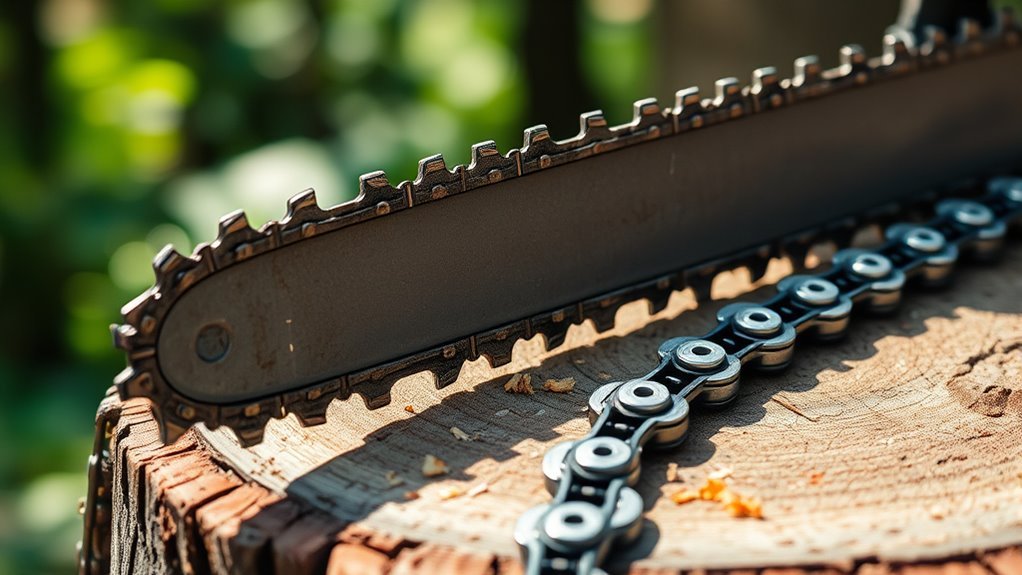
A chainsaw chain typically lasts long enough to cut between 15 and 20 cords of hardwood when you maintain it properly. To keep your chain in good shape, you’ll need to sharpen it regularly—chains can be sharpened over 50 times if you stay on top of maintenance.
The chain’s lifespan depends more on how worn it becomes from damage or wear rather than just the number of cuts made. If your chain hits dirt, nails, or debris, it will wear out faster and need replacing sooner.
You’ll know your chain is worn out when the top plate no longer overlaps or the cutters reach the wear indicator mark. Paying attention to these signs helps you avoid using a dull or unsafe chain.
Factors Affecting Chainsaw Chain Durability

How long your chainsaw chain lasts depends on several important factors beyond just maintenance routines. For instance, hitting dirt, nails, or debris can cause the chain to be damaged, drastically reducing its lifespan.
You’ll want to avoid these to keep your chain cutting efficiently. Regularly sharpen the chain to extend its useful life; most chains can be sharpened over 50 times before the cutters wear down too much.
Proper tension and lubrication also play key roles in preventing excessive chain stretch, which signals the chain should be replaced. By staying attentive to these factors—avoiding damage, sharpening regularly, and maintaining correct tension—you’ll maximize your chainsaw chain’s durability and get the most cuts possible before needing a new chain.
Recognizing Signs of Chain Wear and Damage

When you notice your chainsaw chain struggling to cut effectively or producing dust instead of wood chips, it’s a clear sign that wear has taken its toll. Dull chains lose their cutting ability, while chain wear often shows as a worn top plate or the chain reaching its wear indicator.
Chain damage, like cracked cutters or broken drive links, demands immediate replacement for safety. Watch for excessive chain stretch or loose tension soon after tightening—these also signal the end of your chain’s life.
| Sign | Description | Action Needed |
|---|---|---|
| Dust Instead of Chips | Chain dullness | Sharpen or replace chain |
| Worn Top Plate | No overlap on cutter tip | Inspect chain wear |
| Cracked Cutters | Visible damage on cutters | Replace chain immediately |
| Loose Tension | Chain stretches after tightening | Replace chain |
| Uneven Tracking | Chain doesn’t run straight | Check for damage |
Proper Sharpening Techniques and Frequency
Noticing signs of wear or dullness means it’s time to sharpen your chainsaw chain to keep it cutting efficiently. You should sharpen your chain after every tank of gas or roughly every 1.5 to 2 hours of continuous use.
Proper sharpening techniques involve filing at angles between 27 and 32 degrees and maintaining the witness mark to guarantee consistent sharpening. A sharpened chain cuts more effectively and reduces the strain on your chainsaw.
Keep in mind, chains stretch over time, so regular inspection is vital to adjust tension and sharpen accordingly. With the right technique and tools, you can resharpen a chain over 50 times, greatly extending its lifespan.
Staying on top of sharpening prevents damage and keeps your chainsaw performing at its best. It’s really worth the effort to make sure your chain is always ready to go.
Maintenance Practices to Extend Chain Life
Although sharpening is essential, maintaining your chainsaw chain through proper tension, regular cleaning, and lubrication plays an equally important role in extending its life. Consistent chain maintenance helps avoid unnecessary wear and tear, boosting chain longevity.
Always keep your chain properly tensioned to prevent damage, and clean both the chain and bar after use to remove debris and grit that cause abrasive wear. Regular chain sharpening after every 1.5 to 2 tanks of gas ensures ideal cutting performance.
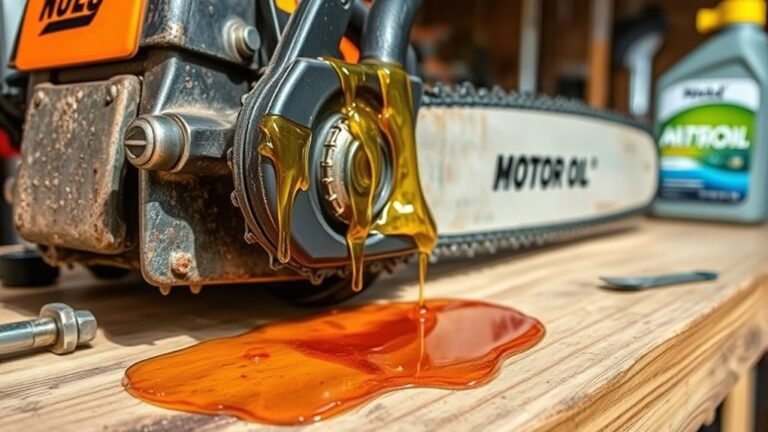
Don’t forget to lubricate the chain with quality oils or even soak it in used motor oil to reduce friction. Flipping the bar periodically promotes even wear, helping your chain last longer.
These simple chain maintenance habits will maximize your chain’s lifespan and performance. Trust me, a little regular care goes a long way!
When to Replace Your Chainsaw Chain
Since a chainsaw chain faces constant wear, you’ll need to replace it once it stops cutting efficiently or shows visible damage. Pay attention to signs like dull cutters that no longer produce large chips even after sharpening.
When your sharp chains no longer perform well, it’s a clear indicator of excessive chain wear. Also, inspect for broken or cracked teeth and worn drive links—these conditions demand immediate chain replacement to ensure safety.
Regularly checking your chain’s condition helps you catch these issues early. Remember, a well-maintained chain typically lasts through 15 to 20 cords of hardwood, but ignoring wear can reduce its lifespan and compromise cutting performance.
Timely chain replacement keeps your saw running safely and efficiently. So, don’t wait too long to swap it out!
Impact of Wood Type and Cutting Conditions
Because different woods and cutting conditions affect your chainsaw chain’s wear rate, understanding their impact helps you maintain ideal performance. Hardwoods like hickory demand more from your chain, wearing it out faster. On the other hand, softer woods help extend its durability.
Also, cutting in dirty or gritty conditions, or striking nails, dulls your chain quickly. This shortens its life, so it’s important to be mindful of where and what you’re cutting.
| Wood Type | Cutting Conditions |
|---|---|
| Hardwoods | Wear chain after 15-20 cords |
| Softwoods | Extend chain life |
| Dirty/Gritty | Reduce durability |
Choosing the Right Chain for Longevity
Understanding how wood type and cutting conditions affect your chainsaw chain’s wear can help you choose the right chain for longer life. Start by selecting a high-quality, professional-grade chainsaw chain designed for your specific bar’s gauge and pitch. This ensures better wear resistance and durability, often lasting beyond 20 cords of hardwood.
Proper sharpening is key—regularly sharpening your chain can extend its lifespan, allowing over 50 sharpenings before replacement. Avoid cutting into dirt, nails, or debris, as these cause premature wear and damage, reducing safety and performance.
Keep an eye out for dullness, chipped teeth, or excessive stretch as signs your chain needs replacing. By choosing the right chain and maintaining it properly, you’ll maximize cutting efficiency and overall longevity.
Frequently Asked Questions
How to Know When a Chainsaw Chain Is Bad?
You’ll know your chainsaw chain is bad when it cuts poorly or produces dust.
If you notice visible damage or it feels loose soon after tightening, that’s a clear sign too. Also, check if the top plate no longer overlaps the link.
When any of these happen, it’s time to replace the chain. Don’t wait too long, or it could affect your safety and cutting efficiency.
Are Stihl Chainsaws 2 Stroke?
Yes, Stihl chainsaws mostly use 2-stroke engines. You’ll find they’re lightweight and powerful, needing a fuel-oil mix for smooth operation.
Just remember to maintain them properly to keep your saw running efficiently and reliably. It really makes a difference in performance and longevity.
What Length Do Chainsaw Chains Come In?
Chainsaw chains come in lengths from about 8 to 36 inches, matching your bar size. You’ll find common lengths for 16″, 20″, 24″, and 36″ bars.
The pitch and gauge of the chain ensure a proper fit and tension. This way, your chainsaw runs smoothly and safely every time you use it.
How Long Do Chainsaws Usually Last?
They say, “A stitch in time saves nine.”
You can expect your chainsaw to last 8 to 20 years if you keep up with regular maintenance, proper use, and timely repairs.
Doing this helps you avoid bigger issues down the road.
Conclusion
Your chainsaw chain’s lifespan depends on how well you care for it and the conditions you use it in. Like a well-tuned engine, regular sharpening and proper maintenance keep it running smoothly and lasting longer.
Watch for signs of wear and replace the chain when needed to avoid damage or accidents. By choosing the right chain and giving it the attention it deserves, you’ll get the most out of every cut, saving time and effort in the long run.
In short, understanding how long a chainsaw chain lasts comes down to maintenance and usage. Keep your chain sharp, check for wear regularly, and replace it when necessary. This way, your chainsaw will perform efficiently and safely, helping you tackle any cutting job with ease. Proper care not only extends the life of your chainsaw chain but also ensures your safety and the quality of your work.