How to Choose the Right File Size for a 3/8 Chainsaw Chain
To select the right file size for your 3/8 chainsaw chain, start by checking your chain’s pitch and gauge.
Most 3/8″ pitch chains with a .050 or .058 gauge will use a 7/32″ file. But if you have a full-size chain, it might need a 13/64″ file instead.
Using the correct file size is super important—it keeps your chain sharp and cuts efficiently. Plus, it helps prevent damage to the chain, which can save you money and frustration down the line.
When filing, hold the file at a 30° angle and use consistent strokes. This technique gives you the best results and keeps your saw working smoothly.
Keep reading for more tips that’ll help maintain your chain’s sharpness longer!
Key Takeaways
- Identify your chain’s pitch and gauge to determine the correct file size for sharpening.
- For standard 3/8″ pitch chains with .050″ or .058″ gauge, use a 7/32″ file. Use a 13/64″ file for full-size 3/8″ pitch FS chains to ensure proper tooth contact.
- Avoid oversized files that can damage the chain or cause uneven sharpening.
- Always confirm chain specs via manufacturer guidelines or a gauge tool before selecting a file. That way, you’ll keep your chain in great shape and sharpen it just right.
Understanding 3/8 Chainsaw Chain Specifications
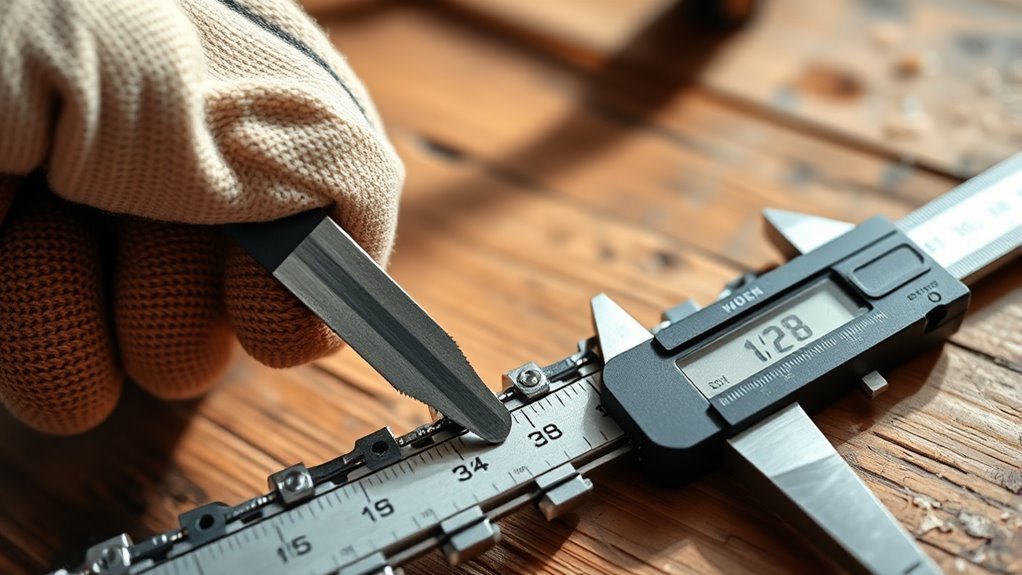
When you’re selecting a 3/8 chainsaw chain, understanding its specifications is essential to guarantee peak performance and proper maintenance. The standard pitch for these chains measures 3/8 inch, which influences the file size you’ll need for sharpening.
Pay attention to the chain gauge, typically ranging from 0.050 to 0.058 inches. This determines the drive link thickness and affects compatibility with your file. Different 3/8 chains come in standard, low profile, and semi-chisel types, each designed for specific tasks and requiring precise file sizes for their cutting teeth.
Also, check the cutter tooth angle—usually 30°—since it impacts cutting efficiency and how you sharpen the teeth. Understanding these details ensures you choose the right file size and maintain ideal cutting performance.
Identifying the Correct File Size for Your Chain
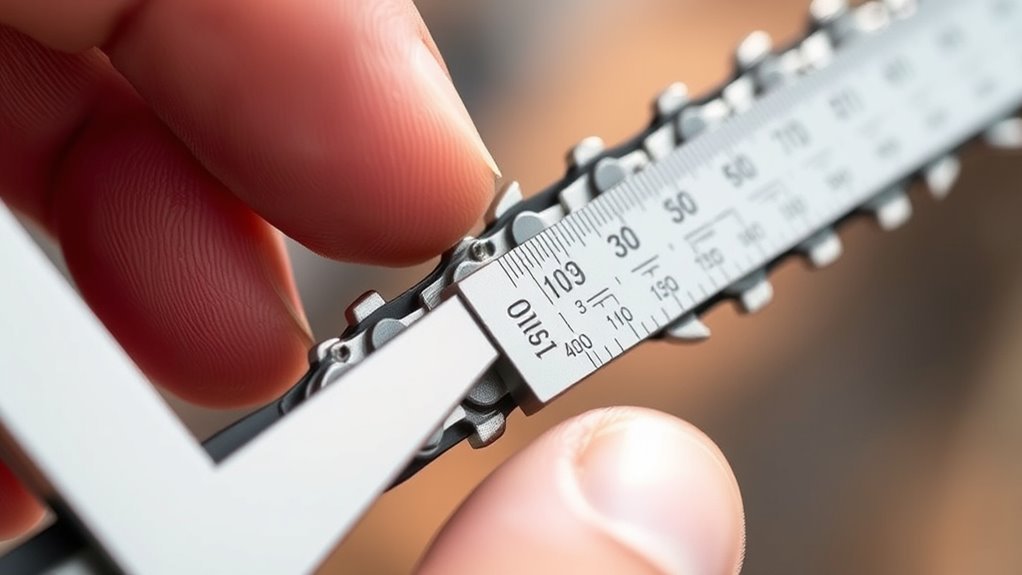
Although selecting the right file size might seem straightforward, using the correct one is essential for maintaining your chainsaw’s cutting efficiency. First, identify your chain’s pitch and gauge by checking the box or using a gauge tool.
Then, refer to the manufacturer’s recommended file size to guarantee precise sharpening.
Here’s a quick reference table to help you match your chain with the proper file size:
| Chain Pitch | Chain Gauge | Recommended File Size |
|---|---|---|
| 3/8″ | .050″ | 7/32″ |
| 3/8″ | .058″ | 7/32″ |
| 3/8″ FS | .050″ | 13/64″ |
| 3/8″ FS | .058″ | 13/64″ |
Using the wrong file size can dull your chain faster and reduce its lifespan. So, it’s definitely worth taking a moment to get it right!
Differences Between 13/64” and 7/32” Files
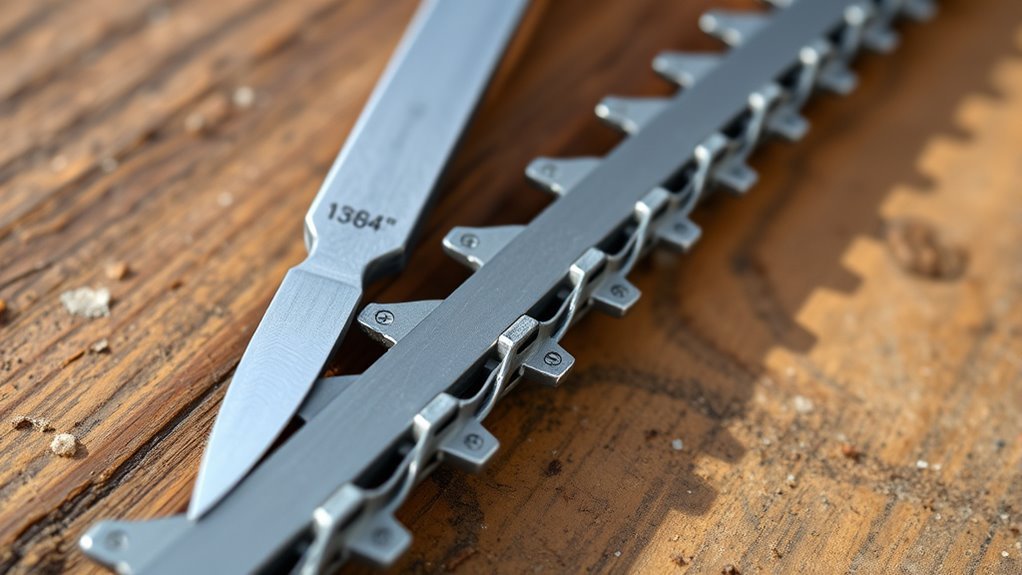
Since choosing the right file size directly impacts your chainsaw’s performance, understanding the differences between the 13/64” and 7/32” files is essential. The cutting tooth’s sharpening depends on matching the file to your chain type.
The 13/64” file suits full-size 3/8” chains best. It provides precise angles and hits both the side and top of the cutting tooth evenly for a factory-like cut.
The 7/32” file is slightly smaller by about 1/64”. It’s designed for narrower or low-profile 3/8” chains, ensuring proper cutting edge contact without over-sharpening.
Using a 7/32” file on full-size chains may lead to less effective sharpening, especially on the top of the cutting tooth. This reduces cutting efficiency.
Step-by-Step Sharpening Process Using the Right File
Choosing the right file size lays the groundwork for effective sharpening, so start by selecting the correct file for your chain—like a 7/32″ for a 3/8” chain.
Start sharpening right by choosing the perfect file size for your specific chain type.
To begin, hold the file upright and align it with the chain’s cutting tooth, maintaining the recommended 30-degree angle.
Use consistent, even strokes, lifting the file before each pass to avoid dragging backward.
Sharpen each tooth with three full-length strokes, ensuring uniform sharpness across all teeth.
Pay close attention to maintaining the same number of strokes per tooth for balanced cutting performance.
Once you finish, check the chain’s sharpness by testing its cutting efficiency.
If the teeth don’t cut smoothly or feel uneven, adjust your technique or reconsider the file size to achieve ideal results.
Common Mistakes When Selecting File Sizes
You might think a bigger file speeds up sharpening, but using an oversized file can damage your chain and cut its lifespan short.
Ignoring the chain’s specific size recommendations often leads to poor results and wasted effort.
Also, neglecting to maintain the proper filing angle with the right file will leave your chain less effective than it should be.
Using Oversized Files
Even though using an oversized file might seem like a quick way to sharpen your chainsaw chain, it often causes more harm than good. Choosing the wrong file size files can lead to serious problems with your 3/8 chain.
Here’s what happens when you use an oversized file: It removes too much metal, shortening the chain’s lifespan and increasing wear. It also alters the cutter’s original angle, resulting in uneven sharpening and poor performance.
Plus, it gives a false sense of sharpness by hitting both the top and side, but the chain still cuts poorly.
Avoid this common mistake by sticking to the recommended file size for your chain. Using a wrong file might seem easier but will cost you more in the long run.
Ignoring Chain Specifications
When you ignore your chainsaw’s specific pitch, gauge, and manufacturer guidelines, picking the wrong file size becomes all too easy. Skipping these essential specs often leads you to grab a size file that doesn’t fit your chain’s needs.
Using a file that’s too small won’t sharpen the cutter’s top effectively, while a larger one can remove too much material, damaging the cutter and shortening chain life. This mismatch also throws off the tooth angles, reducing cutting efficiency and risking chain breakage.
Relying on guesswork or generic sizes rather than exact chain measurements will leave your chain dull, force you to work harder, and decrease its lifespan. For maximum chain sharpening, always check your chain’s specific requirements before selecting a size file.
Neglecting Proper Angle
Failing to contemplate the proper sharpening angle often stems from selecting the wrong file size, which directly impacts your chainsaw’s cutting performance. When you neglect the correct angle, your chain’s tooth wears unevenly, reducing efficiency and lifespan.
To avoid this, focus on matching the file size to your chain’s specifications, including the number of drive links. This helps maintain consistent angles.
Also, avoid files that are too small because they sharpen only the side edges, leaving the tooth’s top dull. On the other hand, steer clear of oversized files. Those can remove excess material or damage the tooth by hitting both side and top simultaneously.
Tips for Maintaining Chain Sharpness and Longevity
To keep your chainsaw chain sharp and lasting longer, you should regularly check and adjust its tension to guarantee proper contact with the bar. I recommend you use the correct file size and maintain a consistent 30° angle when sharpening.
Don’t go back and forth too much; limit each tooth to three strokes per side to avoid over-sharpening. Keep your chain clean from debris and oil to prevent dullness. Replace or sharpen the chain as soon as teeth are dull or chipped to avoid extra stress on your saw.
| Maintenance Tip | Why It Matters | Recommended Action |
|---|---|---|
| Tension Check | Prevents uneven wear | Adjust regularly |
| Correct File Size | Ensures uniform sharpness | Use recommended file size |
| Sharpening Angle | Maximizes chain lifespan | Maintain 30° angle consistently |
| Stroke Limit | Avoids over-sharpening | Three strokes per tooth side |
| Clean Chain | Prevents dulling by debris | Clean after each use |
Frequently Asked Questions
How to Pick Chainsaw File Size?
You pick your chainsaw file size by matching it to your chain’s pitch and gauge. Check the manufacturer’s specs or use a gauge tool.
For 3/8” pitch, 7/32” is usually your best bet. It really helps to get the right size to keep your saw cutting smoothly.
Can You Explain the Different Types of STIHL Chains and How They Differ?
Imagine chains so sharp they could slice through steel! STIHL chains differ by pitch, safety features like extra rakers, and tooth design.
There’s the full chisel type, which is great for speed, and the semi-chisel, known for its durability. Plus, they have special chains designed for rescue operations or ripping tasks.
Is .325 Pitch the Same as 3/8 Pitch?
No, .325 pitch isn’t the same as 3/8 pitch. They’re close in size but not interchangeable.
You need to match your chain’s pitch exactly for proper fit, performance, and sharpening tools. It’s important to get the right one to avoid any issues.
What File Size Should I Use for a 325 Chainsaw Chain?
Think of your 325 chainsaw chain as a finely tuned instrument; you’ll want a 4.8mm (3/16 inch) round file to strike the perfect note.
Using this size sharpens each tooth evenly, keeping your cut clean and sharp.
Conclusion
Choosing the right file size for your 3/8 chainsaw chain is essential for effective sharpening and longer chain life. Did you know that using the wrong file can reduce cutting efficiency by up to 30%?
By selecting the correct file—usually 13/64” or 7/32”—and following proper sharpening steps, you’ll keep your chain sharp and safe. Remember, maintaining your chain regularly saves time and boosts performance every time you work.
So, when you’re picking a file for your 3/8 chainsaw chain, always double-check the size. Using the correct file size not only improves cutting precision but also extends the lifespan of your chain. Consistent sharpening with the right file size ensures your chainsaw runs smoothly and safely, making your work easier and more efficient. Don’t underestimate how much the right file size can impact your chainsaw’s performance and durability!