

How to Oil a Chainsaw in 5 Easy Steps
To oil your chainsaw in five easy steps, first make sure it’s off and completely cooled down. Safety first! Then, find the oil reservoir cap and open it carefully.
Next, pour the correct bar and chain oil slowly into the reservoir. Using a funnel helps to avoid any messy spills — trust me, it makes a difference! After you’ve filled it up, run the chainsaw briefly to check that the oil is flowing properly.
If needed, adjust the oil flow valve to get it just right.
Finally, remember to maintain oil levels regularly. Keeping the reservoir clean and topped up will help your chainsaw last longer and perform better.
Stick around for some useful tips on ideal chainsaw care that will make your life easier!
Key Takeaways
- Ensure the chainsaw is off, cooled, and placed on a level surface before starting the oiling process. This keeps everything safe and steady.
- Locate and open the oil reservoir cap. It’s usually marked with an oil can icon. Make sure to remove any debris around it.
- Use the recommended bar and chain oil. Pour it slowly into the reservoir using a funnel to avoid spills.
- Run the chainsaw briefly to check the oil flow on the chain. If needed, adjust the oil flow control to get it just right.
- Regularly check and refill oil levels before use. Also, clean the reservoir and cap area to keep your chainsaw properly lubricated.
Prepare the Chainsaw for Oiling
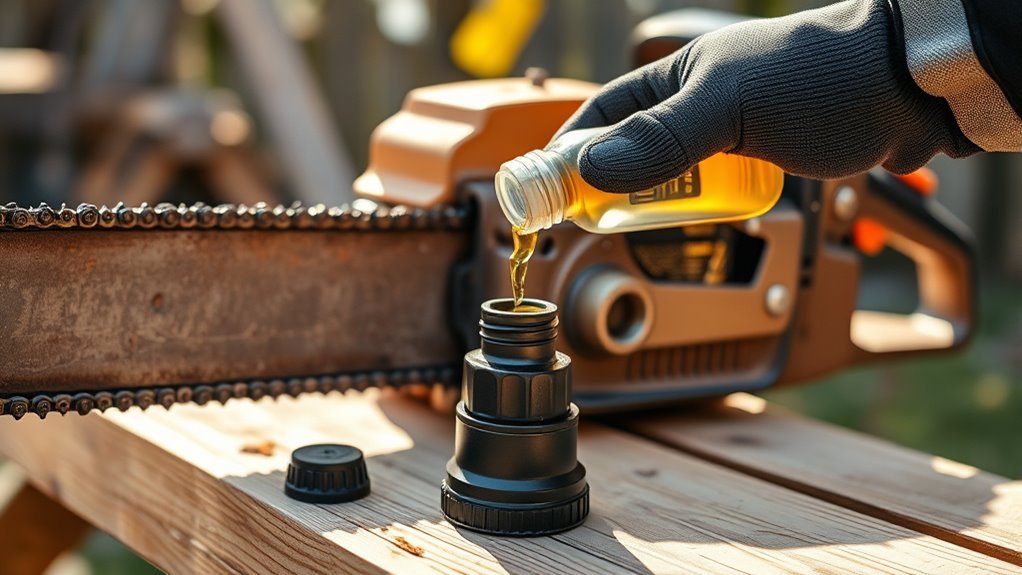
Before you begin oiling your chainsaw, make certain it’s turned off and completely cooled down to avoid any risk of injury. This is essential for your safety and guarantees you can work without rushing.
Always ensure your chainsaw is off and cooled before oiling to work safely and effectively.
Next, set your chainsaw on a level surface so you can accurately monitor the oil level during the process. Before refilling, check the oil reservoir for debris or blockages that might hinder proper flow.
Make sure you have the correct type of bar-and-chain oil suitable for your current weather conditions. Also, inspect the oil supply line and pump for any leaks or damage to confirm oil will be delivered effectively.
These steps prepare your chainsaw for proper oiling, keeping it in good working condition.
Locate and Open the Oil Reservoir
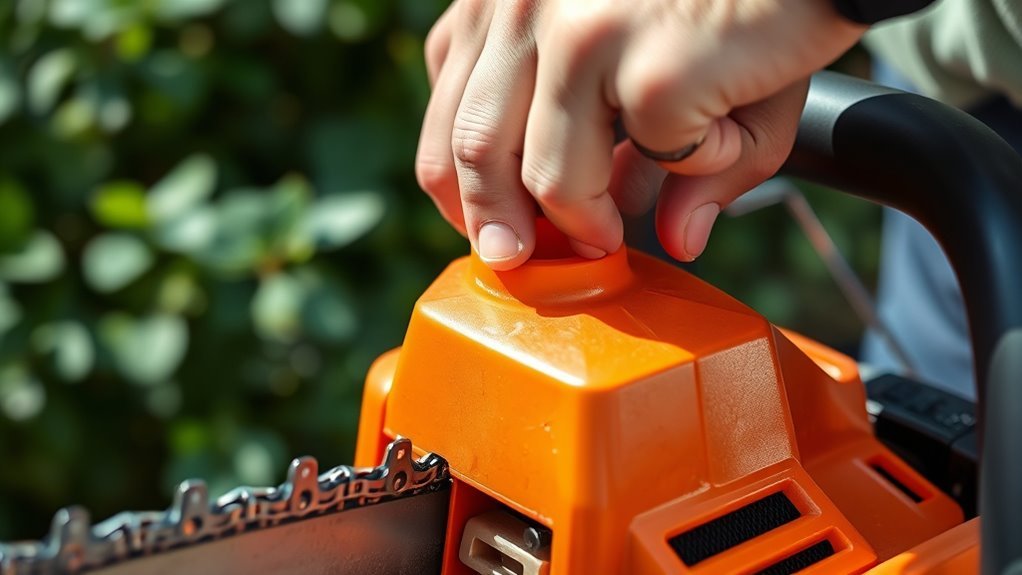
Locate the oil reservoir cap on your chainsaw, usually found on the side or top of the body and marked with an oil can icon. To open it, use your hand or a suitable tool to turn the cap counterclockwise gently.
Avoid forcing the cap to prevent any damage to the threads or seals. Before removing the cap completely, check for any debris, especially if your cap has a vent—clear it to ensure proper oil flow.
Inspect the oil reservoir opening for signs of damage or leaks, which could affect performance. Once open, keep the cap nearby in a safe spot so you can securely close the oil reservoir after refilling.
Proper handling of the oil reservoir is key to maintaining your chainsaw’s efficiency. So, take your time and be gentle with it.
Select and Pour the Correct Bar and Chain Oil
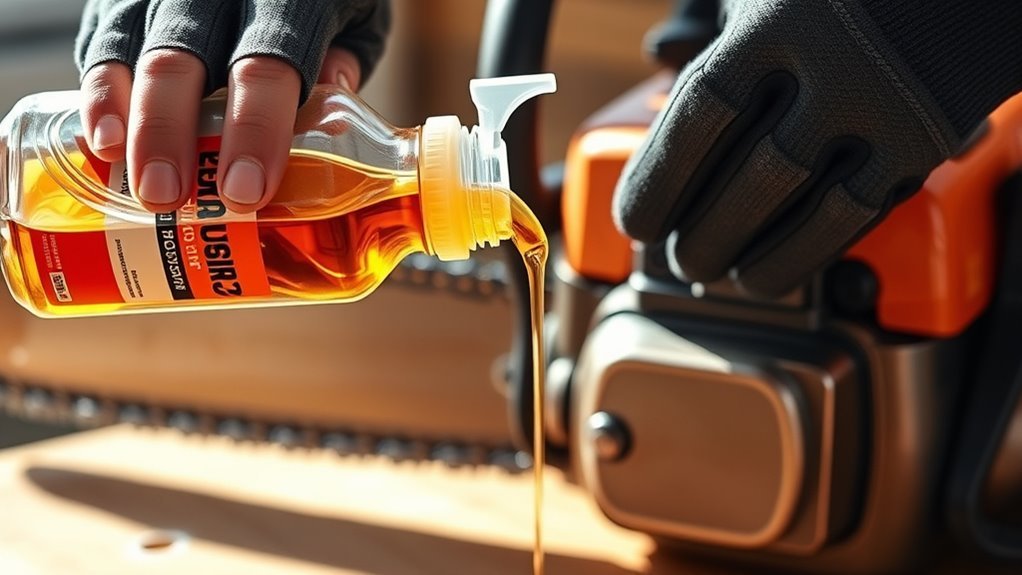
When selecting bar and chain oil, choose a high-quality, eco-friendly option that’s suited to your climate, whether it’s a winter or summer formula. Always use the type recommended in your chainsaw’s owner’s manual to protect your engine and ensure smooth performance.
To fill the oil reservoir, open it carefully and use a funnel or pour spout to avoid spills. Pour the bar and chain oil slowly until the level reaches the designated fill line or just below the overflow point.
Be sure to check the oil reservoir level regularly before each use, especially after refilling, to keep the lubrication just right. Properly selecting and pouring the correct bar and chain oil helps keep your chainsaw running efficiently and extends the life of the bar and chain.
Verify Oil Flow and Adjust If Needed
Although you’ve filled the oil reservoir correctly, you’ll want to verify the oil flow to guarantee your chainsaw’s chain stays properly lubricated during use.
Start by running the chainsaw briefly and observing if oil reaches the chain and bar. If you don’t see any oil, first confirm the reservoir is filled to the recommended level to avoid false results.
Run the chainsaw briefly to check for oil on the chain and bar, confirming the reservoir is properly filled.
Next, adjust the oil flow control valve or screw, usually by turning clockwise to increase flow or counterclockwise to decrease it, following your chainsaw’s manual.
After adjusting, run the chainsaw again and check for proper lubrication.
Regularly verifying oil flow, especially after refills or storage, ensures your chainsaw performs efficiently and prevents premature wear on the chain and bar.
Maintain Oil Levels and Clean the Reservoir Regularly
After confirming that your chainsaw’s oil flows properly, you’ll need to keep an eye on oil levels and clean the reservoir regularly. Check the oil reservoir using the level window or dipstick before each use to ensure your chainsaw stays well-lubricated.
Always refill the reservoir with the recommended bar-and-chain oil, matching about one tank of oil per tank of fuel. Periodically clean the reservoir and cap area by brushing away debris to prevent contamination of the oil.
Use a small brush or toothbrush to clear any dirt buildup around the fill opening and inside the reservoir before refilling. Remember to store leftover oil in its original, sealed container to keep it fresh and ready for your next chainsaw job.
Keeping your oil system clean guarantees smooth, efficient cutting every time.
Frequently Asked Questions
What Oil Do You Put in a Chainsaw?
You put bar-and-chain oil in four-cycle chainsaws and a gasoline-two-stroke oil mix in two-cycle models. Always use manufacturer-recommended oil type to keep your chainsaw running smoothly and avoid damage to the chain and engine.
It’s pretty important to stick to what the manufacturer suggests. That way, you’ll help your chainsaw last longer and work better. Plus, using the right oil means less wear and tear on the engine and chain.
How Does a Chainsaw Oiler Work?
Just like a knight’s armor needs oil, your chainsaw’s oiler pumps bar-and-chain oil via a small pump or gravity system. It adjusts the flow as you work, ensuring smooth operation.
This helps prevent damage while you cut. Keeping everything running smoothly makes your job easier and your chainsaw last longer.
Why Use Chainsaw Bar Oil?
You use chainsaw bar oil because it lubricates the chain and bar, reducing friction and heat. This prevents wear, extends lifespan, and guarantees smooth cutting.
Without it, your chainsaw won’t perform safely or efficiently. So, always make sure to keep that oil topped up!
How Do I Oil a Mini Chainsaw?
You’ll fill the mini chainsaw’s oil reservoir with the recommended bar-and-chain oil, check the level regularly, and refill it when low.
Then, run the saw briefly to spread oil evenly on the chain for smooth cutting. It helps keep the chain moving smoothly and prevents overheating. Just make sure you don’t overfill it!
Conclusion
Oiling your chainsaw properly is essential for its performance and longevity. Did you know that running a chainsaw without adequate oil can cause the chain to wear out up to 10 times faster?
By following these simple steps, you’ll keep your chainsaw running smoothly and avoid costly repairs. Regularly checking and maintaining oil levels not only protects your tool but also guarantees safer, more efficient cutting every time you use it.
Remember, proper chainsaw oiling is key to extending the life of your chain and bar. It helps reduce friction and heat buildup, which can otherwise damage your saw. So, make it a habit to oil your chainsaw before every use and check the oil reservoir regularly.
This simple maintenance step ensures your chainsaw operates at its best, saving you time and money in the long run. Keep your chainsaw well-oiled, and you’ll enjoy safer, smoother, and more efficient cutting every time!


