How to Tune a Chainsaw Carb in 7 Easy Steps
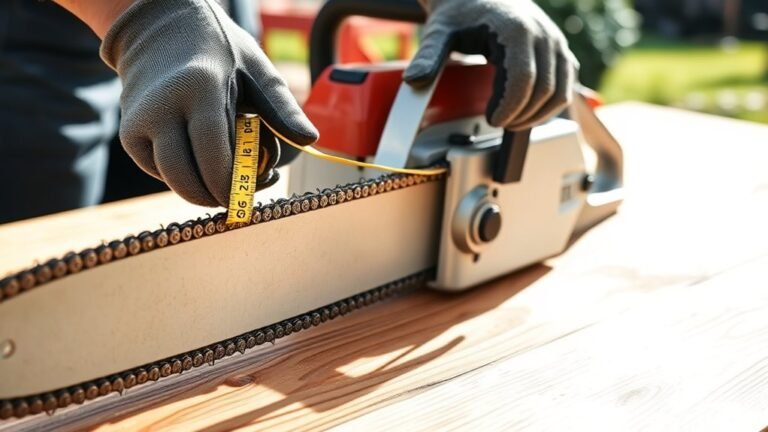
To tune your chainsaw carburetor in seven easy steps, start by gathering the right tools and prepping your saw on a stable surface with a cool engine. Proper carb tuning is key to keeping your chainsaw running smoothly and efficiently. This process ensures your engine gets the right fuel-to-air mix, boosting performance and extending its life.
Once you’re set up, warm the engine up for a few minutes. Then, set the idle and mixture screws about 1.5 turns out to get a good baseline.
Next, adjust the idle screw so the RPMs settle around 2700 without the chain moving. This keeps your saw ready but safe. After that, fine-tune the low and high-speed mixture screws for a steady engine response and maximum RPM.
Finally, test your chainsaw under load and make minor tweaks as needed. Following these basics will get your saw running strong. And if you want to master every detail, keep exploring beyond these simple steps!
Key Takeaways
- Warm the chainsaw engine for 3-5 minutes. Then, place it on a stable surface with the chain brake engaged before tuning.
- Set the high (H) and low (L) screws about 1.5 turns out. Adjust the idle screw to approximately 2700 RPM.
- Adjust the idle speed screw until the chain stops moving but the engine idles smoothly. Make sure it doesn’t stall or surge.
- Fine-tune the low-speed screw in small increments. This helps achieve a smooth idle and the best fuel mixture, without the chain moving.
- Use a tachometer to adjust the high-speed screw for maximum stable RPM. Then, perform load testing to ensure smooth performance.
Gather Necessary Tools and Prepare the Chainsaw
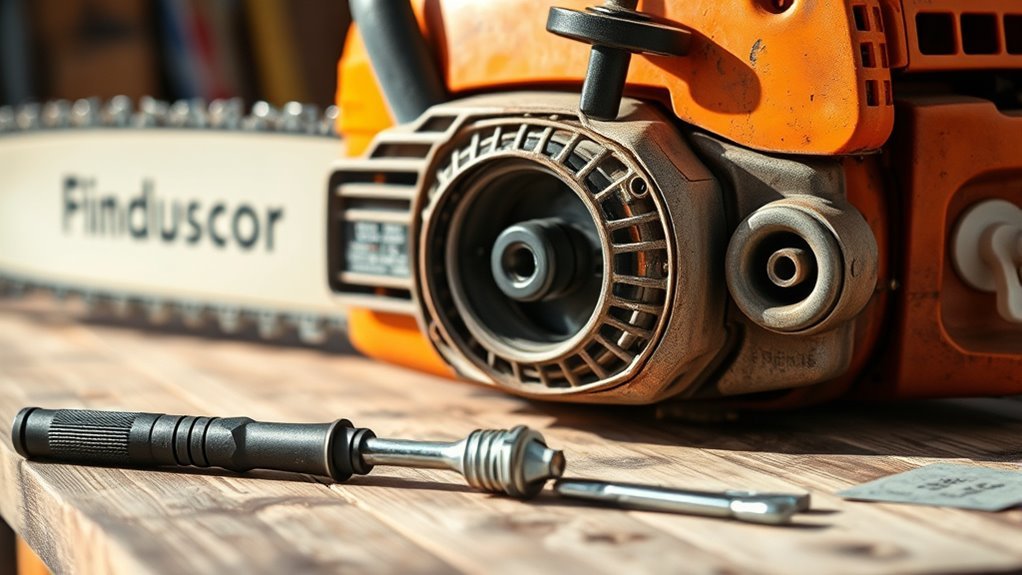
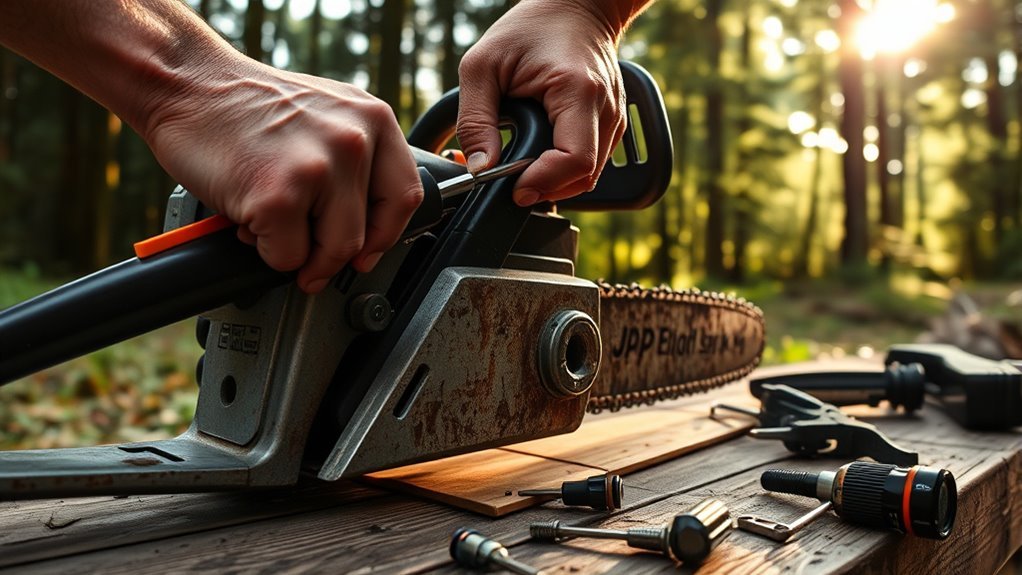
Before you start tuning your chainsaw carburetor, gather a small flat-head screwdriver, a digital tachometer, and some clean rags. These tools are vital for precise adjustment and proper operation.
Next, place your chainsaw on a stable surface and ensure the engine is cool. Check the air filter for cleanliness and verify that the fuel tank is at least half full to avoid interruptions during tuning.
Set your chainsaw on a stable surface, ensure a cool engine, clean air filter, and half-full fuel tank before tuning.
Remove any debris from around the carburetor screws to prevent faulty adjustments. While you won’t warm up the engine just yet, remember that reaching the correct engine temperature is essential for fine-tuning later.
This preparation sets the stage for a smooth, effective carburetor adjustment, helping your chainsaw run efficiently and reliably when you start the warm-up process.
Warm Up the Engine and Set Initial Screw Positions

Start your chainsaw and let it run for 3-5 minutes to reach normal operating temperature. Make sure the saw is on a stable surface with the chain brake engaged before you begin.
Then, set the H and L screws about 1.5 turns out and adjust the idle speed to prepare for tuning. It’s a good idea to get these initial settings right to make tuning easier later on.
Engine Warm-Up Process
How long should you let your chainsaw run before tuning the carburetor? You need to warm-up the engine thoroughly by letting it run for 3 to 5 minutes.
Place your saw on a stable surface to stabilize it and avoid any accidental movement. Make sure the chain is disengaged or in idle before starting the warm-up.
While the engine runs, listen carefully to the engine sounds to confirm proper operation and that it’s reached the right temperature. This warm-up process is essential because it allows the engine components to expand and stabilize.
Once warmed up, you can proceed with adjustment by setting the initial tune, including the idle speed screw, ensuring the chain stays still at idle. This step sets the foundation for accurate carburetor tuning.
Initial Screw Settings
Once the engine is fully warmed up, you’ll want to set the initial positions of the carburetor screws to establish a baseline for tuning. Start by turning the L (low-speed) and H (high-speed) screws clockwise until they lightly seat, then back them out about 1.5 turns. This gives you the proper initial screw settings to balance the rich and lean fuel mixture.
Before adjusting further, make sure the air filter is clean and the fuel mixture is fresh for accurate carburetor adjustment. Also, check the idle screw to ensure the chainsaw idles smoothly around 2700 RPM. Listen for a steady engine sound that indicates stable idle speed.
Getting these initial settings right really helps improve throttle response. Plus, it lets you safely reach the maximum RPM during fine-tuning. So, take your time here—it makes a big difference!
Preparing for Adjustment
Getting the initial screw settings right sets the stage for effective tuning, but before making any adjustments, you need to prepare the engine properly.
Start by checking that the fuel tank is at least half full and the air filter is clean to ensure smooth starting and running. Next, warm up the chainsaw by idling it for 3-5 minutes until the engine temperature stabilizes. This guarantees consistent performance during tuning.
Set the carburetor screws about 1.5 turns out from fully closed as your baseline. Before adjusting, inspect and clean the muffler and spark plug for optimal engine response.
| Step | Action |
|---|---|
| Fuel | Ensure at least half full |
| Air Filter | Check and clean if dirty |
| Starting | Warm engine by idling 3-5 minutes |
| Carburetor Screws | Set 1.5 turns out initially |
| Engine Components | Clean muffler and spark plug |
Adjust the Idle Speed Screw for Smooth Operation
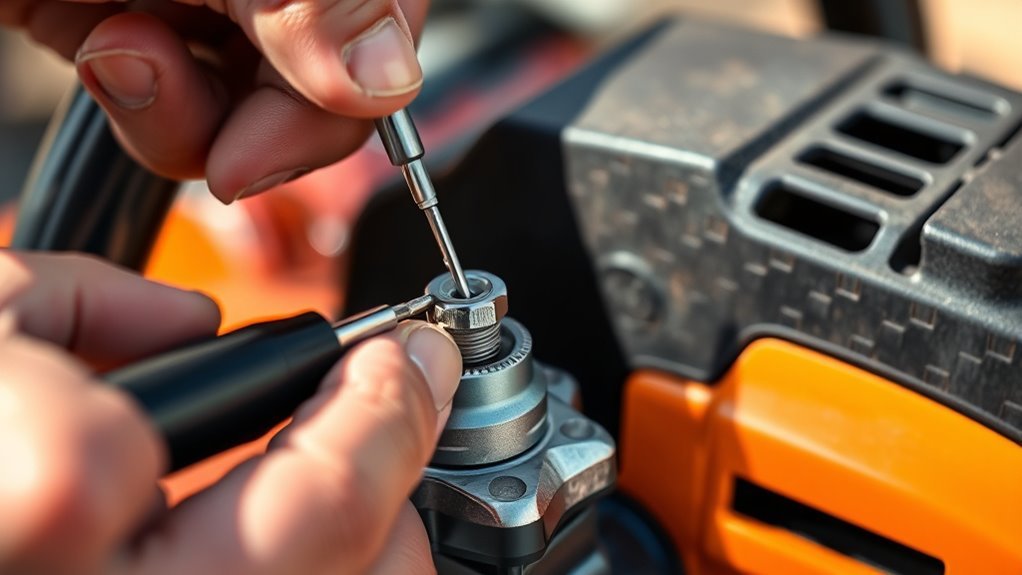
Now, focus on adjusting the idle speed screw to set the RPM around 2700 for smooth engine running. Turn it slowly until the chain just stops moving at idle, preventing unwanted chain rotation.
Keep fine-tuning in small steps to avoid stalling or surging as you listen for steady operation. Take your time with this—it’s all about finding that sweet spot where everything runs smoothly.
Setting Idle RPM
Although tuning your chainsaw carburetor can seem tricky, setting the idle RPM correctly is essential for smooth operation and safety. Start by turning the idle speed screw clockwise to increase RPM until the chain begins to turn.
Then, back it off slightly by turning the screw counterclockwise to prevent chain movement while keeping the engine running smoothly. Aim for an idle speed around 2700 RPM, where the engine maintains smooth running without stalling or moving the chain.
Make small, gentle carburetor adjustments and listen closely for a steady engine sound. If the saw stalls, turn the screw clockwise; if the chain moves, turn it counterclockwise.
Always verify the proper idle to ensure safe and reliable chainsaw performance. It might take a bit of patience, but getting this right really pays off in the long run.
Preventing Chain Movement
When you adjust the idle speed screw, you control how much the throttle valve opens at idle. This directly affects whether the chain moves while the saw isn’t cutting.
Turning the idle screw clockwise raises engine speed and RPM. But if set too high, it causes unwanted chain movement.
To prevent this, loosen the idle screw by turning it counterclockwise. This lowers RPM and stops the chain from moving during idle.
Make adjustments gradually while watching the chain. Find the highest RPM where the chain stays still.
Properly setting the idle screw ensures smooth engine operation without stalling or unsafe chain movement.
This fine-tuning of the carburetor’s throttle at idle is essential for safe, efficient chainsaw use.
Fine-Tune the Low-Speed Fuel Mixture Screw
Because fine-tuning the low-speed fuel mixture screw directly affects your chainsaw’s idle performance, you’ll want to modify it carefully in small increments. Start by turning the low-speed screw about 1/8 turn at a time.
Turning the screw clockwise leans the fuel mixture, while turning it counterclockwise enriches it. Aim for a smooth idle speed where the engine runs steadily without stalling.
If your chainsaw hesitates or stalls, slightly loosen the screw to enrich the mixture.
- Adjust the low-speed screw gradually for precise idle adjustment
- Look for a smooth idle with no engine stalling or chain movement
- Use screw clockwise to lean and screw counterclockwise to enrich the fuel mixture
This ensures your engine idles smoothly with the chain stationary.
Set the High-Speed Fuel Mixture Screw for Maximum RPM
After you’ve fine-tuned the low-speed fuel mixture screw for a smooth idle, it’s time to focus on the high-speed fuel mixture screw to maximize your chainsaw’s RPM. Slowly turn the high-speed screw clockwise to lean the fuel mixture, increasing engine speed until you reach maximum revs.
Use a tachometer to hit the manufacturer’s specified maximum RPM, usually between 12,000 and 13,500. If the engine blubbers or bogs at high RPM, slightly loosen the screw to enrich the mixture for ideal carburetor tuning.
| Adjustment Step | Effect on RPM | Engine Response |
|---|---|---|
| Turn clockwise | RPM increases | Leaner mixture, higher revs |
| Turn counterclockwise | RPM decreases | Richer mixture, smoother load |
| Small increments | Precise RPM adjustment | Stable max revs, no bogging |
Fine-tune the fuel mixture screw in 1/8 turn increments for best performance under engine load. Take your time here — small tweaks make a big difference!
Recheck and Refine Low-Speed and Idle Settings
Although you’ve just adjusted the high-speed screw, you need to recheck the idle speed and fine-tune the low-speed screw. This ensures your chainsaw runs smoothly without stalling or moving the chain at idle.
Start by making sure the engine maintains a steady RPM near 2700 for the ideal idle speed. Then, use these tips to fine-tune your carburetor adjustment:
- Listen for smooth idling with no engine stalling or bogging.
- Confirm the chain remains stationary, which means the low-speed screw is set properly.
- Re-test idle speed after each tweak, since changes affect the overall RPM balance.
Test the Chainsaw Under Load and Make Final Adjustments
When you test your chainsaw under load, you’ll see how it performs during real cutting conditions. This lets you make precise final adjustments to the carburetor.
Start load testing by cutting wood or applying steady pressure at full throttle while listening for a smooth, consistent engine sound. Use RPM verification with a tachometer to make sure the engine hits the manufacturer’s recommended maximum RPM without over-revving.
Make high-speed adjustments as needed to eliminate any engine hesitation or bogging. Proper carburetor tuning under load conditions guarantees steady power and peak engine response.
If the engine stalls or burbles, adjust the mixture until the saw maintains full throttle smoothly. This step ensures your chainsaw runs efficiently and reliably in actual work environments.
Frequently Asked Questions
How to Properly Tune a Chainsaw Carb?
You start by warming up your chainsaw, then adjust the low-speed screw for smooth idle.
Next, tweak the high-speed screw for max RPM without knocking. Fine-tune the mixture, and keep filters clean for best results.
How Do I Set My Carburetor to Factory Settings?
You’ll set your carburetor screws about 1.5 turns out from fully seated—like adjusting a vintage radio dial.
Warm your saw, then tweak the idle and mixture screws until it runs smoothly at factory specs.
How Do You Tune a Carburetor Perfectly?
You tune a carburetor perfectly by warming up the engine first. Then, adjust the idle so the chain stays still.
After that, fine-tune the low and high-speed screws while listening for a smooth, consistent engine sound. It helps to verify the RPM with a tachometer to make sure everything’s just right.
How to Adjust H and L Screws on Carb?
Think of the H and L screws as the volume knobs for your engine’s fuel mix. Warm it up first, then gently seat each screw.
After that, back them out about 1.5 turns. From there, you can fine-tune for a smooth idle and peak throttle power.
Just take your time and adjust little by little until it feels just right.
Conclusion
Now that you’ve mastered tuning your chainsaw carburetor in just seven easy steps, you’re basically a mechanic—without the greasy overalls. Sure, you could’ve left it sputtering like a tired lawnmower, but instead, you’ve fine-tuned it to purr like a kitten ready to roar through wood.
Who knew that a few twists and turns could turn your noisy beast into a smooth operator? Enjoy the newfound power—you earned it! Tuning your chainsaw carb not only boosts performance but also extends its lifespan.
With these simple carburetor tuning steps, maintaining your chainsaw becomes less of a chore and more of a rewarding experience. So next time your chainsaw acts up, remember—you’ve got the skills to get it running like new again. Keep those blades sharp and the carburetor tuned!