How Much Does a Chainsaw Weight Affect Portability
The weight of a chainsaw greatly affects its portability and how long you can use it comfortably. Lighter models, typically under 10 lbs, are easier to carry and maneuver. They cause less fatigue, especially during trimming or overhead work.
Heavier chainsaws, on the other hand, can tire your arms faster. This makes handling and control tougher on long jobs. Your choice should match the task and your strength to stay safe and efficient.
Keep going, and you’ll find tips for selecting the perfect weight for your needs. It’s all about finding the right balance so you can work smarter, not harder!
Key Takeaways
– Heavier chainsaws (>12 lbs) increase fatigue and reduce ease of carrying, making them less portable for extended use or transport.
They can really wear you out if you’re carrying them around for a while.
– Lightweight chainsaws (<10 lbs) enhance portability by reducing strain, improving maneuverability, and facilitating access in tight or elevated spaces.
This makes them a great choice if you need to work in tricky spots.
– Battery-powered models weighing 6-12 lbs offer greater portability due to the absence of fuel tanks and lighter construction materials.
Plus, not having to deal with fuel makes them easier to handle overall.
– Using lightweight materials like magnesium and composites significantly improves chainsaw portability without sacrificing durability.
So, you get the best of both worlds—lightweight and tough.
– Weight directly impacts ease of maintenance and transportation, with lighter chainsaws simplifying handling and reducing physical effort.
In short, lighter chainsaws just make your job a lot easier from start to finish.
Impact of Chainsaw Weight on User Fatigue

Although heavier chainsaws offer power, they can quickly wear you down during long jobs. When you’re handling a chainsaw over 12 pounds, your muscles tire faster, especially your arms and back.
This fatigue can reduce your productivity and increase accident risks. You want your tool to last longer, not your energy to drain quicker.
Lighter chainsaws, around 8 to 10 pounds, ease strain and help you maintain control, even in tight spaces or overhead.
Also, be mindful of maintenance—an unnoticed air leak can reduce efficiency, making you work harder and tire sooner.
Whether you’re a new account manager at a rental place or a seasoned pro, choosing the right weight helps you work smarter, not harder, keeping fatigue at bay.
Comparing Lightweight and Heavy-Duty Chainsaws
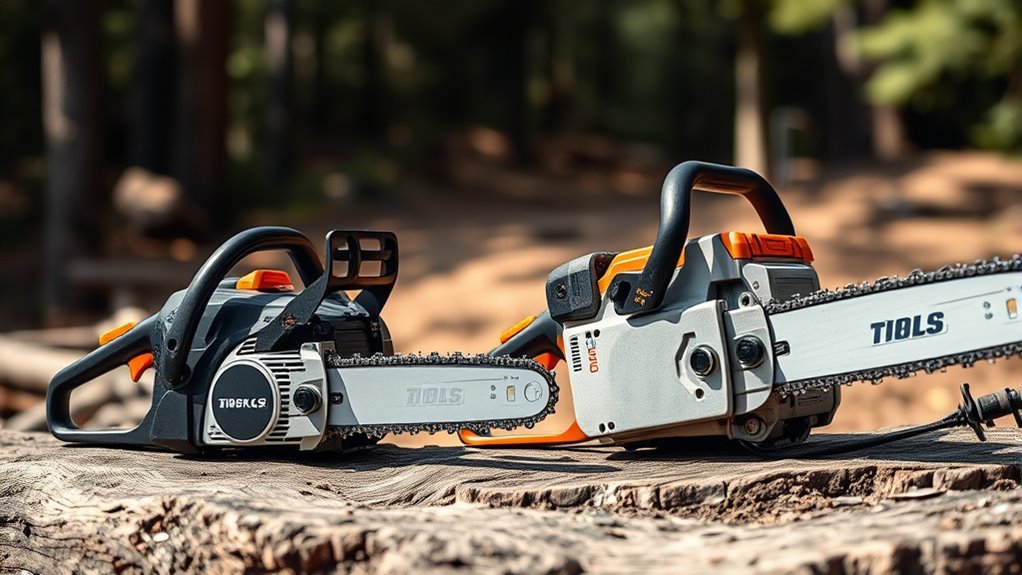
You’ll find lightweight chainsaws much easier to carry and use for longer periods, especially during small jobs or pruning.
On the other hand, heavy-duty chainsaws pack more power but can leave you feeling fatigued faster and are harder to move around.
Knowing these differences helps you pick the right tool for your task and comfort level.
Lightweight Chainsaw Benefits
When you choose a lightweight chainsaw, typically under 10 pounds, you’ll find it much easier to handle for long periods without tiring. These chainsaws reduce fatigue and improve comfort, especially during pruning, trimming, or small cutting tasks.
Their ergonomic designs enhance balance and ease strain on your arms and back, making portability a key advantage. Compared to heavy-duty models weighing over 15 pounds, lightweight chainsaws offer better maneuverability and can often be used one-handed.
| Feature | Lightweight Chainsaw (<10 lbs) | Heavy-Duty Chainsaw (>15 lbs) |
|---|---|---|
| Weight | Under 10 lbs | Over 15 lbs |
| User Fatigue | Low | High |
| Portability | High | Low |
| Task Suitability | Pruning, trimming | Large cutting jobs |
| Ergonomics | Improved balance | Heavier strain |
Heavy-Duty Chainsaw Challenges
Carrying a heavy-duty chainsaw, which typically weighs between 10 to 15 pounds, can quickly wear you down during long jobs. The extra weight comes from larger engines, reinforced bars, and sturdy frames built for demanding tasks.
While these features boost power and durability, they also increase fatigue, especially during extended cutting sessions. You’ll find heavy-duty chainsaws less portable and harder to maneuver in tight or elevated spaces compared to lighter models under 10 pounds.
If your work involves quick, short-term jobs, a lightweight chainsaw might be a better fit for easy handling and reduced strain. However, for prolonged, heavy use, heavy-duty chainsaws deliver the performance you need despite the portability challenges.
Balancing weight and power is key to matching the saw to your task. It’s all about finding the right tool that fits both the job and your comfort level.
Portability Benefits of Battery-Powered Models

You’ll notice battery-powered chainsaws are much lighter, usually between 6 to 12 pounds, making them easier to carry and handle. This lightweight design helps reduce fatigue and lets you maneuver comfortably in tight spots or on ladders.
Without the bulk of fuel tanks or heavy engines, you get better control and safer operation every time. It’s just simpler to use and way less tiring.
Lightweight Design Advantages
Although battery-powered chainsaws weigh as little as 6 to 10 pounds, they deliver impressive portability compared to heavier gas models. You’ll notice how the lighter design reduces fatigue, letting you work longer without feeling drained.
Without bulky fuel tanks and heavy engines, these chainsaws are easier to carry and transport. This makes quick setup a breeze, so you can tackle on-the-go tasks efficiently.
Plus, their reduced weight helps you access tight spaces, climb ladders, or trim overhead branches more comfortably. When you choose a lightweight battery-powered chainsaw, you’re selecting a tool that’s not just portable but also practical for extended use and varied environments.
The design truly enhances your ease of movement and overall work experience.
Enhanced User Maneuverability
Because battery-powered chainsaws weigh between 6 to 12 pounds, they offer greater maneuverability compared to heavier gas models. This lighter weight lets you handle the saw more easily during extended cutting sessions, reducing fatigue and strain.
You’ll find it simpler to control the saw in tight spaces or when working overhead, thanks to its compact design. This means you can work longer without discomfort and maintain precision in tricky spots.
The enhanced maneuverability makes battery-powered chainsaws perfect for residential tasks and lighter professional use. Overall, their reduced weight and ergonomic design improve portability and user control, helping you work more efficiently and comfortably wherever the job takes you.
Effects of Weight on Chainsaw Handling and Control
When you handle a heavier chainsaw, typically over 12 pounds, you’ll notice it quickly tires your arms and limits your maneuverability during long tasks. This weight makes it harder to stabilize the saw, increasing the risk of accidents.
On the other hand, lighter chainsaws, usually under 10 pounds, offer easier handling, especially for overhead or precise cuts. They improve control and reduce fatigue, allowing you to work longer and more safely.
| Weight Range | Handling Impact | Control Effect |
|---|---|---|
| Over 12 pounds | Causes fatigue | Harder to stabilize |
| 10-12 pounds | Moderate effort | Balanced control |
| Under 10 pounds | Easy maneuverability | Improved precision and safety |
How Chainsaw Weight Influences Cutting Efficiency
Since chainsaw weight directly impacts your stamina and control, it plays a crucial role in cutting efficiency. When you use a heavier chainsaw, especially those over 10 pounds, you’ll tire faster, which slows your work and reduces overall productivity.
On the other hand, lighter chainsaws, typically under 8 pounds, let you move more easily and cut with better precision. This increased maneuverability helps you maintain speed and accuracy, especially during tasks that require frequent repositioning, like pruning or trimming in tight spaces.
Because you won’t fatigue as quickly with a lightweight saw, you can keep working longer without sacrificing performance. Ultimately, lighter chainsaws help you sustain your energy and improve cutting efficiency over extended periods.
Choosing the Right Chainsaw Weight for Different Tasks
Although choosing the right chainsaw weight depends on your specific task, matching the saw’s weight to your strength and job type is essential for safety and efficiency.
Selecting a chainsaw weight suited to your strength and task ensures both safety and effective operation.
If you’re pruning or doing light trimming, a chainsaw under 8 pounds works best. It offers easy handling and helps reduce fatigue.
For longer jobs, lighter models between 6 and 10 pounds help you maneuver comfortably without wearing you out.
However, if you’re tackling heavy-duty cutting or felling large trees, you’ll want a chainsaw weighing 12 to 15 pounds. These heavier saws provide the power and stability needed for demanding tasks.
Just keep in mind, they can tire you faster. Always consider your physical strength and the job’s demands to pick a chainsaw weight that balances portability with performance.
Maintenance Considerations Related to Chainsaw Weight
Because heavier chainsaws often weigh over 12 pounds, you’ll find they demand more effort during transportation, storage, and maintenance. Moving and supporting these bulky tools can tire you out faster, especially when you need to perform routine tasks like lubrication or chain tension adjustments.
Lighter chainsaws, typically under 10 pounds, make these chores easier since they’re simpler to handle and store. Remember, regardless of weight, regular maintenance is essential to keep your chainsaw running smoothly.
However, the added weight means you might need to take extra care when managing heavier models to avoid strain. Manufacturers often use lighter materials like magnesium or composites to boost portability without compromising durability, helping you maintain your saw more comfortably.
Frequently Asked Questions
What Does Getting a Chainsaw Ported Mean?
Getting a chainsaw ported means you modify its internal airflow ports to boost power and efficiency. You reshape intake, exhaust, and transfer ports, which increases RPM and torque.
But you’ve got to tune it carefully to avoid damage. It’s a bit like giving your chainsaw a performance upgrade, so it runs smoother and stronger. Just make sure it’s done right!
How Much Does a 20 Inch STIHL Chainsaw Weigh?
Carrying a 20-inch STIHL chainsaw feels like holding a small thundercloud, weighing between 10.5 to 17 pounds.
You’ll find models like the MS 271 at 13.1 pounds and lighter ones like the MS 211 at 11.2 pounds.
How Much Tension on a Chainsaw?
You want the chain tension snug enough to pull it slightly from the bar without it hanging loose.
Too tight strains the sprocket, while too loose risks slipping.
Check and adjust regularly for smooth, safe operation.
Is It Worth Buying an Electric Chainsaw?
Yes, it’s worth buying an electric chainsaw if you want something lightweight, easy to handle, and low maintenance.
Just remember, battery life or cords might limit your work area, so consider your needs carefully.
Think about where and how you’ll be using it. That way, you can make sure it’s the right fit for your projects.
Conclusion
When you pick up a chainsaw weighing just 7 pounds, you’ll notice how much easier it is to maneuver compared to a heavier 15-pound model. That difference might not sound huge, but over time, it can cut your fatigue in half.
Choosing the right weight means you’ll work longer and safer, whether you’re tackling light pruning or heavy-duty cutting. Remember, the lighter your saw, the more control and comfort you’ll have on the job.
In terms of portability, a lighter chainsaw is definitely easier to carry around, especially if you’re moving between job sites or working in tight spaces. The weight of a chainsaw directly affects how portable it is, making it a crucial factor when selecting the right tool for your needs. So, always consider chainsaw weight to boost both your efficiency and comfort during your cutting tasks.