How to Clean a Chainsaw Carb in 3 Easy Steps
To clean your chainsaw carburetor in 3 easy steps, start by disconnecting the spark plug for safety.
Then, remove the air filter and carefully take off the carburetor, making sure to note all linkages and fuel lines. This helps you keep track of how everything fits together.
Next, soak and clean all parts thoroughly using a carburetor cleaner. Pay close attention to the jets and diaphragms, as these areas often get clogged and affect performance. A good cleaning here can make a big difference.
Finally, reassemble everything precisely and secure the carburetor back onto the chainsaw. Once done, test it to ensure smooth operation.
Interested in sharpening your maintenance skills? There’s more useful info ahead to help you keep your chainsaw running like new.
Key Takeaways
- Remove the carburetor by disconnecting the spark plug wire, air filter, fuel line, and throttle linkage carefully.
- Soak metal carburetor parts in carburetor cleaner and use a soft brush or compressed air to remove dirt and debris.
- Inspect and replace clogged air filters to improve airflow and overall chainsaw performance.
- Reassemble the carburetor precisely, ensuring all gaskets, diaphragms, and needles are aligned and secure.
- Reinstall the carburetor, reconnect all linkages and fuel lines, then test the chainsaw for smooth operation.
Remove and Disassemble the Carburetor

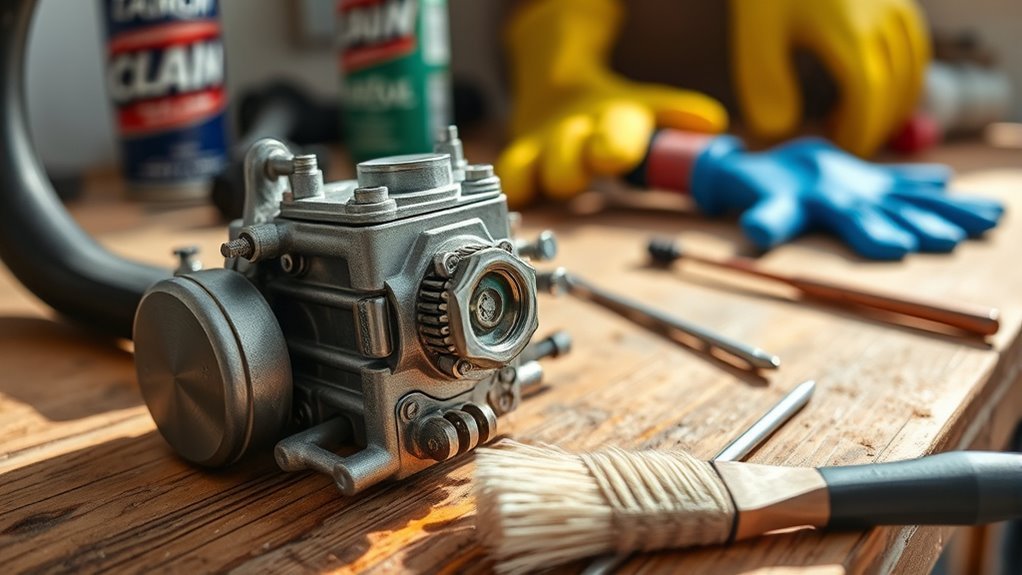
Before you can clean the carburetor, you’ll need to remove and disassemble it carefully. Start by disconnecting the spark plug wire, then remove the air filter cover and filter.
Begin by disconnecting the spark plug wire, then remove the air filter cover and filter before cleaning.
Loosen the mounting nuts or screws securing the carburetor to the engine, making sure not to damage the gaskets. Next, carefully disconnect the fuel line and throttle linkage, noting their positions to ensure proper reassembly.
Lay the carburetor on a clean surface and begin to disassemble carburetor parts like the diaphragm and metering needle. As you take it apart, organize small parts such as screws and springs in a container or tray to prevent losing them.
This careful approach helps you access and clean internal components effectively in the next step.
Clean the Carburetor Components Thoroughly
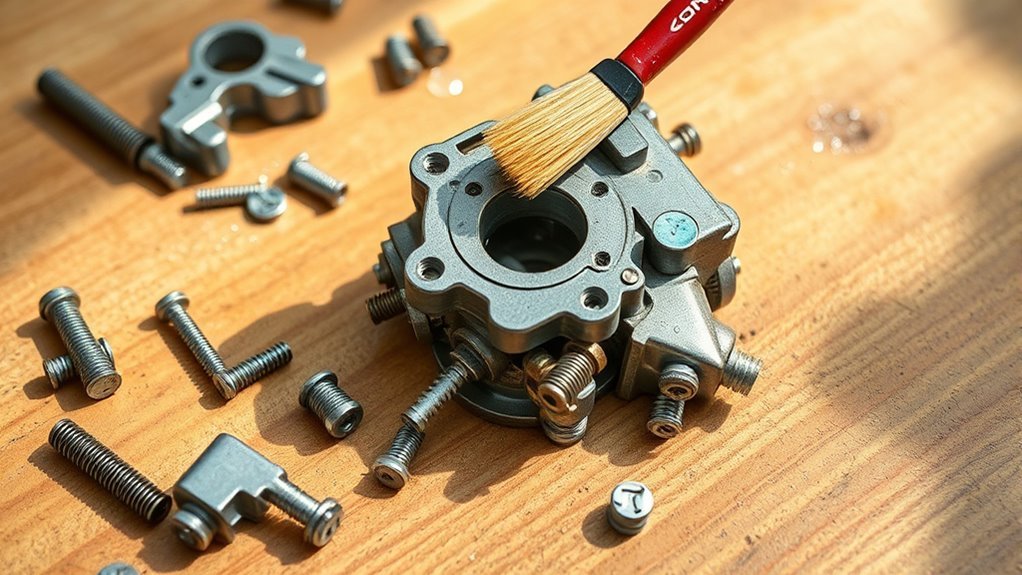
When you’ve disassembled the carburetor, soak all metal parts in a carburetor cleaner spray to dissolve varnish and debris effectively. Pay close attention to jets, diaphragms, and gaskets as you clean the carburetor components.
Use a soft brush or compressed air to gently remove stubborn dirt without harming delicate parts. For a deeper clean, consider ultrasonic cleaning with water and dish soap to reach tiny passages.
While cleaning, inspect and replace the air filter if it’s clogged, as it affects carburetor performance. Taking the time to thoroughly clean the carburetor components guarantees your chainsaw runs smoothly and efficiently.
Don’t rush this step! Thorough cleaning helps prevent buildup that could cause future carburetor problems. It’s definitely worth the extra effort.
Reassemble and Reinstall the Carburetor
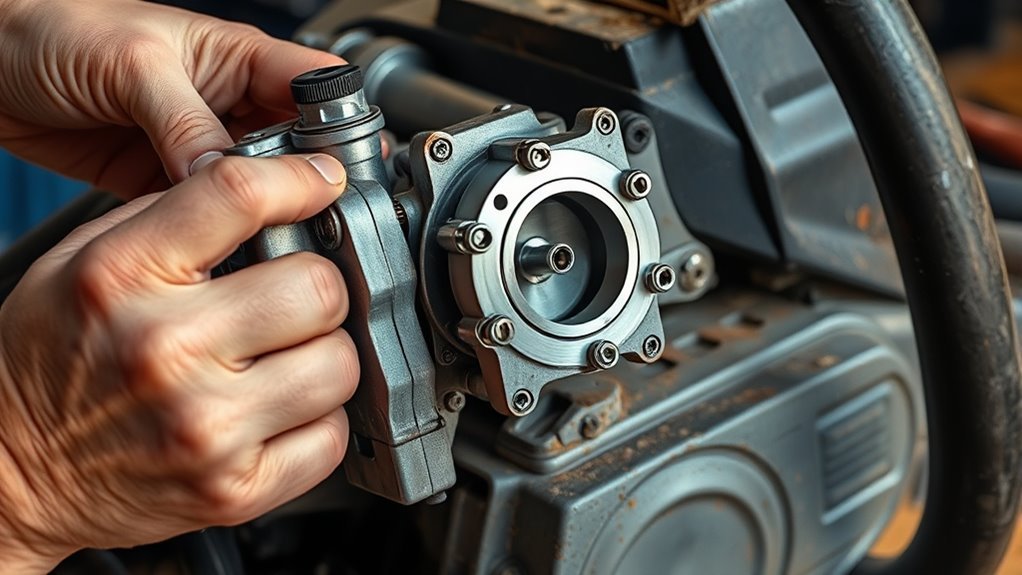
Although reassembling the carburetor requires focus, you can guarantee proper function by carefully aligning all internal parts like gaskets, diaphragms, and needles. Take your time to reassemble the carburetor precisely, ensuring every tiny component fits correctly.
Use a small tool or matchstick end to position delicate parts without damage. When reinstalling, follow these steps to secure everything properly:
- Reattach the carburetor to the chainsaw body
- Reconnect the throttle linkage and fuel lines
- Tighten all mounting nuts firmly
- Double-check screws and covers for tight seals
Once reassembled and secure, test your chainsaw to confirm smooth starting and performance. This careful approach prevents air leaks and guarantees your carburetor works efficiently.
Frequently Asked Questions
How to Clean Old Gas Out of a Chainsaw?
You’ll drain the old gas by tipping the chainsaw and pouring it into a container. Then, refill with fresh fuel mixed with stabilizer.
Run the saw briefly to get the fresh fuel moving through. If it still acts up, you might need to clean the carburetor to remove any buildup.
What Are the Symptoms of a Dirty Air Filter in a Chainsaw?
You’ll notice your chainsaw struggles to start and runs rich with black smoke. It might also lose power and idle poorly.
If it stalls under load or you see visible dirt on the filter, it’s definitely time to clean or replace it. Don’t wait too long—keeping that filter clean helps your chainsaw run smoothly.
How to Set a Chainsaw Carb?
Turn, tweak, test—set your chainsaw carb by adjusting idle, low, and high-speed screws carefully.
Use a tachometer, listen closely, and fine-tune incrementally to keep your engine humming smoothly without stalling or knocking.
It might take a bit of patience, but with each small adjustment, you’ll get closer to that perfect run.
Just keep an ear out for any changes, and don’t rush the process!
Can You Use Carb Cleaner on a Chainsaw Carburetor?
Yes, you can use carb cleaner on your chainsaw carburetor. Just make sure the engine’s off before you start.
Next, remove the spark plug and disassemble the carburetor carefully. Use a specialized spray designed for carburetors, and be gentle to avoid damaging any delicate parts.
It’s pretty straightforward, but taking your time will help keep everything in good shape.
Conclusion
Cleaning your chainsaw carb might seem intimidating, but it’s actually straightforward and quick. Instead of letting gunk slow you down, you’ll have your saw running smoothly in no time.
By carefully removing, cleaning, and reassembling the carburetor, you turn frustration into efficiency. Don’t let dirt dictate your work—take control with these simple steps.
Watch your chainsaw roar back to life, ready for action whenever you are. Keeping your chainsaw carb clean ensures optimal performance and extends the life of your tool. So, get ready to tackle your next project with confidence, knowing your chainsaw is in top shape!