How to Clean a Chainsaw Carburettor in 3 Easy Steps
To clean your chainsaw carburettor in three easy steps, start by carefully removing and disassembling it. Make sure to note each part’s position as you take it apart—that way, reassembly will be a breeze.
Next, give all the components a thorough cleaning. You can use ultrasonic cleaning or soda blasting to get jets and passages completely spotless. This step is key to keeping your chainsaw running smoothly.
Finally, inspect each part for wear and tear. Replace anything that looks worn out, then reassemble the carburettor correctly with proper lubrication. Doing this will restore smooth operation and help prolong your chainsaw’s life.
Keep exploring for more tips on maintenance and performance optimization to get the most out of your chainsaw!
Key Takeaways
- Remove the carburettor carefully, noting hose and linkage positions for accurate reassembly.
- Disassemble all parts gently, keeping track of jets, float, and needle valve placements.
- Clean components using ultrasonic cleaning and soda blasting to remove dirt and varnish.
- Inspect parts for damage or wear, replace gaskets or O-rings as needed before reassembly.
- Reassemble carefully, lubricate moving parts, verify float level, and reinstall carburettor properly.
Remove and Disassemble the Carburettor
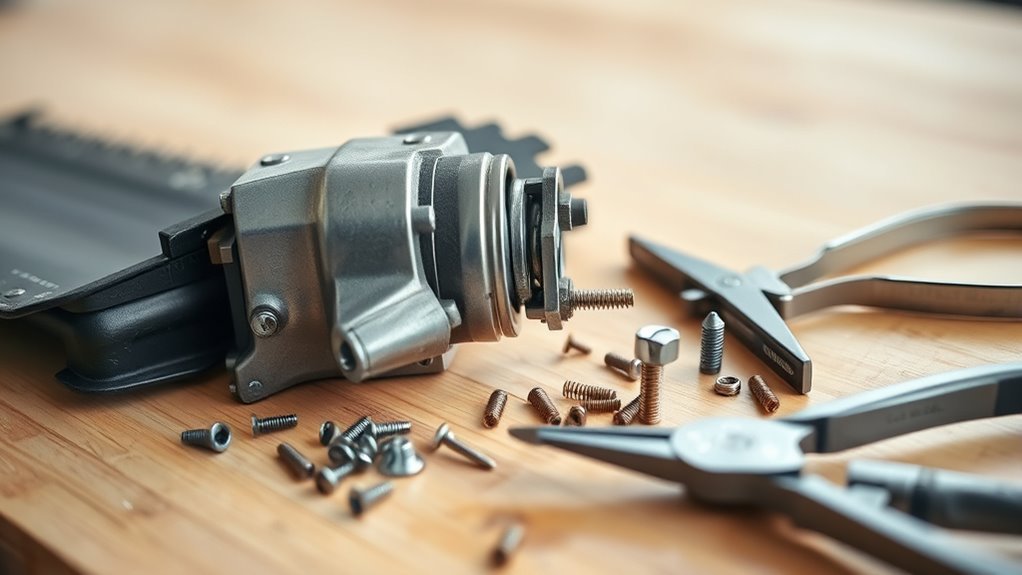
Before you begin cleaning, carefully remove the carburettor from your chainsaw, paying close attention to the position of hoses and linkages. Take photos or make notes to help you reassemble it correctly later.
Next, disassemble the carburettor by unscrewing the screws and removing small components like jets, the float, and needle valve. Use gentle tools such as small screwdrivers and pliers to avoid damaging delicate parts.
Carefully unscrew and remove jets, float, and needle valve using gentle tools to protect delicate parts.
As you disassemble, keep track of each piece’s placement to ensure proper reassembly. Inspect every part for wear, damage, or clogging, and consider replacing any worn components before proceeding.
Taking these careful steps will make the cleaning process smoother and help maintain your chainsaw’s performance. It’s worth spending the time now to save headaches later!
Thoroughly Clean All Carburettor Components
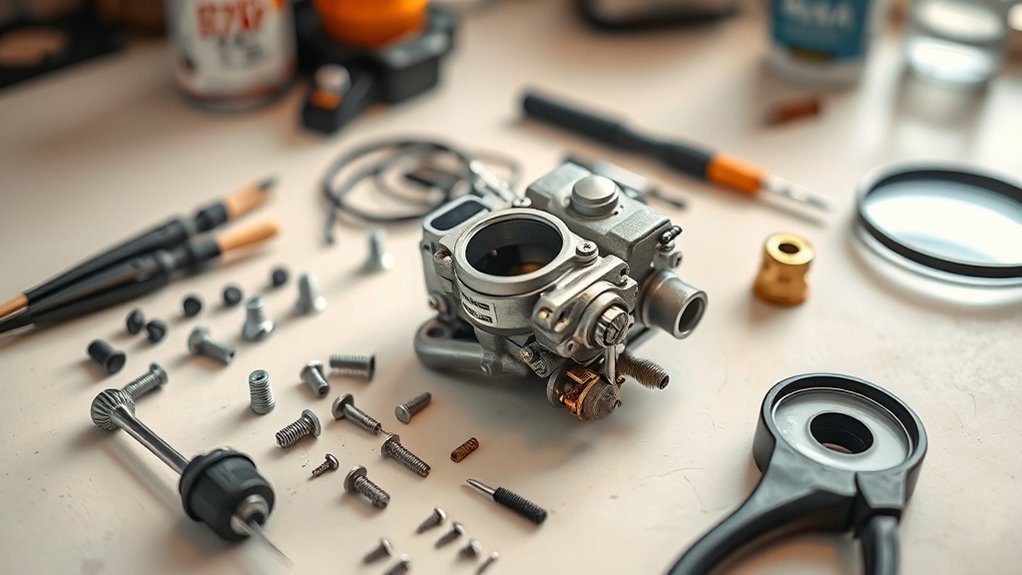
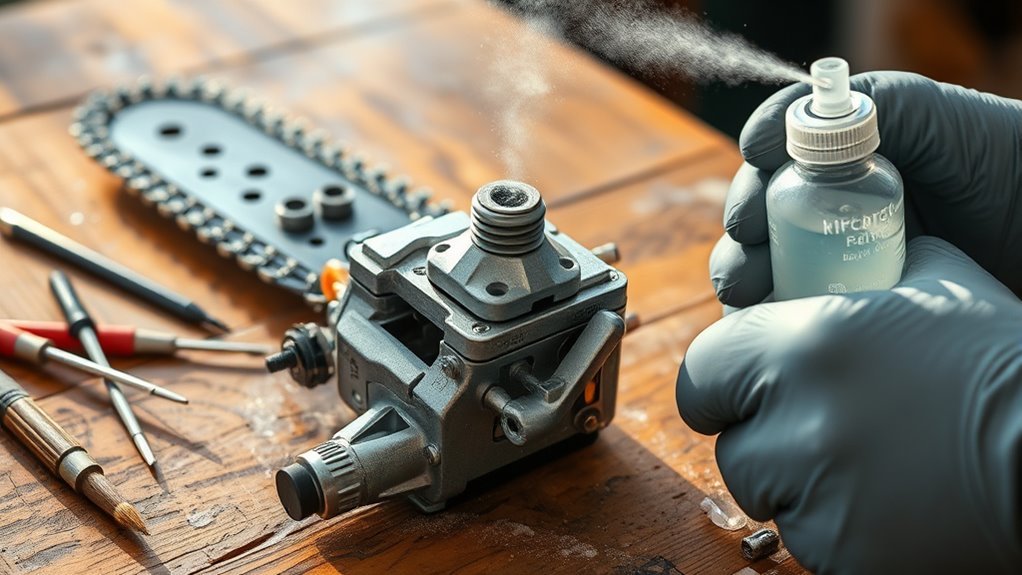
Once you’ve carefully taken the carburettor apart, you’ll want to clean every component thoroughly to remove varnish, dirt, and rust that can affect performance. Use ultrasonic cleaning with a suitable solution and heated water to break down stubborn residues on needles, jets, and gaskets.
Soda blasting works well to clean the exterior and internal passages, ensuring no debris or gunk remains. After cleaning, rinse all parts multiple times with water or run additional ultrasonic cycles to wash away any soda or solution leftovers.
Finally, dry each component completely using compressed air or a clean towel to prevent corrosion or damage. Proper cleaning of all carburettor components is essential for smooth operation and extending your chainsaw’s lifespan.
Inspect, Replace Parts, and Reassemble
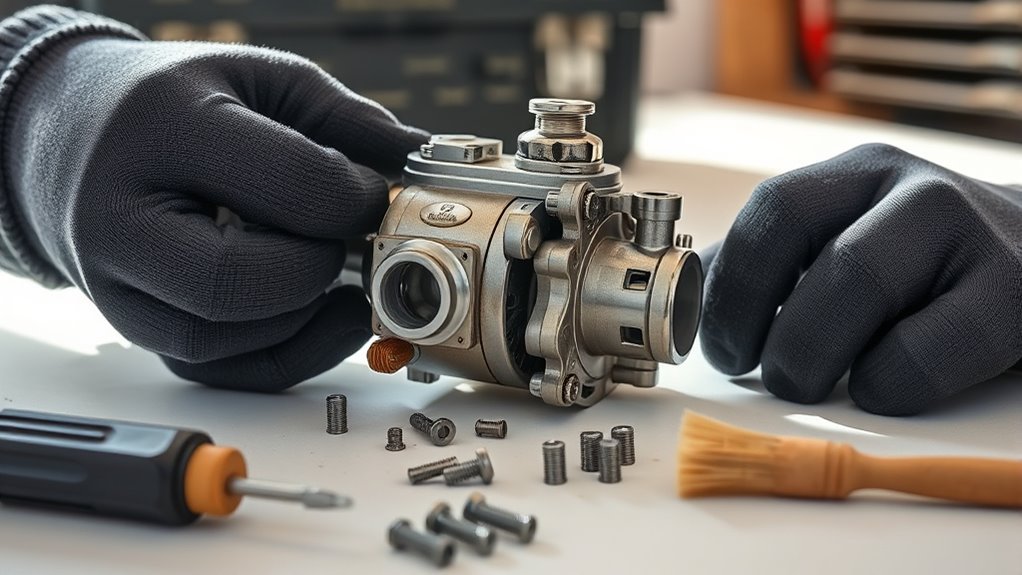
As you inspect each carburettor part, look closely for wear or damage and replace any gaskets, O-rings, or needles that show signs of deterioration.
Before you reassemble, guarantee all passages and jets are spotless. Apply a small amount of lubricant to moving parts for smooth operation.
Use the right tools to reassemble and tighten screws to spec. Double-check the float level and needle seat before reinstalling.
| Step | Action | Tip |
|---|---|---|
| Inspect | Check parts for damage | Focus on gaskets, O-rings |
| Replace parts | Swap worn components | Use OEM replacements |
| Clean | Clear jets and passages | Use compressed air |
| Reassemble | Tighten screws properly | Lubricate moving parts |
This method ensures your carburettor runs efficiently after cleaning.
Frequently Asked Questions
How to Clean Old Gas Out of a Chainsaw?
You’ll want to drain the old gas from the tank completely. Then, run the chainsaw until it stops to clear fuel from the carburetor.
After that, refill with fresh fuel and add stabilizer to prevent future clogs. This helps keep your chainsaw running smoothly!
How Do I Clean a Motorcycle Carburetor?
Think of your carburetor as your engine’s heart; you’ll remove it carefully. Then, clean every passage using ultrasonic or soda blasting.
After that, replace any worn parts. Finally, reassemble and adjust screws for smooth, life-giving fuel flow.
Can You Use Carb Cleaner on a Chainsaw Carburetor?
Yes, you can use carb cleaner on your chainsaw carburetor, but be careful. It works best on external parts and light deposits.
Avoid overuse, as it can damage rubber and plastic components inside the carburetor. So, just take it slow and make sure you’re targeting the right areas.
How to Set a Chainsaw Carb?
Picture tuning a guitar: start by adjusting the idle screw until your chainsaw hums smoothly.
Then, fine-tune the mixture and high-speed screws using a tachometer. This helps make sure your saw purrs perfectly without stalling or bogging.
Conclusion
Just like a finely tuned engine in a classic car, your chainsaw’s performance depends on a clean carburettor. By removing, cleaning, and carefully reassembling it, you’re giving your tool the care it deserves.
Don’t let grime be the “silent saboteur” of your cuts—maintain your carburettor regularly, and your chainsaw will run as smoothly as a well-rehearsed symphony.
Keep it clean, and you’ll always be ready to tackle any task. Regular carburettor cleaning not only boosts your chainsaw’s efficiency but also extends its lifespan. So, take a little time to clean your chainsaw carburettor, and enjoy smoother starts, better fuel economy, and reliable performance every time you fire it up.