How to Know When to Replace Your Chainsaw Bar
You should replace your chainsaw bar if you notice cracks, chips, or worn rails below 6mm depth. These signs can seriously affect your cutting performance and safety.
Also, check for bent or warped bars that cause crooked cuts or chain derailment. A bent bar can make your work frustrating and dangerous, so keep an eye out for that.
Inspect the nose sprocket and rivets for damage or looseness. If these parts are compromised, your chainsaw won’t run smoothly.
Watch for heat discoloration or blueing from overheating, which indicates excessive wear. If your chain keeps slipping or snagging despite proper tension, it’s a clear sign to swap the bar.
Keep going to uncover key tips for maintaining bar life and ensuring your chainsaw stays in top shape.
Key Takeaways
– Replace the bar if cracks, chips, or missing sections are visible on the rails or nose.
It’s important not to ignore these signs because they can affect the bar’s performance and safety.
– Change the bar when rail depth wears below 6-7mm or shows uneven wear.
Uneven wear can cause the chain to run poorly, so keeping an eye on this is key.
– Swap out the bar if the nose sprocket is damaged, loose, or has worn rivets.
A faulty sprocket can lead to chain derailment, which is both frustrating and dangerous.
– Replace the bar if it causes chain derailment, crooked cuts, or slipping despite proper tension.
If adjusting the tension doesn’t help, the bar might be the culprit.
– Change the bar if you notice blueing, heat discoloration, or bent and warped rails.
These signs usually mean the bar has been overheated or stressed, and it’s time for a replacement.
Identifying Visible Damage and Wear
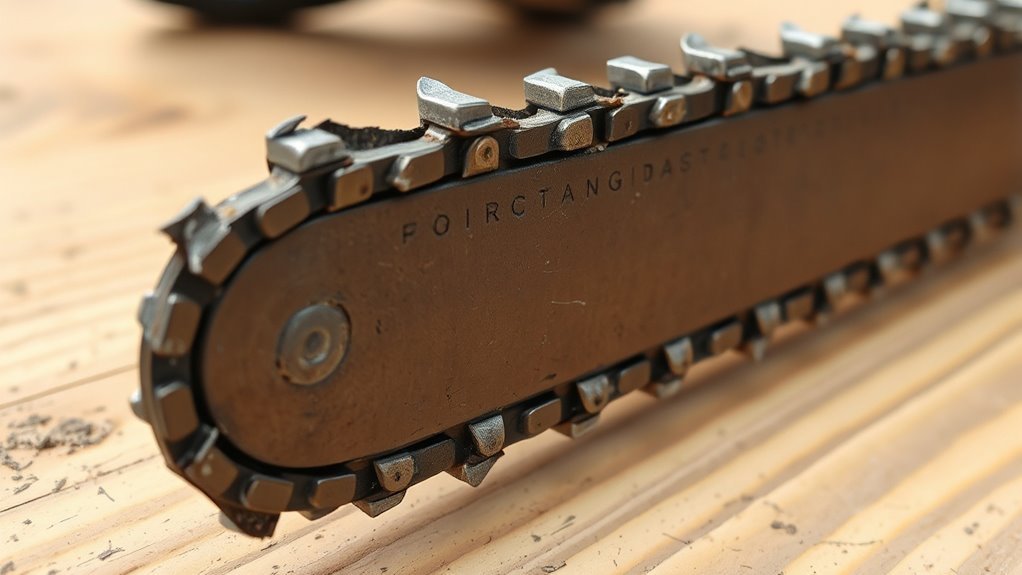
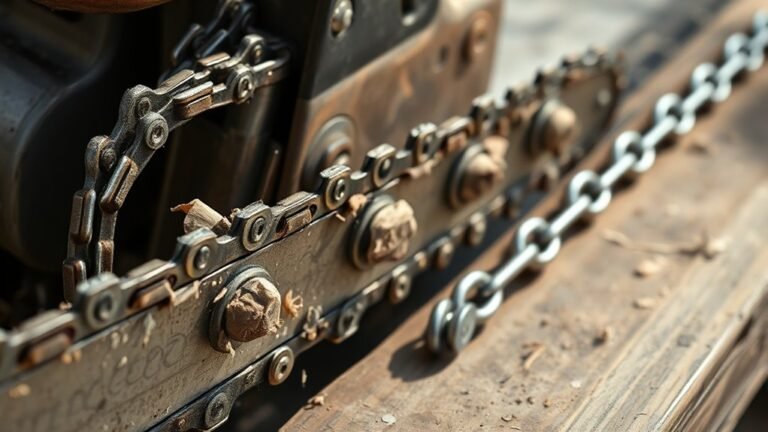
When you inspect your chainsaw bar, look closely for visible damage like cracks, chips, or missing sections—these signs mean you need to replace it immediately. Your guide bar is the backbone of your chainsaw, so any damage compromises safety and performance.
Check the wear indicators along the rails; if they’re worn below the minimum depth, typically 6-7mm, it’s time for a new bar. Also, examine the bar for blueing or discoloration from overheating, which weakens its integrity.
Worn or missing rivets, especially near the nose, indicate structural issues. Bent or warped bars cause crooked cuts and can’t always be straightened.
Identifying visible damage and wear early ensures your chainsaw works efficiently and safely every time you use it. So, keep an eye out and don’t hesitate to replace your bar when needed.
Measuring Rail Depth and Assessing Bar Straightness
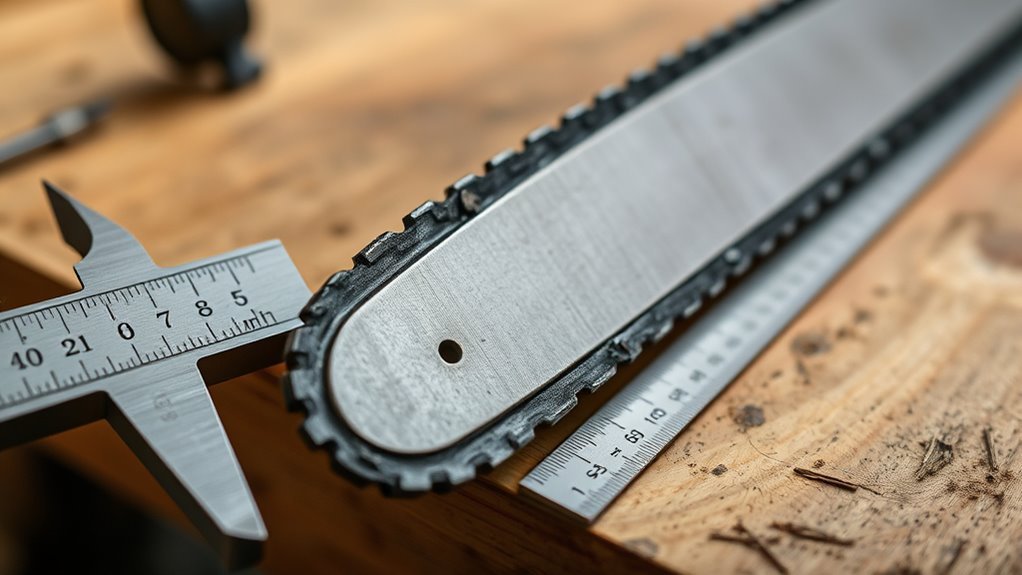
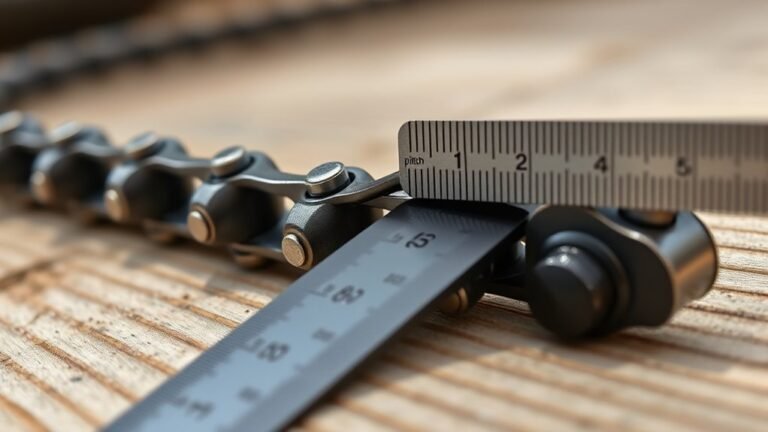
Although visible damage is easier to spot, measuring the rail depth and checking your chainsaw bar’s straightness are crucial steps to guarantee peak performance. Use a depth gauge or ruler to ensure the rail depth stays above the manufacturer’s minimum—typically around 6 mm for 325 bars.
Uneven wear is a red flag; compare both rails, and if one is noticeably lower, it’s time to consider replacement. To assess bar straightness, place a straight edge along the rails and look for any bowing or bending.
Key checks include:
- Measuring minimum rail depth along the entire bar length
- Comparing both rails for uneven wear
- Inspecting for bends or warping to confirm bar straightness
These steps help you catch issues before cutting efficiency declines. Taking a little extra time here can save you from bigger headaches down the road.
Inspecting the Nose Sprocket and Rivets
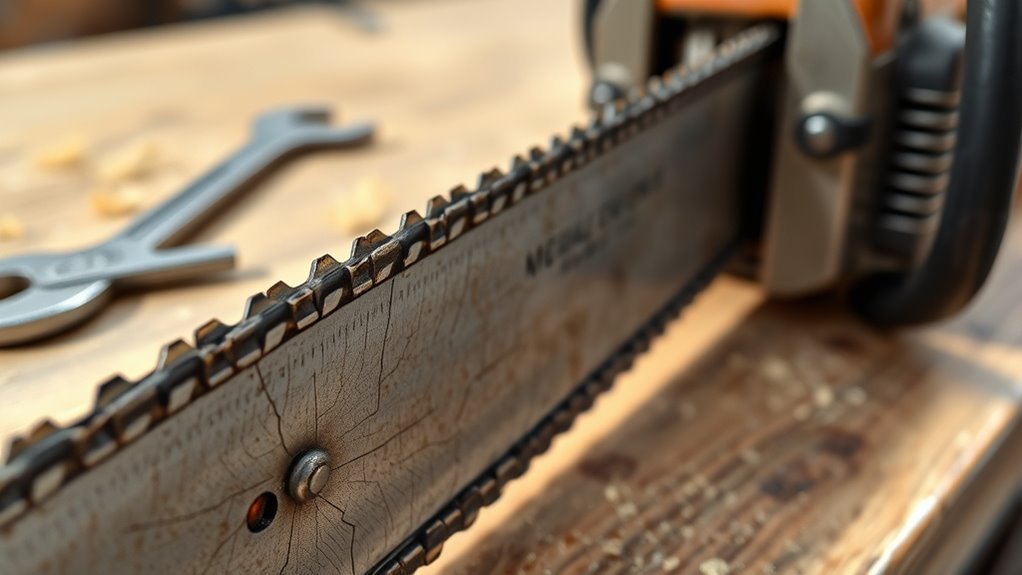
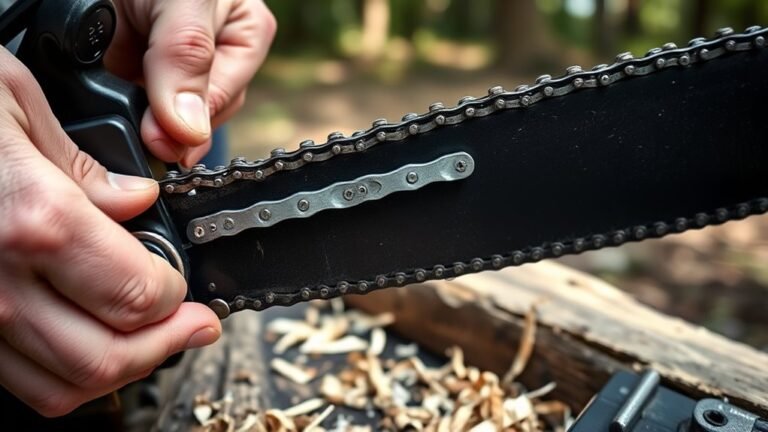
Since the nose sprocket and rivets play a crucial role in guiding the chain smoothly, you need to inspect them carefully for any signs of wear or damage. Check that the nose sprocket maintains at least 1/8 inch (8 mm) clearance from the chain to avoid contact.
Examine the rivets for looseness or if any are missing, as these issues can affect the chain guide’s effectiveness. Also, look for cracks or chips on the hard nose.
Repair or replace damaged rivets promptly to keep the chain running safely and prevent faster bar wear. Taking these steps will help your equipment last longer and work better.
| Component | What to Check |
|---|---|
| Nose Sprocket | Minimum 1/8 inch clearance from chain |
| Rivets | No looseness or missing rivets |
| Hard Nose | Free of cracks or chips |
| Chain Guide | Proper alignment and condition |
| Overall Integrity | No excessive wear or damage |
Recognizing Signs of Chain Derailment and Poor Performance
If your chainsaw chain frequently slips off or produces crooked cuts, you’re likely dealing with worn or damaged guide bar rails that need immediate attention. Chain derailment often stems from excessive rail wear, uneven surfaces, or rails worn below minimum depth, causing the chain to jump out during use.
Watch for these key signs: uneven or damaged guide bar rails with visible burrs, excessive heat discoloration or blueing on the rails, and chain catching or jumping from the bar groove despite proper tension.
Ignoring these symptoms can lead to poor cutting performance and increased safety risks. Regularly inspect your guide bar rails for wear and damage to spot issues early.
That way, you can decide if replacement is necessary to avoid chain derailment and maintain efficient cutting.
Maintenance Practices to Extend Bar Life
Noticing wear or damage on your guide bar signals the need for attentive maintenance to keep it in good condition. Start by regularly flipping the guide bar to promote even wear and extend its lifespan.
Always keep the bar groove clean, clearing out sawdust, debris, and metal buildup to prevent uneven wear and damage. Periodically measure the rail depth; if it falls below the manufacturer’s minimum, replacement is necessary to ensure safe operation.
Watch for signs like blueing, burrs, chips, or uneven rails—they indicate your bar may need replacing soon. Finally, avoid cutting into dirt, rocks, or nails, as these accelerate wear.
Consistent guide bar upkeep helps you get the most out of your chainsaw bar and keeps your cutting efficient. Taking these simple steps really makes a difference!
Frequently Asked Questions
How Do I Tell if My Chainsaw Chain Needs Replacing?
You’ll know your chainsaw chain needs replacing when sharpening no longer improves cutting. It might start producing sawdust instead of chips, which is a clear sign something’s off.
Also, if the chain feels harder to push or has broken or loose links, it’s time to take a closer look. Don’t forget to check if it stretches beyond the recommended tension—that’s another red flag.
Why Do Loggers Run Chainsaw Bars Upside Down?
Think of your chainsaw bar like a spinning coin—loggers flip it upside down to balance wear evenly on both sides. You’ll reduce buildup, spot damage sooner, and stretch the bar’s life like turning a well-loved page.
Flipping the bar helps keep everything running smoother. It’s a simple trick that saves time and money in the long run. Plus, it just makes sense to use your gear evenly, right?
Is It Okay to Put WD-40 on a Chainsaw Chain?
You shouldn’t use WD-40 on your chainsaw chain. It’s not designed for lubrication, which is what your chain really needs.
Plus, WD-40 can actually remove the proper oil that’s supposed to protect your chain. This can lead to increased wear and overheating.
How Are Chainsaw Bars Measured?
You measure chainsaw bars by running a tape from the tip to the mounting point. For double-ended bars, measure the entire length.
Always measure along the centerline and round to the nearest inch for accuracy. It’s a simple way to make sure you get the right size every time.
Conclusion
Knowing when to replace your chainsaw bar keeps your tool running safely and efficiently. Did you know that worn bars can reduce cutting performance by up to 30%? By regularly checking for visible damage, measuring rail depth, and inspecting the nose sprocket, you’ll spot issues early.
Don’t ignore signs like chain derailment or poor cutting. These problems often mean your chainsaw bar needs attention. With proper maintenance, you can extend your bar’s life—but when wear catches up, it’s time to replace it.
Replacing your chainsaw bar at the right time is key to maintaining safety and efficiency. Keeping an eye out for wear and tear not only boosts performance but also prevents accidents. So, stay proactive—inspect your chainsaw bar regularly and replace it when necessary to keep your tool cutting smoothly and safely.