What Size Chainsaw Do I Need?
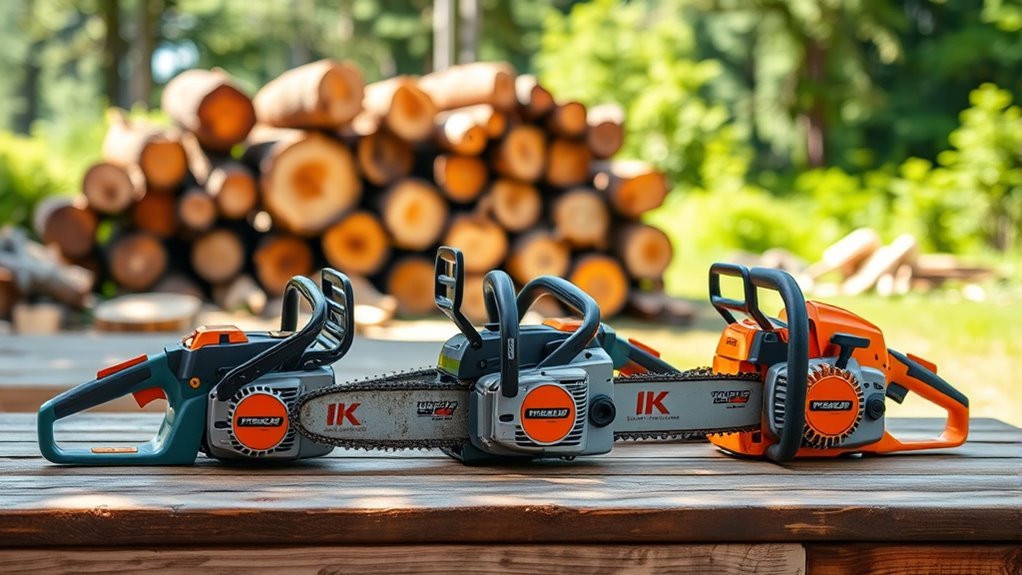
You’ll want a chainsaw with a bar at least two inches longer than the diameter of the wood you’re cutting for safety and ease. Smaller bars (10-14 inches) work best for pruning and light yard work. Meanwhile, 16-20 inch bars suit medium to large firewood tasks perfectly.
Choosing the right size chainsaw is key to making your cutting efficient and safe. For power and heavy-duty work, gas chainsaws are the go-to option. On the other hand, electric or battery models are great for lighter, quieter jobs around the yard.
Remember, there’s more to consider than just size and power. Your specific cutting needs, comfort, and budget all play a part in picking the perfect chainsaw.
So, take your time and choose wisely!
Key Takeaways
- Choose a bar length at least two inches longer than the wood diameter for safe, efficient cutting. This helps you avoid getting stuck or damaging the wood.
- Short bars (10-14 inches) are great for pruning, limbing, and small yard tasks. They’re easy to handle and perfect for lighter work.
- Medium bars (16-18 inches) work well for small tree cutting and firewood preparation. They give you a bit more reach without being too heavy.
- Long bars (16-20+ inches) are ideal for larger logs and heavy-duty firewood cutting. If you have big jobs, these bars can handle the tough stuff.
- Match the power source and bar size to your task. Gas chainsaws are great for heavy work, while electric or battery-powered ones are better for lighter, portable jobs.
Understanding Chainsaw Sizes and Bar Length
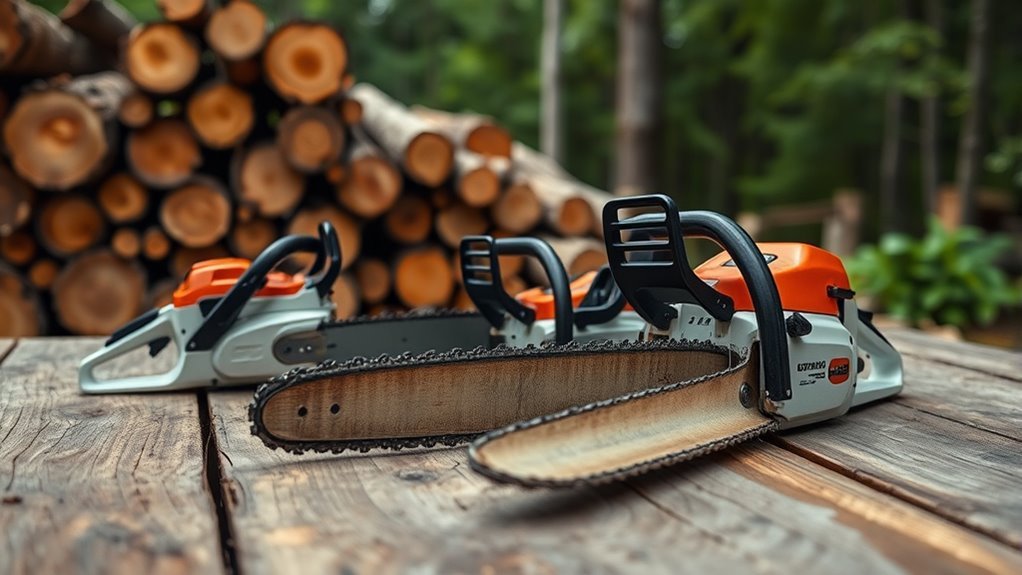
When choosing a chainsaw, you need to take into account its guide bar length, as it directly affects cutting performance. Chainsaws come with different bar lengths, and selecting the right one is vital for tasks like cutting logs or firewood cutting.
Generally, longer bars—between 16 and 20 inches—handle larger logs and bigger trees better, while shorter bars, around 10 to 14 inches, suit pruning and smaller jobs. You should pick a bar length at least two inches longer than the diameter of the wood you’re cutting for safer, more efficient work.
Keep in mind that using a bar length longer than necessary can make maneuvering harder and increase kickback risk, especially if you’re not experienced with chainsaws. So, it’s best to choose the right size for your specific needs to stay safe and get the job done right.
Factors Influencing the Choice of Chainsaw Size
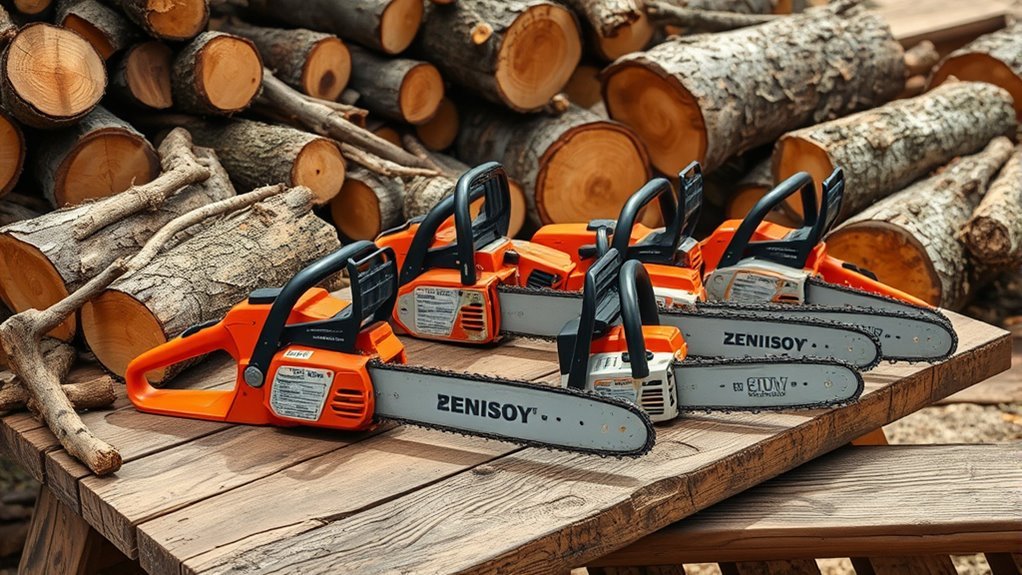
Although selecting the right chainsaw size might seem straightforward, several key factors influence your choice. You need to take into account the diameter of wood, task type, engine power, guide bar length, and your user experience.
Matching the guide bar length to the wood diameter ensures efficient cutting. Engine power affects how large a bar you can handle. Your experience level guides the safest and most manageable size.
| Factor | Consideration |
|---|---|
| Diameter of Wood | Bar length should exceed wood size |
| Task Type | Light pruning vs. heavy felling |
| Engine Power | Higher cc for longer bars |
| User Experience | Beginners need lighter, smaller saws |
Choosing wisely balances performance, safety, and ease of use. It really comes down to finding that sweet spot that works best for you.
Recommendations for Small-Scale and Home Use Tasks
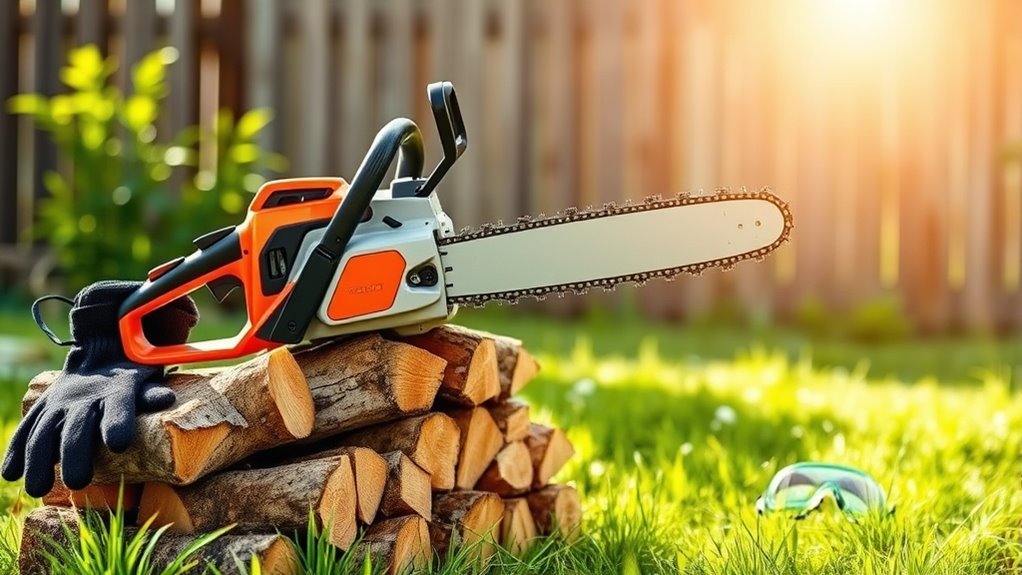
Since small-scale and home use tasks demand ease and control, choosing a chainsaw with a 10-18 inch guide bar suits pruning, limbing, and yard cleanup perfectly.
This chainsaw guide helps you pick the right Bar Length for various cutting tasks around your property. For effective and safe operation, consider:
- A 10-14 inch bar length for pruning and limbing, offering lightweight maneuverability.
- A 14-inch gas chainsaw for beginners, balancing power and ease of use.
- A 16-18 inch bar length for cutting small trees and preparing firewood.
- Battery-powered models for light-duty, occasional cutting tasks.
Matching your chainsaw’s bar length to the wood diameter guarantees comfort and efficiency in all your small-scale and home use projects. It really makes a difference when you have the right size in hand!
Guidance for Medium to Large-Scale Tasks and Power Sources
When tackling medium to large-scale firewood cutting, you’ll want a chainsaw with a 16-20 inch bar for the best balance of power and control.
Gas chainsaws with 60cc to 70cc engines handle bigger logs efficiently, while electric models suit lighter tasks and offer easier maneuverability.
Choosing the right power source and bar size depends on the wood size and how comfortable you are with the saw. It’s all about matching the tool to the job so you get the best results without overdoing it.
Firewood Cutting Bar Sizes
Choosing the right chainsaw bar size for firewood cutting depends largely on the diameter of the logs and the scale of your task. Your bar size selection should correspond to the chainsaw length needed to handle the logs efficiently without overworking the saw.
Here’s a quick guide for firewood cutting:
- Use 16-20 inch guide bar sizes for logs up to 16 inches in diameter.
- Opt for 20-24 inch bars when cutting larger logs up to 30 inches.
Medium to large tasks often require higher chainsaw power found in gas models with bars 20 inches or longer. Electric chainsaws with 14-18 inch bars suit medium tasks, offering lighter handling and quieter operation.
Matching chainsaw power and bar size ensures efficient, safe cuts for your firewood needs. It just makes the whole job easier and safer.
Gas Vs Electric Chainsaws
Although electric chainsaws offer quieter operation and easier maintenance, gas chainsaws deliver the power and runtime necessary for medium to large-scale tasks. If your cutting tasks demand higher horsepower and longer runtimes, a gas chainsaw is your best bet.
These models typically handle larger bar lengths—20 inches or more—providing superior performance on extensive projects like land clearing or heavy forestry work. Electric chainsaws, especially battery-powered ones, are great for lighter to medium jobs, but their bar length usually maxes out around 14 to 18 inches, which can limit their effectiveness for bigger tasks.
When deciding, consider the power you need and how long you’ll work without interruptions. For sustained, demanding cutting tasks, the gas chainsaw’s power and bar length make it the preferred tool.
Handling Medium-Large Tasks
If you’re tackling medium to large-scale tasks like firewood cutting or land clearing, selecting the right chainsaw size and power source makes all the difference.
For these jobs, consider chainsaws with a bar length of 16-20 inches. They offer the reach needed for cutting firewood and felling large trees.
Gas chainsaws with 60cc or higher engines provide the power to handle bigger logs and extended work sessions efficiently.
Longer bars (20 inches or more) let you make deeper cuts but require good control to work safely.
Electric models with 14-18 inch bars suit lighter outdoor tasks but may struggle with very large trees.
Choosing the right chainsaw size and power source ensures you work safely, efficiently, and with less fatigue on medium-large tasks.
Maintenance and Safety Considerations for Chainsaw Use
To keep your chainsaw running smoothly and safely, you need to regularly inspect and sharpen the chain, wear proper safety gear, and maintain all safety features like chain brakes and throttle locks. Regular chain maintenance reduces kickback risks and keeps cutting efficient.
Always wear goggles, gloves, ear protection, and sturdy boots to protect yourself during operation. These items really make a difference when you’re out in the field.
Goggles, gloves, ear protection, and sturdy boots are essential for safe, effective chainsaw operation in the field.
Keep the bar oil topped up and clean the bar groove and sprocket to prevent overheating and ensure smooth cutting. It might seem like a small detail, but it helps your chainsaw last longer.
Check chain brakes and throttle locks often to ensure they function properly, as they’re critical safety components. You definitely don’t want to skip this step.
Finally, follow the manufacturer’s guidelines for proper handling, starting, and refueling to avoid accidents and extend your chainsaw’s lifespan. Staying diligent with maintenance and safety gear makes your work safer and your chainsaw more reliable.
Comparing Gas and Electric Chainsaws for Different Needs
When choosing between gas and electric chainsaws, consider how much power and performance you need for your tasks. You’ll also want to think about portability and noise levels, especially if you’re working in a residential area.
Finally, compare maintenance requirements and operating costs to find the best fit for your needs. It really helps to weigh these factors based on what you plan to do with the saw. That way, you can pick the one that suits you best.
Power and Performance Differences
Although gas chainsaws pack more power with engine sizes ranging from 50cc to 120cc, electric chainsaws offer quieter, cleaner operation that suits lighter tasks. When deciding on power and performance, consider these factors:
Gas chainsaws deliver superior cutting power, making them ideal for large logs and heavy-duty work. On the other hand, electric models provide consistent performance with instant startup, perfect for medium and light cutting jobs.
Size and engine displacement directly impact how much you can accomplish. Bigger engines mean more power but also more maintenance.
Battery-powered saws offer portability but may limit runtime, while corded electric saws depend on nearby power sources. So, think about where and how long you’ll be working.
Understanding these differences helps you match your chainsaw’s power and performance to the tasks you face. That way, you get the right tool for the job every time.
Portability and Noise Levels
Since noise levels and portability greatly affect your chainsaw experience, choosing between gas and electric models depends on where and how you plan to work. Electric chainsaws offer quiet operation, usually between 70-85 decibels, making them perfect for noise-sensitive areas.
Battery-powered options boost portability thanks to their lightweight, cordless design. Gas chainsaws, while powerful, are heavier and louder, often hitting 100-115 decibels, which can limit use in residential zones.
| Feature | Gas Chainsaw |
|---|---|
| Noise Levels | 100-115 dB |
| Portability | Heavier, needs fuel |
| Operation | Requires fuel mix |
| Start-up | Pull cord |
| Best Use | Heavy-duty, remote |
Electric chainsaws provide easier handling and quieter work for everyday tasks. They’re a great choice if you want something simple and less noisy around the house.
Maintenance and Operating Costs
Considering your budget and time, maintenance and operating costs play a crucial role in choosing between gas and electric chainsaws. Gas models usually have higher maintenance costs due to fuel consumption, oil changes, spark plug replacements, and frequent servicing.
Electric chainsaws, on the other hand, require minimal chainsaw upkeep, cutting down on long-term costs. Here’s what to evaluate:
- Gas chainsaws have higher operating expenses but excel in heavy-duty, long-duration tasks.
- Electric chainsaws eliminate fuel costs and have fewer parts prone to wear.
- Battery-powered saws offer convenience but come with a higher initial investment.
- Electric models often have a lower total cost of ownership for light or occasional use.
Weighing these factors helps you pick the right saw that fits your needs and budget. It’s all about what works best for you and your projects!
Frequently Asked Questions
How Big of a Tree Will a 20 Inch Chainsaw Cut?
With a 20-inch chainsaw, you can cut trees up to about 36 inches in diameter with a single cut.
For larger trees, you’ll want a longer bar or make multiple cuts for safety and efficiency.
It’s all about making sure you’re working smart and staying safe out there.
Do I Need a 16 or 18 Chainsaw?
You’ll want an 18-inch chainsaw if you regularly cut trees over 30 inches in diameter. It offers better leverage and efficiency, making those bigger jobs easier.
For lighter, occasional tasks, a 16-inch chainsaw is perfectly sufficient. Plus, it’s easier to handle and won’t tire you out as quickly.
Should I Get a 14 or 16 Inch Chainsaw?
You should get a 16-inch chainsaw if you want versatility for firewood and medium trees. It’s a great all-rounder for most tasks.
Choose a 14-inch if you mostly handle light jobs and smaller branches. It’s easier to manage and lighter to carry.
Pick what feels easier to handle for you personally. Comfort and control matter a lot when using a chainsaw.
Should I Get a 20 Inch or 24 Inch Chainsaw?
You’ll want a 20-inch chainsaw if you’re cutting logs up to 16 inches easily. It’s perfect for most everyday tasks and won’t tire you out too quickly.
Go for a 24-inch only if you regularly tackle bigger trees. Just be ready for the added weight and extra effort it takes to handle. It’s a bit more work, but worth it for the bigger jobs.
Conclusion
Choosing the right chainsaw is like picking the perfect key—it opens your project’s potential without overwhelming you. If you’re trimming small branches, a compact saw fits like a glove.
For bigger jobs, you’ll need more power and reach. Remember, just as a key that’s too big or small won’t open a door, the wrong chainsaw size can slow you down or be unsafe.
Choose wisely, and you’ll cut through tasks smoothly every time. Picking the right chainsaw size is essential for efficiency and safety. Whether you’re handling light pruning or heavy-duty cutting, the proper chainsaw ensures your work is done quickly and securely. So, match the chainsaw size to your specific needs and enjoy hassle-free, effective cutting every time.