How to Identify the Pitch on a Chainsaw Chain
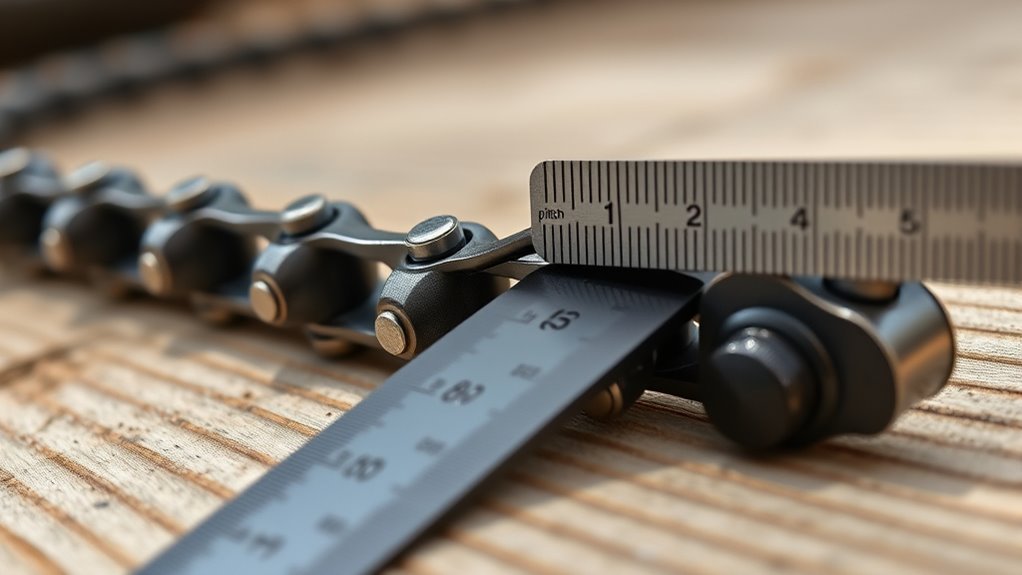
To identify the pitch on your chainsaw chain, start by measuring the distance between three consecutive rivets. Use a caliper or a ruler to get an accurate measurement.
Then, divide that number by two. This calculation gives you the chain pitch, which is crucial for matching your chain with the right sprocket and guide bar.
Knowing the pitch ensures your chainsaw runs smoothly and safely.
Common chain pitch sizes include 3/8 inch and .325 inch, so double-check your measurement against these standards.
Keep following along to learn how the pitch affects your saw’s performance and safety. It’s easier than you think!
Key Takeaways
- Measure the distance from the center of the first rivet to the center of the third rivet on the chain.
- Then, divide that distance by two to get the chain pitch size in inches.
- It’s best to use calipers or a ruler for a more accurate measurement from center to center of the rivets.
- Once you have the number, compare it with common pitch sizes like 3/8, .325, or .404 inches to identify the chain.
- You can also double-check the pitch by looking for markings on the chain itself, or by matching it with the specifications on the guide bar.
Understanding Chainsaw Chain Pitch
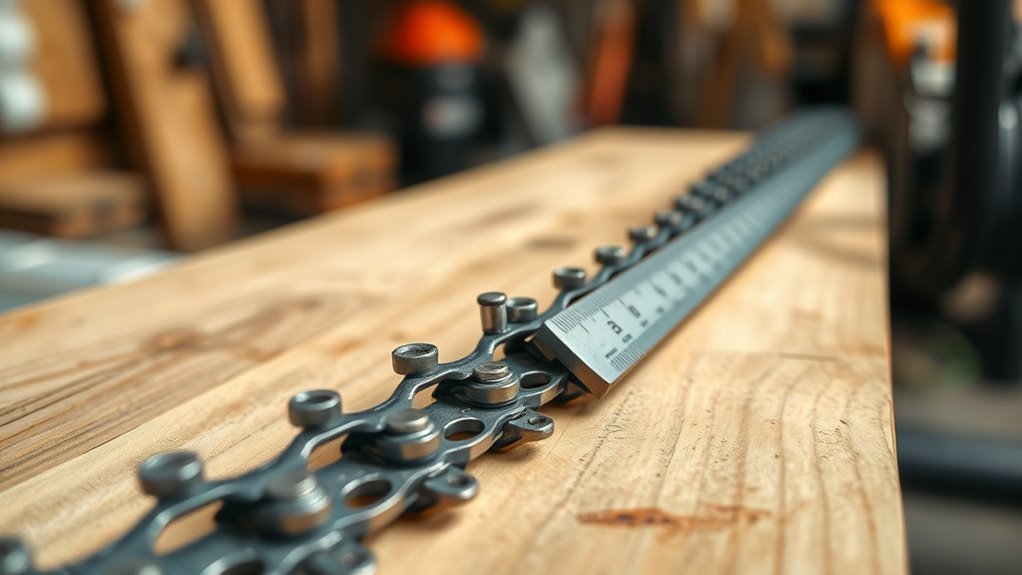
To identify your chainsaw’s chain pitch, start by measuring the distance between rivets on the chain. Chain pitch is calculated by measuring from the center of one rivet to the center of the third rivet and dividing that distance by two.
This measurement determines the spacing between drive links, which is essential for matching sprocket size and guide bar compatibility. Common pitch sizes include 3/8 low profile, .325 inches, 3/8 inches, and .404 inches.
You might find markings on the chain, guide bar, or sprocket indicating the pitch size. But if not, a manual measurement guarantees a correct fit.
Look for pitch size markings or measure manually to ensure your chainsaw chain fits perfectly.
Knowing the drive link count alongside pitch size helps confirm the right chain for your saw. This avoids improper operation and keeps things safe.
Tools Needed to Measure Chain Pitch
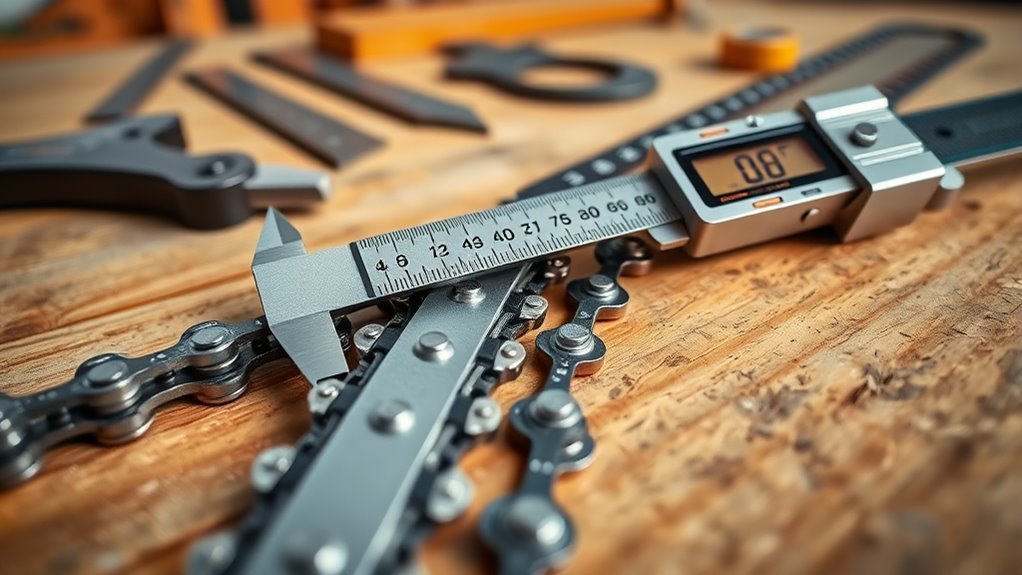
When you need an accurate chain pitch measurement, having the right tools makes all the difference. Start with a caliper or a ruler marked in millimeters or inches to measure rivet spacing precisely.
A digital caliper is ideal for measurement accuracy. It allows you to measure the distance between the center of one rivet and the center of the third rivet without any guesswork.
This distance, divided by two, gives you the chain pitch in inches or millimeters. Alongside these tools, a chain gauge can help verify the chain size.
Finally, always cross-check your measurements with a chain size chart or manufacturer specifications. This guarantees the chain pitch matches the correct chain size.
Proper tools make sure you identify the right pitch quickly and accurately. It really does make the whole process easier!
Step-by-Step Method to Measure Chain Pitch
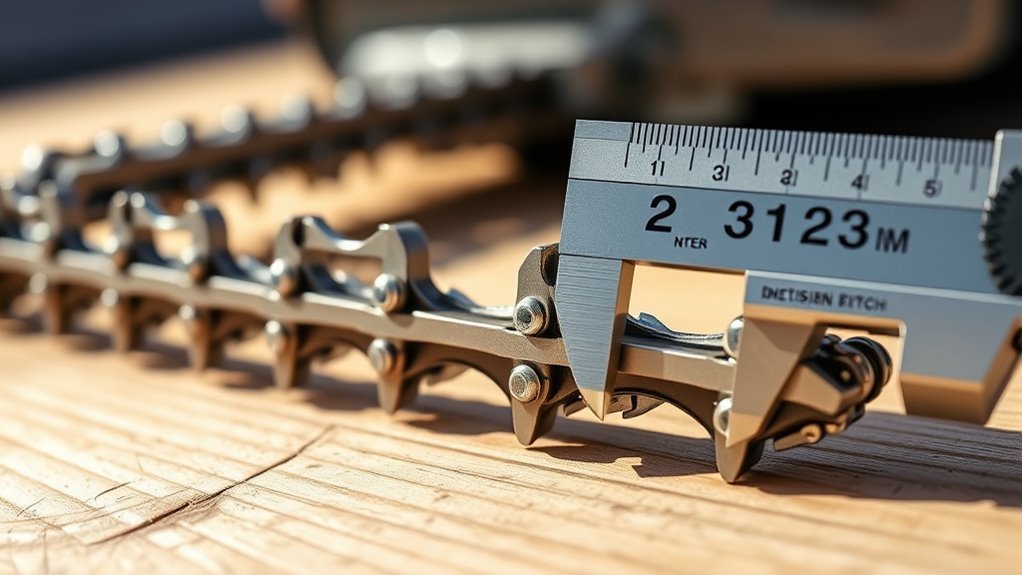
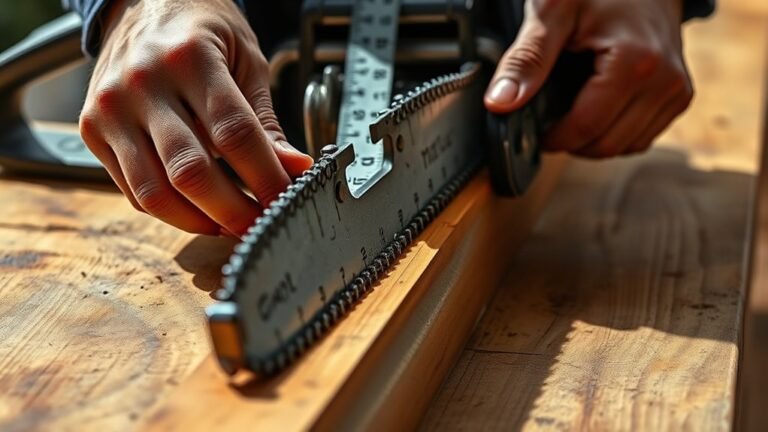
Although measuring chain pitch might seem tricky at first, you can do it accurately by following a simple process. First, locate three consecutive rivets on your chainsaw chain. Use calipers or a ruler to measure the center-to-center distance between the first and third rivets.
Measure the center-to-center distance of three consecutive rivets to accurately find your chainsaw chain pitch.
This rivet spacing is vital for correct chain measurement. Next, divide that distance by two to identify chain pitch. For example, if the distance is 1.5 inches, your chain pitch is 0.75 inches.
Using calipers helps guarantee precision, especially if the chain is worn or rivet spacing is tight. Finally, compare your measurement against standard chain sizes or manufacturer specs to confirm the exact chain pitch.
This step-by-step method ensures you accurately measure chain pitch every time.
Interpreting Chain Pitch Measurements
How do you interpret the chain pitch measurement once you’ve got it? Start by ensuring you measured pitch correctly—mark one drive link, then measure the distance from rivet center to rivet center across three consecutive rivets and divide by two. This gives the chain pitch in inches, often converted to decimal inches for accuracy.
Next, compare this pitch size to any markings on the chain or guide bar, if available. If markings are missing, rely on your measurement method to determine the pitch.
Knowing the exact chain pitch is essential for matching sprocket compatibility and ensuring the chain fits the guide bar properly. Remember, accurate interpretation of the pitch size helps you select the right chain and maintain safe, efficient chainsaw operation.
Common Pitch Sizes and Compatibility
Which chain pitch size suits your chainsaw best? Common pitch sizes include 3/8 Low Profile (.375 inches), .325 inches, 3/8 inches, and .404 inches.
Matching the chain pitch to your sprocket and guide bar is vital for safe, efficient cutting. You can find chain markings on the drive links, sprocket, or guide bar. Or, you can confirm with pitch measurement by dividing the distance from the first to the third rivet by two.
Here are key points to guarantee compatibility:
- Verify pitch sizes align with your sprocket and guide bar match.
- Check gauge size and drive links for proper fit.
- Use correct chain sizes to prevent damage and unsafe operation.
Proper sprocket compatibility and guide bar match rely on accurate pitch measurement and chain markings. So, always double-check before you start cutting!
Frequently Asked Questions
What Is the Difference Between a 3/8″ and a .325 Pitch Chain?
The 3/8″ pitch chain has larger spacing between rivets, offering more power for heavy cutting.
The .325 pitch chain is smaller, suited for lighter tasks. You can’t interchange them due to different sprocket compatibility.
Can I Use a .043 Chain on a .050 Bar?
You shouldn’t use a .043 chain on a .050 bar because the thinner chain won’t fit properly in the wider groove. This mismatch can cause wear, poor performance, and potential safety hazards.
Always match chain gauge to bar. It’s really important to keep them compatible to ensure your saw runs smoothly and safely.
What Is the Pitch Measurement on a Chainsaw Chain?
The pitch measurement on a chainsaw chain is the distance between three consecutive rivets divided by two.
You’ll usually see common pitches like 3/8 inch, .325 inch, or .404 inch. It all depends on your chain size.
What Are the Drive Links on a Chainsaw?
Imagine a knight’s chainmail—drive links are the metal tabs connecting your chainsaw’s chain to the sprocket and guide bar.
You’ll count them around the loop to guarantee your chain fits perfectly and runs smoothly. It’s like making sure all the pieces click together just right.
Conclusion
Now that you know how to identify the pitch on your chainsaw chain, measuring it becomes a walk in the park. With the right tools and clear steps, you’ll avoid any guesswork and keep your saw running smoothly.
Remember, matching the pitch correctly guarantees your chainsaw performs at its best—no cutting corners here. Stay sharp, and you’ll always hit the nail on the head when it comes to chain maintenance.
Properly identifying and measuring the pitch on a chainsaw chain is essential for safe and efficient operation. It ensures you select the right replacement chain and maintain optimal cutting performance. So, take your time, follow the steps carefully, and keep your chainsaw in top condition. This way, you’ll enjoy a hassle-free cutting experience every time.