How to Choose the Right File Size for a 3/8 Chainsaw Chain
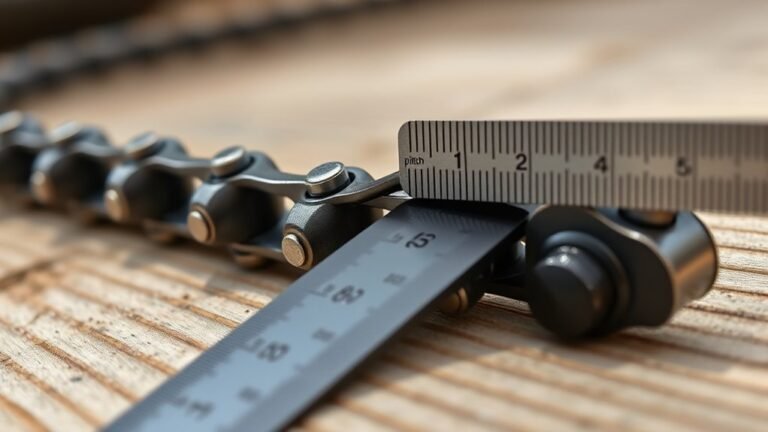
To choose the right file size for your 3/8 chainsaw chain, start by identifying the chain pitch. You can do this by measuring the distance between rivets or checking the chain markings. This step is crucial because the pitch determines the file size you’ll need.
Next, measure the drive link thickness, also known as the gauge, using a precise tool. This ensures the file you pick fits perfectly.
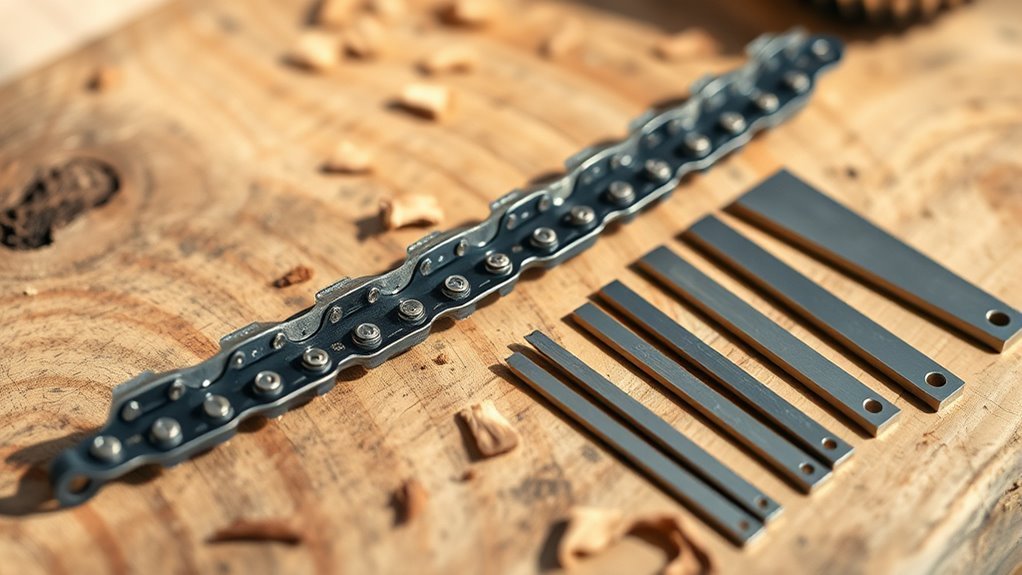
Most 3/8 chainsaw chains typically use a 7/32-inch round file, but some low-profile chains require smaller sizes. Using the correct file size is key to maintaining sharpness and overall chainsaw performance.
Getting this right might seem a bit tricky at first, but it’s worth it. Keep reading to learn more about sharpening techniques and the different types of files that can help you get the best results.
Key Takeaways
- Verify the chain pitch is 3/8 inch by measuring rivet spacing or checking chain markings before selecting a file size. It’s a simple step but super important to get right.
- Use a gauge tool to measure the drive link thickness (gauge) to determine the correct file diameter for sharpening. This helps make sure you don’t damage the chain.
- Most 3/8 chains require a 7/32-inch round file, but low-profile or micro chains may need 5/32-inch or 3/16-inch files. So, don’t just assume—double-check what your chain needs.
- Consult the manufacturer’s guidelines or manuals to confirm the recommended file size for your specific chain model. They usually have the best advice tailored for your chain.
- Choose the correct file size to maintain cutter geometry, ensure efficient cutting, and extend the chain’s lifespan and performance. Using the right file makes all the difference in how well your chainsaw works.
Understanding 3/8 Chainsaw Chain Specifications
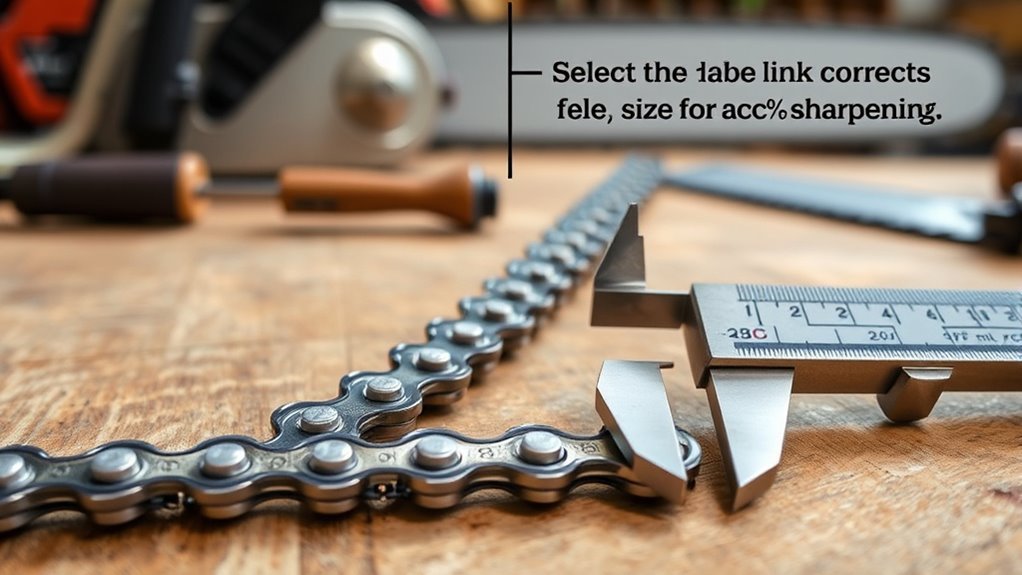
When you’re working with a 3/8 chainsaw chain, understanding its specifications is key to choosing the right file size. Most 3/8 chains use a 7/32-inch round file for sharpening, but some models call for a slightly larger 13/64-inch file.
The chain’s pitch, typically 3/8 inch, directly affects the cutter size and helps determine the proper file size. Additionally, chain gauges for 3/8 chains often range from 0.050 to 0.063 inches, which also influences which file size you should use.
Keep in mind that different 3/8 chain types—like standard, low profile, or full chisel—might require slight adjustments in file size. To get the best sharpening results, always check your chain’s specifications or consult manufacturer guidelines before selecting your file size.
Identifying Chain Pitch and Gauge
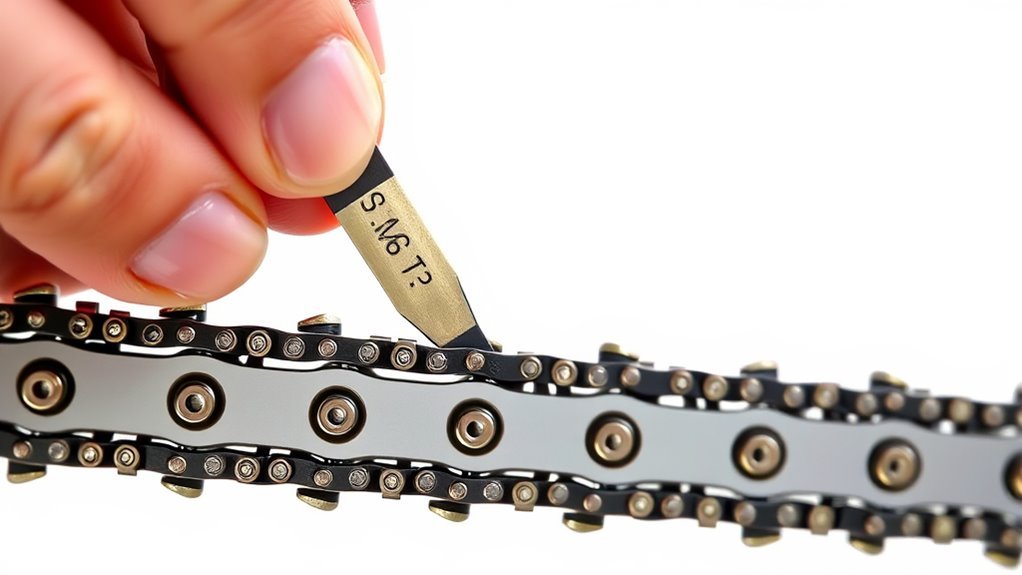
You’ll want to start by understanding your chain’s pitch, which is the distance between rivets and usually noted as 3/8 inch for standard chains.
Next, measure the chain gauge, or the thickness of the drive links, to verify it matches your bar’s groove width.
Checking these two measurements helps you pick the right file size and keep your chainsaw running smoothly. It’s a simple step, but it makes a big difference!
Chain Pitch Basics
Although identifying the right chain pitch and gauge might seem tricky at first, you can determine them quickly by measuring or checking your chain’s markings.
The chain pitch is the distance between three consecutive rivets divided by two, usually expressed in inches like 3/8 inch. You can measure this distance with a ruler or find it on the chain’s packaging.
The gauge, on the other hand, refers to the thickness of the drive links and is measured in thousandths of an inch, such as .050 or .058. It must match your chainsaw bar and sprocket for proper fit.
Knowing your chain pitch and gauge ensures you use the correct file size when sharpening, keeping your chain efficient and safe. It’s a small step that makes a big difference!
Measuring Chain Gauge
Understanding your chainsaw’s chain gauge is essential because it determines how well the chain fits into the bar and sprocket. The gauge measures the width of the drive links, typically in thousandths of an inch—like .050″, .058″, or .063″.
To identify your chain’s gauge size, use a gauge tool that fits snugly into the drive link slot; a proper fit confirms the size. Most 3/8″ chains come with .050″ or .058″ gauges, while .063″ is common for heavy-duty chains.
Common File Sizes for 3/8 Chainsaw Chains
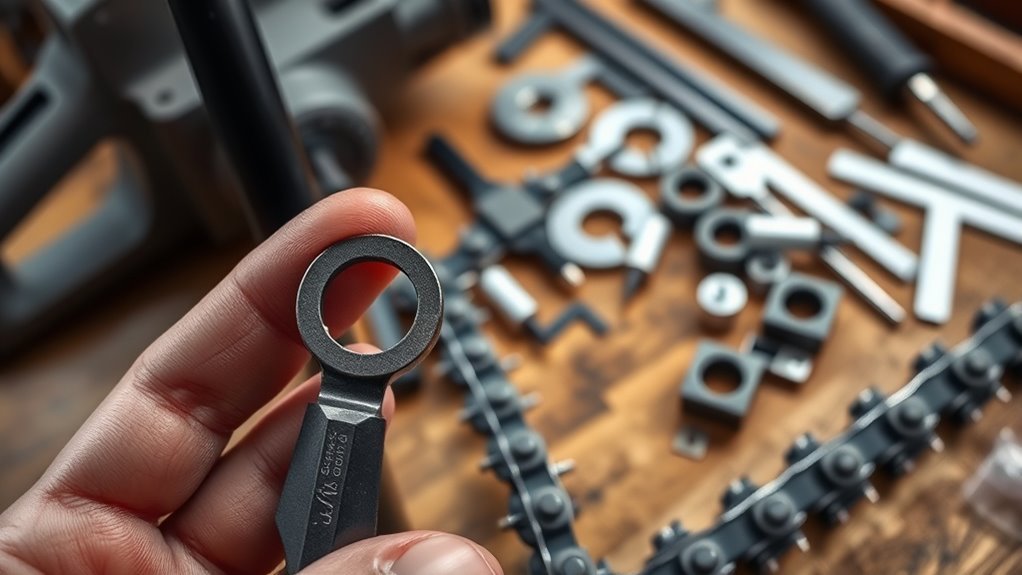
When honing a 3/8 chainsaw chain, you’ll usually choose between a 7/32 inch, 13/64 inch, or 3/16 inch file depending on the chain type. Brands like Stihl may recommend specific sizes for maximum performance, so it’s best to follow their guidelines.
Using the right file size guarantees even sharpening and keeps your chain cutting efficiently. It really makes a difference in how well your saw works! So, always check what your chain brand suggests before you start.
Standard File Size Options
How do you pick the right file size for your 3/8 chainsaw chain? The key lies in selecting from standard file size options designed for these chains. The most common size is 7/32 inches, ideal for sharpening both the side and top cutters effectively.
For lower-profile 3/8 chains, you might find a 5/32-inch file works better. Some specialized chains, like micro or semi-chisel types, often require a smaller 3/16-inch file for precise sharpening.
Always check your chain’s packaging or manual for the manufacturer’s recommended file size. Using the correct standard file size ensures your chain cuts efficiently and lasts longer.
Choosing the right file isn’t just about size—it’s about maintaining your chainsaw’s performance and safety. So, take a moment to pick the right one and keep your tool in top shape!
Brand-Specific File Recommendations
Choosing the right file size for your 3/8-inch chainsaw chain often depends on the brand. For example, Husqvarna and Oregon recommend a 7/32-inch size file for effective chain sharpening.
Stihl, on the other hand, suggests a slightly larger 13/64-inch file to sharpen the cutting tooth properly. If your chain is a low-profile 3/8, you might need a smaller 3/16-inch flat file.
Always check the chain’s pitch and gauge markings before you go back to filing. Using the wrong file can damage the cutting teeth or reduce performance.
I recommend getting the manufacturer’s recommended file size to ensure you sharpen each cutting tooth correctly. If your tooth looks off after sharpening, you may be using a different size file than needed.
Impact of File Size
Although it might seem minor, selecting the right file size for your 3/8 chainsaw chain considerably impacts how well it cuts and how long it lasts. Most 3/8 chains use a 7/32 inch file, which sharpens both the side and top of the cutter effectively.
However, some low-profile or specialized chains need a smaller 3/16 inch file to maintain proper tooth geometry. In contrast, full-size 3/8 chains sometimes require a 13/64 inch file for excellent cutting angles.
Using the correct file size ensures even sharpening, sharper cuts, and extends chain life. On the other hand, mismatched files cause duller cuts and uneven wear, reducing your chainsaw’s efficiency and lifespan.
Effects of Using Correct vs. Incorrect File Sizes
When you use the correct file size, like a 7/32″ file for a 3/8″ chain, you sharpen the cutter evenly and keep your chainsaw cutting smoothly. Using a smaller file can leave the top of the cutter dull, reducing cutting efficiency and forcing you to work harder.
On the other hand, an oversized file removes too much material or risks damaging the cutter, which causes uneven wear and quicker dulling. If your file size doesn’t match the chain, you’ll notice dull cuts and a shortened chain lifespan.
Sticking to the right file size preserves your chain’s factory sharpness, meaning fewer frequent sharpenings or replacements. Choosing the correct file size directly impacts your chainsaw’s performance, longevity, and your overall cutting experience.
Step-by-Step Guide to Measuring Your Chain
Before you can select the right file size, you need to measure your chainsaw chain accurately. Start by using a chain gauge tool to check the width of the drive links, making sure they match your chain’s specified gauge, like 0.063 inches for a 3/8 chain.
Next, count the drive links to verify the chain length and bar compatibility. It’s also important to identify the pitch, which is usually stamped on the chain or packaging — 3/8 inch is common.
Finally, check your chainsaw’s manual or manufacturer specs to confirm the correct file size. This way, you’ll be sure you’re using the perfect file for your chain.
Here’s what to focus on:
- Measure drive link width with a chain gauge tool
- Count the number of drive links
- Confirm chain pitch from markings
- Check your manual for recommended file size
Taking these precise measurements really helps you pick the perfect file.
Choosing Between Round and Flat Files
Since maintaining your chainsaw’s cutting efficiency depends on proper sharpening, you’ll need to choose between round and flat files carefully. Round files are the standard for sharpening the cutting teeth of a 3/8 chainsaw chain because they provide precise control over the cut angle.
Be sure the round file size matches your chain’s recommended size, like 7/32″. On the other hand, flat files aren’t used for the cutting teeth; instead, you use them to file the depth gauges, or rakers, which control how much wood each tooth cuts.
Flat files work best with a depth gauge tool to set the correct height after sharpening with the round file. Selecting the proper file type guarantees your chain stays sharp, cuts efficiently, and operates safely every time you use it.
Recommended Sharpening Techniques for 3/8 Chains
After selecting the right file size and type, you’ll want to focus on sharpening your 3/8 chainsaw chain correctly. Using a 7/32-inch round file, make sure you maintain a consistent 30-degree angle to match the chain’s factory edge.
Proper tension and a cooled chain provide the best sharpening conditions. Target the most worn tooth first and keep an eye on uniform sharpness throughout.
- Hold the file steady using a filing guide for consistent angles.
- Apply three smooth, even strokes per tooth, lifting the file after each.
- Check chain tension and cool it before starting.
- Mark the dullest tooth to focus your sharpening effort.
Following these steps ensures a clean, sharp edge that maximizes cutting efficiency. It really makes a difference when you’re out there cutting wood!
Maintaining Optimal Chain Performance With Proper Filing
When you file your chainsaw chain properly using the correct file size, you maintain the precise cutter height and tooth geometry needed for efficient cutting. Using the recommended 7/32” file for 3/8” chains guarantees each tooth is sharpened at the right angle and length.
This helps preserve consistent sharpness across the chain, which optimizes cutting performance and reduces how often you need to re-sharpen. Regularly checking that your file matches the chain specifications also prevents uneven wear and dullness.
That way, your chain stays safe and reliable. By sharpening with the correct file size and technique, you can restore factory-like sharpness and extend your chain’s effective life.
Proper filing doesn’t just boost performance—it also helps you operate your chainsaw safely and efficiently every time you use it.
Tips for Extending Chain Life Through Proper File Selection
Although choosing the right file size might seem minor, it plays a crucial role in extending your chainsaw chain’s life. Using the manufacturer-recommended size, like 7/32″ for a 3/8″ chain, ensures each tooth sharpens evenly and maintains the original cutting angle.
This prevents removing too much material, which can weaken cutters and cause premature dulling. Sticking to the proper file size keeps your chain’s factory geometry intact, boosting durability and cutting efficiency over time.
Avoid mismatched files to reduce uneven wear and early replacements.
- Sharp, consistent teeth with the right file size
- Preserved tooth angles for efficient cutting
- Reduced material removal to maintain cutter strength
- Longer-lasting chain with fewer replacements
Frequently Asked Questions
How to Pick Chainsaw File Size?
You pick your chainsaw file size by matching it to your chain’s pitch and gauge.
Check your chainsaw manual or chain markings. Then, use a chain gauge tool to confirm and choose the file size recommended for your chain type.
It’s pretty straightforward once you know where to look! Just make sure you get the right match to keep your saw running smoothly.
Can You Explain the Different Types of STIHL Chains and How They Differ?
Sure, you’ve got full chisel for speed demons, semi-chisel for tough, dirty jobs, safety chains to avoid flying logs, and specialty chains like Duro for those who think chainsaws need more personality.
Choose wisely, lumberjack!
Is .325 Pitch the Same as 3/8 Pitch?
No, .325 pitch isn’t the same as 3/8 pitch. They differ in size and thickness, so you’ll need specific guide bars and files for each.
Always double-check your chain’s pitch before buying parts or tools. It helps avoid compatibility issues and keeps your chainsaw running smoothly.
What File Size Should I Use for a 325 Chainsaw Chain?
Don’t grab a giant file like you’re chopping firewood with a spoon.
For your 325 chainsaw chain, use a 7/32 inch file—it’s the sweet spot for sharp, precise cuts and keeps your chain happy.
Conclusion
Choosing the right file size for your 3/8 chainsaw chain is like picking the perfect key to release smooth, powerful cutting. Using the correct file sharpens your chain’s bite, turning it from dull and sluggish into a roaring beast ready to tackle any job.
Don’t let the wrong file dull your edge—treat your chain like a trusted tool. It’ll reward you with longer life and sharper performance every time you sharpen.
Remember, the right file size is essential for maintaining your chainsaw’s efficiency and safety. Using the correct file size not only enhances cutting precision but also extends the life of your chain. So, when choosing the file for your 3/8 chainsaw chain, always match the file diameter to your chain’s specifications. This simple step ensures your chainsaw stays sharp, powerful, and ready for any cutting task.