What Size Chainsaw Do I Need?
You’ll want a chainsaw with a bar length matching the size of wood you’ll cut. Short bars (10-14 inches) are great for small branches and pruning.
Medium bars (16-20 inches) suit firewood and moderate logs perfectly.
For big trees or heavy jobs, bars over 20 inches paired with higher engine power work best.
Also, think about whether you prefer gas or electric for power versus portability.
Choosing the right size keeps you safer and more efficient.
There’s more to consider when picking the perfect chainsaw for your needs.
So, take your time to match the chainsaw size to your cutting tasks for the best results!
Key Takeaways
- Choose bar length based on wood diameter: 10-14 inches for up to 12-inch logs, 14-18 inches for 12-16 inches, 20+ inches for over 18 inches. This way, you’ll have the right reach without overdoing it.
- Match chainsaw power to task: 36-50cc for light pruning, 50-70cc for medium logs, 70+ cc for large tree felling. Picking the right power helps you work efficiently without struggling.
- Use electric chainsaws with shorter bars (up to 18 inches) for light yard work and quieter operation. They’re great if you want something easy and less noisy around the neighborhood.
- Consider weight and ergonomics to reduce fatigue; lighter models suit extended work, heavier models provide more power. Comfort matters, especially if you’re out cutting for a while.
- Select chainsaw size balancing power, control, and safety based on user experience and typical cutting needs. It’s all about finding what fits you and the job best.
Understanding Chainsaw Size and Bar Length

When you choose a chainsaw, understanding its size—mainly determined by the guide bar length—is essential. The bar length typically ranges from 10 to 36 inches and directly impacts the cutting diameter you can handle.
Shorter bars, around 10 to 14 inches, are perfect for small tasks like pruning. They ensure better maneuverability and safety.
Medium bars of 16 to 20 inches suit cutting firewood or medium-sized logs. They balance task suitability and control quite well.
For large logs or felling big trees, bars over 20 inches provide the cutting diameter needed for efficiency and safety.
Matching the chainsaw size and bar length to your task and experience level helps you work confidently, maintaining safety while maximizing effectiveness. It’s all about picking the right tool for the job!
How Bar Length Impacts Cutting Performance

Although the bar length directly determines the maximum thickness of wood you can cut in one pass, choosing a bar at least two inches longer than the wood’s diameter will boost your cutting efficiency and safety.
The right bar length improves cutting performance by balancing power and control. But keep in mind, a longer bar adds weight, which can affect handling.
Matching chainsaw size to your log diameter ensures safer, more efficient cuts.
| Bar Length | Ideal Log Diameter | Cutting Performance |
|---|---|---|
| 10-14 inches | Up to 12 inches | Precise, lightweight tasks |
| 14-18 inches | 12-16 inches | Versatile for medium logs |
| 18-20 inches | 16-18 inches | Heavy-duty, larger logs |
| 20+ inches | 18+ inches | Large logs, professional use |
Choose wisely for safety and efficiency.
Chainsaw Size Recommendations for Small-Scale Tasks

When handling small-scale tasks like pruning or trimming, you’ll want a chainsaw with a 10-14 inch bar for better control and maneuverability. Lightweight models in the 36cc to 50cc range make it easier to work without getting tired quickly.
Electric chainsaws with shorter bars are also great if you prefer something quiet and low-maintenance for light-duty jobs. They’re pretty handy and won’t wear you out as much.
Ideal Bar Lengths
Choosing the right bar length makes your chainsaw safer and more effective for small-scale tasks. When deciding on guide bar length, consider the size of the wood and your chainsaw tasks.
For firewood cutting and light pruning, a smaller chainsaw size with a 10 to 14-inch bar is easier to handle and reduces kickback risk. Here’s a quick guide for bar length selection:
- 12-inch bars work well for cutting small branches and firewood up to 8 inches in diameter.
- 16-inch bars offer versatility for felling small to medium trees and general yard work.
- 18-inch bars provide a balance of power and maneuverability for most homeowner needs.
Always match bar length to the wood diameter for safe, efficient cutting. It’s all about making your job easier and safer.
Light-Duty Chainsaw Options
If you need a chainsaw for light pruning, trimming, or small branch cutting, a light-duty model with a 10 to 14-inch guide bar will serve you well. Small chainsaws in this range offer excellent maneuverability and control, making them perfect for precise pruning and cutting firewood without causing fatigue.
These saws typically have engine displacements between 36cc and 50cc, providing enough power for small-scale tasks without being heavy or cumbersome. Electric chainsaws with 10 to 14-inch guide bar lengths are especially popular for quiet, emission-free operation, ideal for occasional home use.
Choosing a lightweight model guarantees safe, efficient handling during pruning and limbing, helping you tackle your yard work with ease and confidence. It’s all about making the job easier on you while getting great results.
Choosing Chainsaw Size for Medium-Scale and Farm Use
Since medium-scale and farm tasks vary widely, selecting the right chainsaw size depends on the wood you’ll cut and how often you’ll use it.
For cutting logs efficiently, focus on guide bar length and engine power to match your needs. A size chainsaw with a 16-20 inch bar and 50-60cc engine works well for general farm use.
Larger logs up to 24 inches call for a 20-24 inch bar with 60-70cc power. Electric chainsaws handle smaller cuts up to 18 inches, offering portability for lighter tasks.
Consider these factors when choosing your chainsaw: typical wood diameter and density, frequency of use, and job intensity.
Also, think about your experience level and safety requirements. These will help you pick the best chainsaw for your needs.
Selecting Chainsaw Size for Large-Scale and Professional Jobs
When your work involves large-scale or professional jobs, you’ll need a chainsaw with a bar length of 20 inches or more. This helps you handle big logs and trees over 36 inches in diameter.
Selecting a chainsaw size with at least 70cc engine displacement guarantees you have the power for demanding tasks. Professional-grade models often include features like electronic fuel injection and anti-vibration systems to boost performance and comfort.
| Bar Length (inches) | Engine Displacement (cc) |
|---|---|
| 20 | 70+ |
| 24 | 70+ |
| 30 | 75+ |
| 36 | 80+ |
Choose a chainsaw size that balances power and handling for cutting large trees efficiently and safely. It makes the job easier and keeps you comfortable while working.
Comparing Gas and Electric Chainsaws by Size and Power
When choosing between gas and electric chainsaws, you’ll notice gas models pack more power and handle larger tasks thanks to their bigger engines. Electric chainsaws are lighter and easier to maneuver, making them great for smaller jobs and tight spaces.
Understanding these size and power differences helps you pick the right tool for your needs. It’s all about matching the chainsaw to the job you want to get done.
Power Differences Explained
Although gas and electric chainsaws serve similar purposes, their power outputs differ markedly, affecting their suitability for various tasks. Gas chainsaws feature larger engine displacements, typically 50cc to 120cc, delivering 2 to 6 horsepower.
This higher power output supports longer bar lengths and greater cutting capacity, ideal for heavy-duty jobs. Electric chainsaws, whether corded or battery-powered, offer around 1 to 2.5 horsepower, making them perfect for lighter tasks like pruning or small firewood.
When deciding between fuel vs electric, consider: Gas saws handle bars over 20 inches and tougher wood diameters. Electric saws excel with bars up to 18 inches and require less maintenance.
Battery chainsaws offer consistent power but depend on battery capacity for runtime. Understanding these power differences helps you pick the right chainsaw for your needs.
Size and Portability
Because size and power directly affect portability, choosing between gas and electric chainsaws depends on your task and mobility needs. Gas chainsaws usually feature bar lengths from 14 to 36 inches, giving you the power and runtime needed for heavy-duty work but at the cost of added weight.
If you’re tackling large logging or storm cleanup, a gas chainsaw’s size and power are worth it. On the other hand, electric chainsaws come with smaller bar sizes, typically 8 to 18 inches, making them lighter and easier to maneuver.
They’re perfect for light to medium tasks like pruning or yard work. Battery-powered models offer a good balance, with bar lengths between 12 and 16 inches, combining portability and sufficient power for most home uses.
Ergonomics and Weight Considerations in Chainsaw Selection
Choosing a chainsaw that balances weight and ergonomics can considerably reduce fatigue and improve your control during extended use. Opt for lighter models weighing 8 to 10 pounds to boost maneuverability and minimize user fatigue.
Ergonomic features like padded handles, anti-vibration systems, and balanced weight distribution ease strain on your arms and back. Keep in mind, heavier chainsaws (over 12 pounds) deliver more power but increase fatigue and risk, especially for less experienced users.
To enhance safety and comfort, consider these factors: weight that matches your strength and task duration, ergonomic design to reduce strain and improve grip, and features that optimize maneuverability and minimize user fatigue.
Selecting the right chainsaw with these ergonomic and weight considerations ensures safer, more efficient operation. It really makes a difference when you’re working for longer periods!
Essential Maintenance Tips to Extend Chainsaw Life
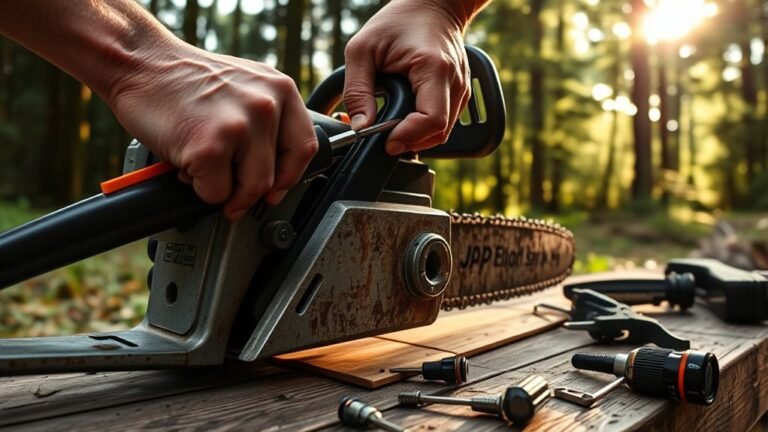
To keep your chainsaw running smoothly and extend its life, you need to perform regular maintenance tasks. Start with routine checks before each use: inspect the spark plugs, air filters, and fuel filters to maintain ideal engine performance.
Regular chain sharpening is vital—use proper files or tools to keep your chain cutting efficiently and prevent excessive wear. Don’t forget to clean the bar groove and sprocket, removing sawdust and debris to guarantee smooth chain movement and reduce engine strain.
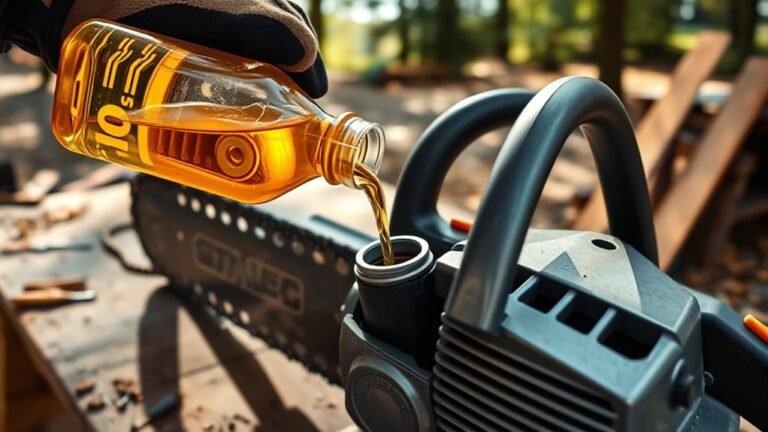
Always check and refill bar and chain oil levels to avoid overheating and protect components. Finally, store your chainsaw in a dry, protected place. Consistent chainsaw maintenance like this will save you time and money by extending your tool’s lifespan.
Frequently Asked Questions
How Big of a Tree Will a 20 Inch Chainsaw Cut?
You can cut trees up to about 16 inches in diameter with a 20-inch chainsaw bar.
With proper technique, it might handle logs up to 18-20 inches. But bigger trees need a longer bar for safety and efficiency.
Do I Need a 16 or 18 Chainsaw?
You don’t want a delicate scalpel when tackling thick logs, nor a bulky beast for small branches.
Choose a 16-inch chainsaw for nimble pruning or an 18-inch for versatile cutting power and larger wood tasks.
Should I Get a 14 or 16 Inch Chainsaw?
You should get a 16-inch chainsaw if you want more versatility and power for medium branches and small trees.
A 14-inch works well for light pruning and smaller branches, perfect if you prefer easier handling. It’s lighter and easier to maneuver, which can make a big difference if you’re new to using chainsaws.
Should I Get a 20 Inch or 24 Inch Chainsaw?
You’ll want to grab the 20-inch chainsaw if you seek nimbleness and ease. It’s perfect for smaller jobs and gives you more control.
But if your wood’s as mighty as a giant’s fortress, the 24-inch will slice through like a seasoned warrior wielding a heavy blade. It’s built for bigger, tougher cuts and gets the job done faster.
Conclusion
Now that you know how bar length and power affect performance, you’re ready to pick the perfect chainsaw size for your needs. Whether you’re tackling small garden tasks or large professional jobs, choosing wisely will save you effort and time.
Remember, just like a trusty pocket watch, regular maintenance keeps your chainsaw running smoothly. So, grab the right tool, respect its weight, and make every cut count with confidence.
Selecting the right chainsaw size is key to efficient and safe cutting. A smaller bar length is ideal for light pruning and trimming, while a longer bar suits heavy-duty cutting and felling large trees. Power and bar length go hand in hand, so consider both when choosing your chainsaw.
By understanding your project requirements and matching them with the appropriate chainsaw size, you can work smarter, not harder. This ensures you get the job done efficiently while maintaining control and safety throughout your cutting tasks.