Can I Use Engine Oil for Chainsaw?
You shouldn’t use engine oil for your chainsaw because it lacks the tacky additives that keep bar and chain oil in place during high-speed cutting.
Engine oil is thinner and flings off easily. It doesn’t protect the chain and bar properly, which can cause increased wear and damage.
While you can use engine oil temporarily in an emergency, it’s not ideal for long-term lubrication.
If you want to avoid costly repairs and environmental harm, there’s more to contemplate about proper chainsaw oil.
Using the right bar and chain oil ensures your chainsaw runs smoothly and lasts longer.
So, stick with oils designed specifically for chainsaws to keep everything working safely and efficiently.
Key Takeaways
- Engine oil can be used temporarily in emergencies but lacks tackifiers needed for proper chainsaw bar and chain lubrication.
- Using engine oil long-term increases fling-off, causing higher wear, heat, and reduced cutting efficiency on the chain and bar.
- Engine oil’s thinner viscosity and additives can leave residue, promoting corrosion and damaging chainsaw components over time.
- Proper bar and chain oil is specially formulated to cling during high-speed operation, reducing friction and wear effectively.
- For environmental safety, avoid engine oil due to contamination risks; use biodegradable or eco-friendly chainsaw oils instead.
Why Chainsaws Require Specialized Bar and Chain Oil
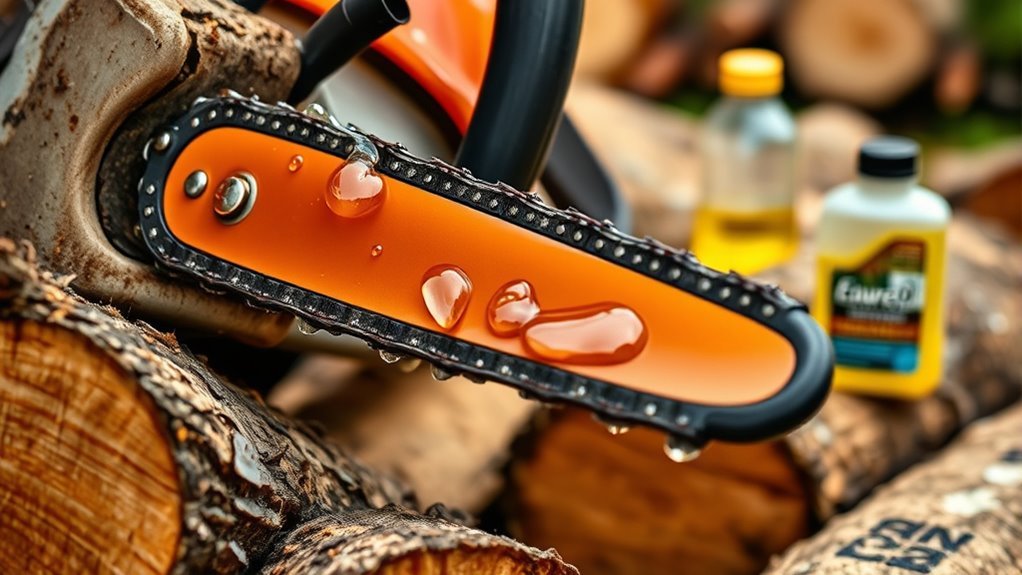
Although you might be tempted to use regular motor oil, chainsaws require specialized bar and chain oil because it’s designed to stick to the chain during high-speed operation.
Regular motor oil won’t cut it—chainsaws need bar and chain oil that clings during high-speed use.
This bar oil has a thick, tacky consistency that prevents fling-off, ensuring continuous lubrication where it’s needed most. When you use the right bar oil, it reduces metal-on-metal friction between the chain and guide bar, lowering heat buildup and minimizing wear.
Without proper lubrication, friction increases, causing premature damage to your chainsaw components. Bar and chain oil’s unique formulation keeps it from thinning under high temperatures, maintaining its adhesive properties throughout use.
Using the correct oil not only boosts your chainsaw’s performance but also extends its lifespan by protecting essential parts from excessive wear. It’s a small step that makes a big difference in keeping your chainsaw running smoothly.
Differences Between Engine Oil and Chainsaw Bar Oil
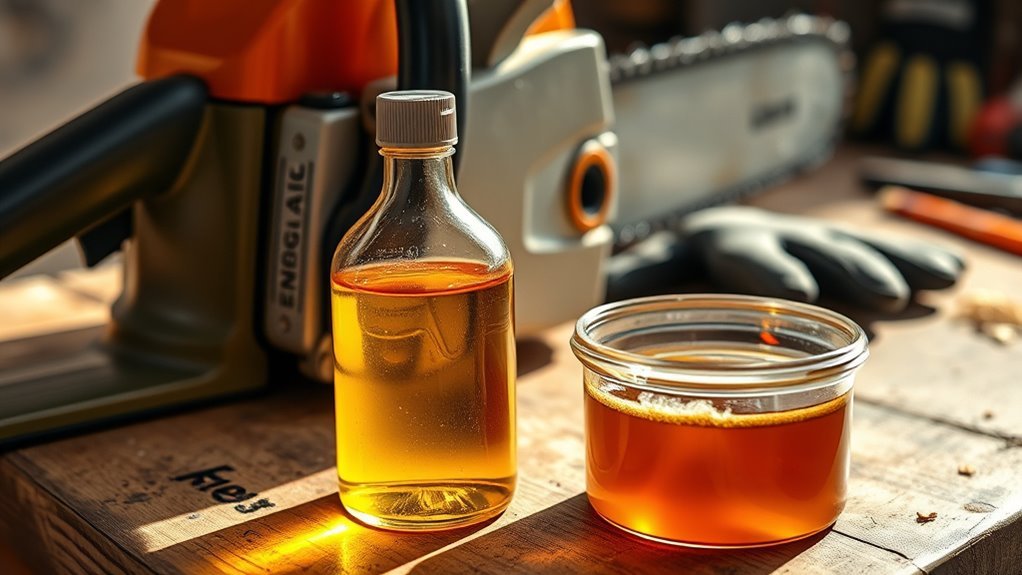
You might think engine oil works fine on your chainsaw, but its thinner viscosity and lack of tacky additives mean it won’t stick well to the chain and bar.
Chainsaw bar oil is specially formulated with adhesives that keep it in place during use, ensuring better lubrication. Using engine oil instead can reduce efficiency and increase wear on your saw’s components.
Viscosity and Adhesion
When you use engine oil on a chainsaw, its thinner viscosity and lack of sticky additives cause it to fling off the chain more easily than proper bar oil. Engine oil’s lower viscosity means it doesn’t cling well to the moving chain, resulting in poor adhesion.
Chainsaw bar oil contains tackifiers—special additives that give it a sticky quality—so it adheres firmly to the chain and bar, even at high speeds. This reduces oil throw-off, ensuring consistent lubrication.
Without these tackifiers, engine oil tends to throw off quickly, exposing the chain and bar to increased friction and wear. So, relying on engine oil compromises the lubrication’s effectiveness because its viscosity and adhesion aren’t designed for the rapid motion and demands of chainsaw operation.
Additive Composition Impact
The difference in how engine oil and chainsaw bar oil stick to the chain comes down not just to viscosity, but also to their additive compositions. Engine oil contains detergents and dispersants designed for engines, which can actually hinder lubrication performance on a chainsaw’s moving parts.
These additives cause more residue buildup on the chain and bar, reducing cutting efficiency over time. Chainsaw bar oil, however, includes specialized tackifiers that help it adhere firmly to the chain, minimizing fling-off during operation.
Since engine oil lacks these tackifiers, it doesn’t stick well, leading to increased wear and shorter chain lifespan. So, the additive composition directly impacts how well the oil lubricates and protects your chainsaw components under high-speed, high-temperature conditions.
Lubrication Efficiency Differences
Although engine oil might seem like a convenient substitute, it falls short in lubrication efficiency compared to chainsaw bar oil. Engine oil has lower viscosity, making it thinner and less able to adhere to the chain and bar during operation.
Without tackifiers—special additives designed to improve adhesion—engine oil tends to sling off at high speeds, reducing lubrication where it’s needed most. Chainsaw bar oil’s higher viscosity ensures better adhesion and sustained lubrication under intense friction and heat.
Using engine oil means you get faster oil consumption and insufficient protection, increasing wear on your chain and bar. To maintain highest performance and longevity, it’s best to stick with chainsaw-specific bar oil formulated for this unique high-speed, high-friction environment.
Potential Risks of Using Engine Oil in Chainsaws

Since engine oil lacks the tackifiers and adhesive properties of specialized chainsaw bar and chain oil, you’ll notice it flings off more easily during use. This fling off increases the risks of using engine oil, as it leads to improper lubrication of the bar and chain.
Without proper lubrication, friction rises, causing accelerated wear on critical components. Engine oil’s thinner viscosity means it doesn’t protect against heat and friction effectively, further contributing to premature damage.
Additionally, used or contaminated engine oil may contain metals and impurities that can harm your chainsaw over time. Beyond mechanical issues, the fling off of engine oil poses environmental risks by contaminating soil and water.
Situations Where Engine Oil Might Be Used Temporarily
If you find yourself without proper bar oil, you can use engine oil as a temporary fix to keep your chainsaw running. Just remember, this is only an emergency solution and shouldn’t replace regular lubrication.
Using engine oil too often can cause increased wear and shorten your chainsaw’s lifespan. So, try to get the right bar oil as soon as you can. It’ll help your chainsaw last longer and work better.
Emergency Usage Only
When might you need to use engine oil instead of proper chainsaw bar oil? In an emergency, if you run out of chainsaw bar oil and can’t get more right away, engine oil—especially SAE 30—can provide temporary lubrication.
While it offers basic protection, engine oil lacks the tackifiers that keep chainsaw bar oil sticky, so it won’t cling well during high-speed operation. This means you risk increased wear on your chain and bar if you use engine oil for too long.
It’s vital to treat engine oil as a short-term fix only and switch back to proper chainsaw bar oil as soon as possible to avoid accelerated wear and potential damage. Using engine oil beyond emergencies can lead to costly maintenance and environmental issues.
Short-Term Lubrication Solution
Why might you reach for engine oil like SAE 30 to lubricate your chainsaw temporarily? If you run out of proper bar oil, you can use motor oil as a short-term lubrication solution in emergencies.
Engine oil, though thinner and less tacky than specialized bar oil, can still protect the chain and bar briefly. Using motor oil gives you a quick fix to keep the chain moving, but remember, it’s not designed for chainsaw components.
You should only use motor oil for short-term lubrication to avoid accelerated wear. Afterward, clean the chain and bar thoroughly and switch back to recommended bar and chain oil. This ensures your chainsaw stays in good condition, preventing damage while maintaining ideal performance.
Increased Wear Risks
Although you might reach for engine oil like SAE 30 in a pinch, using it on your chainsaw increases wear risks considerably. Motor oil lacks the tackifiers found in bar and chain oil, causing it to sling off quickly and fail to lubricate properly.
This leads to increased wear on the chain and bar, raising friction and accelerating damage. Also, engine oil can deposit contaminants that promote corrosion. While you can use motor oil temporarily in warm weather emergencies, prolonged use will cause premature failure of key components.
| Factor | Bar and Chain Oil | Engine (Motor) Oil |
|---|---|---|
| Viscosity | Thicker | Thinner |
| Tackifiers presence | Yes | No |
| Lubrication quality | High | Low |
| Sling-off tendency | Low | High |
| Wear protection | Excellent | Poor |
Recommended Alternatives to Engine Oil for Chainsaw Lubrication
Since finding the right lubricant can be challenging, you might consider biodegradable plant-based oils like canola or soybean oil as eco-friendly alternatives for your chainsaw. These oils offer alternative lubrication that’s safer for the environment but may thicken in cold weather, affecting performance.
Hydraulic oil works temporarily due to its good lubricating properties, though it lacks the tackiness chainsaw oil usually provides for better chain adhesion. While some use light motor oil, such as SAE 30, in emergencies, it’s not ideal for regular use because it doesn’t offer the specific qualities of dedicated chainsaw oil.
Avoid used motor oil altogether, as contaminants can damage your equipment and harm the environment. Choosing the correct oil type ensures your chainsaw runs smoothly and lasts longer.
How to Properly Maintain Your Chainsaw When Using Non-Standard Oils
When you use non-standard oils like engine oil for your chainsaw, you need to stay vigilant about maintenance to prevent damage. Choose a thicker motor oil grade like SAE 30 for better adhesion in warm weather.
Regularly check chain tension and inspect for uneven wear or heat buildup. Clean the chainsaw thoroughly after each use to remove oil residue, avoiding clogging and poor lubrication.
Remember, engine oil lacks tackifiers, so it can fling off and cause faster wear if used too long.
| Maintenance Task | Purpose |
|---|---|
| Monitor Chain Tension | Ensures proper lubrication |
| Inspect Wear Patterns | Detects uneven wear early |
| Clean Residue | Prevents clogging and damage |
Proper upkeep helps extend your chainsaw’s life despite using non-standard oils.
Environmental Impacts of Using Engine Oil as Chainsaw Lubricant
Using engine oil as a chainsaw lubricant may seem practical, but it poses significant environmental risks you should consider. When you use engine oil, especially used motor oil, it flings off during operation, causing environmental contamination by seeping into soil and water sources.
Engine oil contains heavy metals and toxins from engine wear, which contribute to pollution harmful to plants, animals, and aquatic life. Improper disposal of used motor oil—like pouring it on the ground or down drains—can violate environmental laws and cause lasting ecological damage.
Since engine oil decomposes slowly, it increases soil and groundwater contamination risks, harming local biodiversity. Choosing biodegradable bar oil instead supports eco-friendly practices and helps prevent pollution and environmental degradation.
Frequently Asked Questions
What Can I Use Instead of Chainsaw Oil?
You can use biodegradable oils like rapeseed or vegetable oil temporarily for light chainsaw tasks. They’re a decent short-term fix if you’re out of the proper stuff.
Engine or hydraulic oil works short-term but lacks stickiness. So, it won’t protect your chainsaw as well as the right oil would.
Avoid cooking oils since they gum up and harm your chainsaw. Trust me, it’s not worth the risk!
Can I Use Regular Motor Oil for Chainsaw Oil?
You can use regular motor oil temporarily if you’re in a pinch, but it doesn’t stick well and wears out your chainsaw faster.
For best results, stick to specialized chainsaw oil to protect your equipment. It’s designed to cling to the chain and reduce friction, which helps your chainsaw last longer and run smoother.
Can I Use Engine Oil as Chainsaw Oil?
If you’re in a pinch like Joe, who ran out of bar oil mid-job, you can use engine oil briefly. But don’t rely on it—it won’t protect your chainsaw well and can cause quicker wear and damage.
It’s really just a temporary fix. So, try to get the right bar oil as soon as you can to keep your chainsaw running smoothly.
What Oil Can I Use as Chainsaw Oil?
You should use dedicated chainsaw bar and chain oil because it sticks well, lubricates properly, and protects your saw. Avoid engine oil except in emergencies—it lacks tackifiers and can cause faster wear on your chain and bar.
It’s really best to stick with the right oil to keep your chainsaw running smoothly. Using the proper oil helps extend the life of your equipment and makes your work easier.
Conclusion
You might wonder, why risk using engine oil when your chainsaw needs specialized bar and chain oil? While engine oil can temporarily lubricate, it doesn’t provide the same protection or viscosity.
This can potentially cause damage to your chainsaw and even harm the environment. To keep your chainsaw running smoothly and lasting longer, it’s best to stick to the recommended oils.
Proper maintenance and using the right bar and chain oil ensure optimal performance. After all, wouldn’t you want the best care for your tool instead of a quick, risky fix? So, avoid using engine oil and choose the correct chainsaw oil to protect your equipment and get the job done safely.