How to Sharpen a Chainsaw at the Best Angle
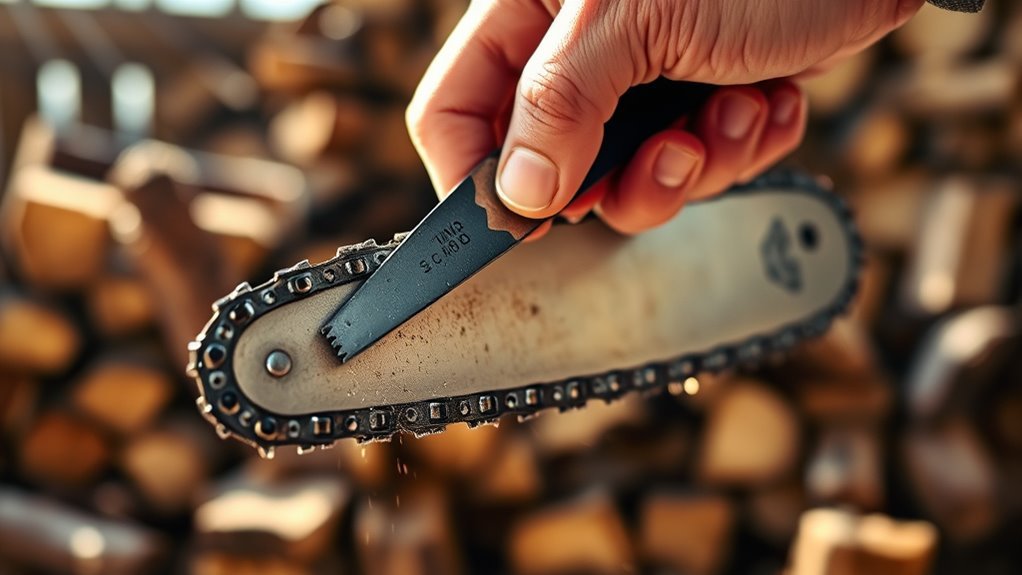
To sharpen your chainsaw at the best angle, you want to keep a steady filing angle between 30° and 35°. Using a properly sized round file and guide makes all the difference.
For hardwoods, a 30° angle works best, while 35° suits softer woods perfectly.
Always file all the cutters evenly on one side first, then switch to the other side.
If you’re using an electric grinder, be careful not to overheat the chain—it can damage the teeth.
And don’t forget, after sharpening, you’ll need to adjust your depth gauges to keep the cutting smooth and efficient.
Following these simple steps will help you get the most out of your chainsaw. It’s all about consistent angles and maintenance for long-lasting performance.
There’s definitely more to learn if you want to become a pro, but this is a great place to start!
Key Takeaways
- Maintain a consistent 30° to 35° filing angle using a file guide to ensure smooth and efficient cutting performance.
- Choose 30° for hardwoods and 35° for softer woods to balance cutting speed and chain durability.
- Use the correct round file size (5/32″ to 7/32″) matching your chain manufacturer’s specifications.
- File all cutters on one side, then flip the chain to sharpen the opposite side evenly.
- Avoid overheating the chain by applying gentle, smooth strokes or quick, light taps with an electric grinder.
Understanding Chainsaw Chain Angles
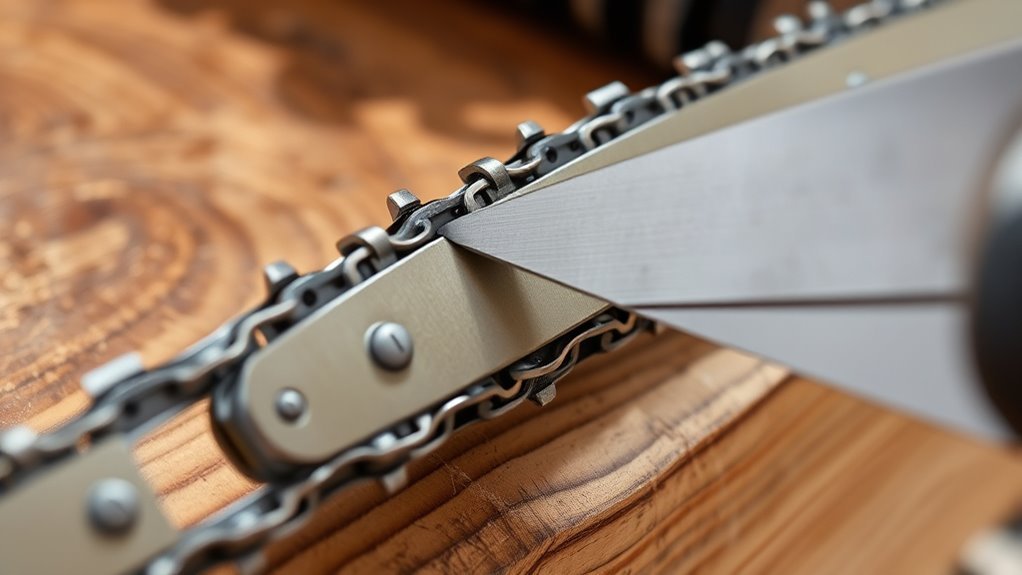
When sharpening your chainsaw, understanding the correct chain angles is essential for efficient cutting and chain longevity. The most common chain angles you’ll encounter are 30° and 35°.
Generally, 30° is the industry standard, offering a good balance between cutting efficiency and durability. If you’re working with a semi-chisel chain, 35° might suit you better, as it allows faster cuts but dulls a bit quicker.
Maintaining a consistent chain angle across all cutters is vital—it ensures smooth performance and extends your chain’s life. Remember, the angle directly affects how easily the chain slices through wood and how often you’ll need to sharpen.
Sharpening at the right angle optimizes cutting efficiency, saving you time and effort on every job. So, keeping these angles in mind really makes a difference when you’re out there cutting.
Choosing the Right Angle for Your Wood Type
Although selecting the right sharpening angle depends on various factors, your choice should primarily reflect the type of wood you’ll be cutting. Different wood types affect chain dulling, so adjusting the sharpening angle guarantees efficient cutting and longer chain life.
Softer woods tolerate steeper angles, while hardwoods require shallower ones to reduce dulling.
| Wood Type | Recommended Sharpening Angle | Effect on Chain Dulling |
|---|---|---|
| White Pine | 35° | Slower dulling, longer chain life |
| Cedar | 35° | Balanced cutting speed and wear |
| White Oak | 30° | Reduced dulling on dense wood |
| Mixed Woods | 32° | Compromise between speed and wear |
| Dense Hardwoods | 30° | Minimizes chain dulling |
Choose wisely to balance cutting efficiency and chain durability.
Essential Tools for Sharpening Your Chainsaw Chain
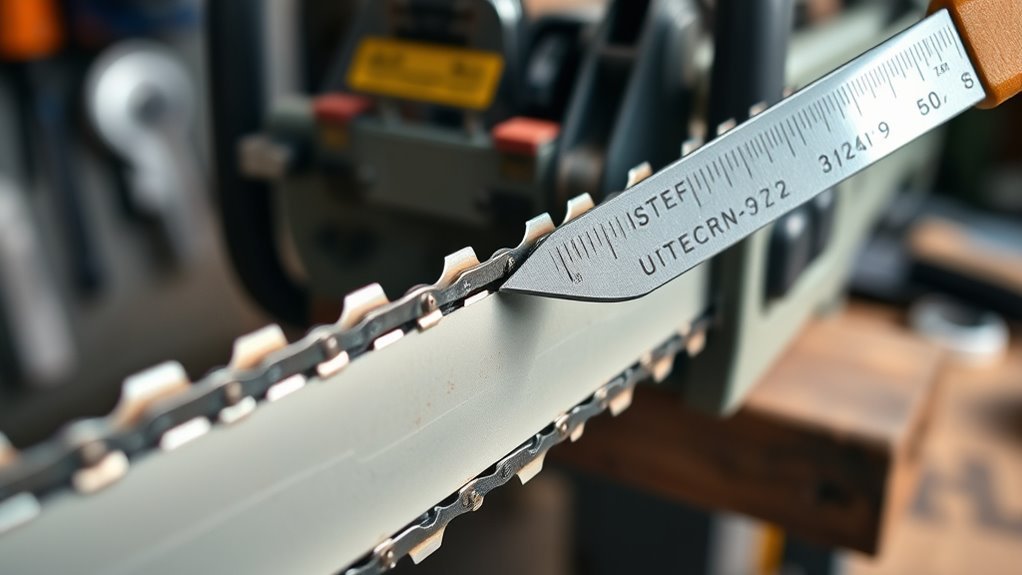
Sharpening your chainsaw chain requires a few essential tools that you’ll want to have on hand to guarantee precise and efficient work. Start with a correctly sized round file—usually between 5/32″ and 7/32″—to maintain the cutting edges.
Using the right round file size ensures your chainsaw chain stays sharp and cuts smoothly every time.
Use a file guide to hold the file at the proper sharpening angle, typically between 30° and 35°. A depth gauge tool is vital to set the rakers to the manufacturer’s specs, ensuring maximum cutting performance.
If you use an electric grinder or sharpening jig, regularly dress the grinding wheel to prevent uneven sharpening. Remember, always engage the chain brake before starting any sharpening task to ensure your safety.
Following proper safety measures helps prevent accidents while you maintain your chainsaw’s sharpness efficiently. It’s worth taking the time to do it right!
Preparing Your Chainsaw for Sharpening
Before you start using your round file or electric grinder, make certain your chainsaw is completely powered off and disconnected from any power source. Prioritizing chainsaw safety means wearing protective gloves and eye gear.
Next, check the chain tension—if it’s too loose, the chain may move during sharpening, risking injury.
Cleaning is vital: remove oil, grease, and sawdust from the chain and bar to ensure a smooth sharpening process.
Inspect the chain carefully for any damaged cutters or bent links; replace any faulty parts before proceeding.
| Step | Why It Matters |
|---|---|
| Power Off | Prevents accidental start-up |
| Protective Gear | Protects from sharp edges |
| Proper Tension | Keeps chain stable |
| Cleaning | Ensures clear working area |
Step-By-Step Guide to Sharpening With a Round File
First, pick the right round file size recommended by your chain’s manufacturer—usually around 5/32″ or 3/16″.
Next, hold the file at a steady 30° to 35° angle against the cutter’s top edge.
Keeping this angle consistent is key to sharpening your chainsaw effectively.
Selecting Proper File Size
How do you know which file size fits your chainsaw chain? First, make sure to check the chain manufacturer’s recommendation. It’s usually marked on the saw chain itself or listed in the user manual.
Common sizes are 5/32-inch (4.0 mm) and 3/16-inch (4.8 mm), but always verify the exact fit for your chain. Using the appropriate file size is vital; the file’s diameter must match the cutter size to avoid uneven filing or damaging the chain.
Before you start, ensure your round file is sharp, round, and in good condition. Remember, selecting the correct file size is a key step for effective sharpening while maintaining appropriate safety.
This preparation helps you keep your saw chain in top shape. So, take your time and pick the right file to get the best results.
Maintaining Correct Filing Angle
Choosing the right file size sets you up for effective sharpening, but maintaining the correct filing angle is just as important to keep your chain cutting smoothly.
Position your round file at a 30° to 35° angle relative to the guide bar, matching the chain’s factory-recommended angle. Hold the file steady at this angle throughout each stroke, ensuring consistent contact with the cutter’s top plate.
Before filing, let about 20% of the file diameter extend above the cutter’s edge. Use smooth, steady strokes from the inside of the cutter toward the tip, applying gentle pressure to avoid overheating.
File all cutters on one side, then flip the chain, repeating the process. After sharpening, apply bar and chain oil to keep your chain running efficiently and extend its life.
Using an Electric Grinder for Precise Sharpening
When using an electric grinder, set the angle guide to match your chainsaw’s recommended sharpening angle, usually between 30° and 35°.
Use quick, light taps to prevent overheating and keep the edge sharp. This approach helps you maintain precision and avoid damaging the chain.
It’s all about being gentle and steady, so take your time and keep an eye on the angle. That way, your chainsaw stays in top shape!
Setting Grinder Angles
Although using an electric grinder requires careful attention, setting the correct angle is key to precise chainsaw sharpening. First, adjust your grinder’s angle guide to match the chain manufacturer’s recommended sharpening angle, usually between 30° and 35°.
Align the grinder’s wheel with the existing bevel on each cutter to maintain consistency. Use quick, tapping motions to remove metal gently without overheating the cutters.
Keep checking the angle and depth of each cut regularly to ensure uniform edges. Don’t forget to dress the grinding wheel often; this keeps it flat and free of debris, helping you control the angle accurately.
Preventing Overheating Tips
Since overheating can damage your chainsaw’s cutters, you’ll want to use quick, light tapping motions with your electric grinder to keep the temperature down. Proper technique not only protects the chain but also ensures a sharp, durable edge.
To prevent overheating, keep these tips in mind:
- Set the grinder’s angle precisely per the chain manufacturer’s specs to minimize friction.
- Maintain a well-dressed grinding wheel for even contact and reduced heat buildup.
- Limit continuous grinding time on each cutter to avoid weakening the metal.
- Frequently check the chain’s temperature by touch; pause to cool if it feels hot.
Following these steps helps you sharpen effectively without compromising your chainsaw’s performance or safety. Just take it slow and steady!
Adjusting Depth Gauges After Sharpening
After sharpening your chainsaw cutters, you’ll need to adjust the depth gauges to make certain each one sits at the correct height relative to the cutting edge. Use a depth gauge tool to measure each gauge’s height, setting them to the manufacturer’s specified level, usually around 0.025 inches (0.65 mm).
File down any gauges that are too high using a flat file or specialized tool. This adjustment guarantees efficient cutting, reduces kickback, and extends chain life.
Regularly check depth gauges after every few sharpenings to keep performance ideal. It’s a simple step that really makes a big difference.
| Task | Recommended Action |
|---|---|
| Measure depth gauges | Use a depth gauge tool |
| Set height | Adjust to ~0.025 inches (0.65 mm) |
| File gauges | Use flat file or specialized tool |
Maintaining Sharpness and Chain Longevity
To keep your chainsaw cutting efficiently, you need to maintain the correct sharpening angle—usually between 30° and 35°. Sticking to this angle helps your chain cut smoothly and stay sharp longer.
Here are four key tips to maintain sharpness and extend your chain’s life:
- File every cutter consistently at the same angle to prevent uneven wear.
- Regularly check and adjust depth gauges to optimize cutting performance.
- Use proper tools like a round file and a guide to keep the angle precise.
- Avoid overheating the chain during sharpening to preserve metal hardness.
Frequently Asked Questions
What Happens if Rakers Are Too High?
If your rakers are too high, you’ll struggle pushing the saw and face faster chain dulling. You’ll also get uneven cuts, which can be really frustrating.
Plus, high rakers reduce sawdust clearance. That means inefficient cutting and more fatigue during your work. Not fun at all!
What Pitch Is Best for a Chainsaw?
You’ll want a 3/8-inch pitch for general use—it balances speed and durability well.
If you’re pruning or doing lighter work, .325-inch suits better.
For heavy-duty cutting, go with 0.404-inch pitch chains.
How to Determine Blade Angle for Sharpening?
You determine the blade angle by checking your chain’s manufacturer specs or markings. Use a guide or jig to maintain that angle, usually between 30° and 35°, ensuring consistent, efficient sharpening every time.
It’s pretty straightforward once you know where to look. Just keep that angle steady while you sharpen, and your chain will stay sharp and work better for longer.
How to Sharpen a Milwaukee Chainsaw?
You don’t need a magic wand—just grab the right file, lock the chain brake, and file at Milwaukee’s recommended angle.
Keep strokes even, file both sides, adjust depth gauges, then clean and lubricate. Voilà, sharp!
Conclusion
Sharpening your chainsaw at the best angle might seem tricky, but with the right tools and a bit of practice, you’ll get it done quickly and safely.
You might worry it takes too much time, but regular sharpening actually saves you time by improving cutting efficiency and extending your chain’s life.
Follow the steps carefully, and you’ll keep your chainsaw performing at its best, making every cut smoother and easier.
Remember, sharpening your chainsaw chain at the correct angle is key to maintaining optimal performance. It not only enhances cutting precision but also prolongs the life of your chain and bar. By sharpening regularly and at the best angle, you’ll reduce wear and tear, save time during cutting tasks, and ensure your chainsaw runs safely and efficiently every time you use it. So, take the time to sharpen your chainsaw properly — your tools and your work will thank you!