How Often Should You Sharpen Your Chainsaw: Step-by-Step Guide
You should sharpen your chainsaw chain every 5 to 10 uses, especially if you notice slower cuts, fine sawdust, or the chain wandering.
Sharpening your chainsaw regularly keeps it running smoothly and safely, making your cutting tasks much easier and more efficient. Hardwoods and rough materials might require faster sharpening since they dull the chain more quickly.
To sharpen, secure the saw firmly. Use a round file at a 30-35° angle and file each cutter evenly.
Don’t forget to file the depth gauges as needed to maintain proper cutting depth. Maintaining the right tension and lubrication also helps extend the sharpness of your chain.
If you want to keep your chainsaw in top shape, there’s more to learn about proper care and sharpening techniques.
Taking a little extra time to maintain your chainsaw will save you effort and prevent damage in the long run.
Key Takeaways
- Sharpen your chainsaw chain every 5 to 10 uses, or sooner if you’re cutting hardwood or accidentally hit debris like rocks.
- Keep an eye out for signs that your chain is getting dull. If it’s cutting slowly, producing fine sawdust, making wandering cuts, vibrating more than usual, or overheating, it’s time to sharpen.
- Secure the chainsaw in a vise before you start. Use a round file that matches the chain pitch, and hold it at a 30-35° angle while sharpening.
- File each cutter evenly with steady strokes. Don’t forget to use a flat file to keep the depth gauge at the proper height.
- Regularly check your chain’s tension and lubrication. This helps keep it sharp longer and prevents you from over-sharpening or causing damage.
Understanding Chainsaw Chain Wear and Maintenance
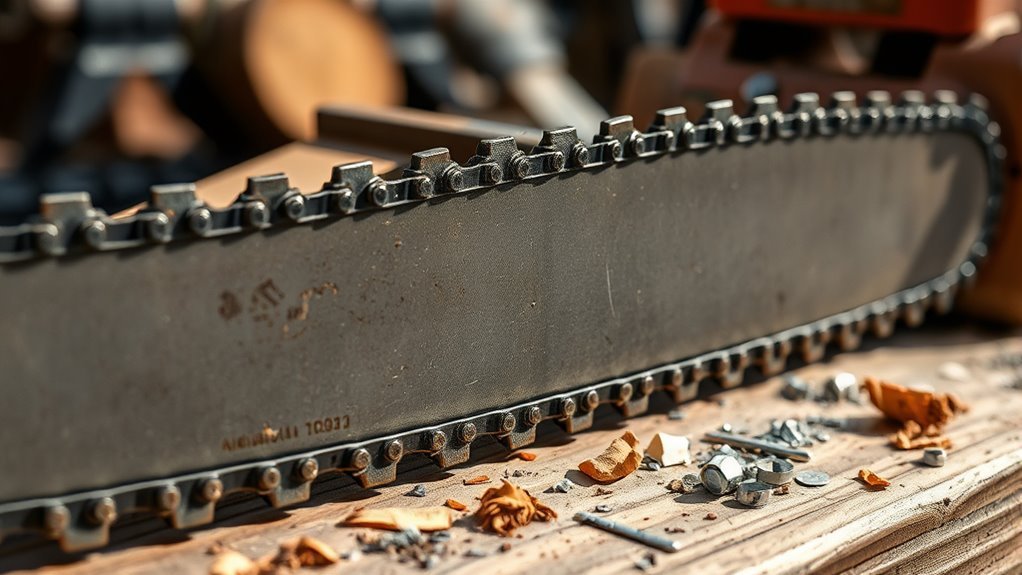
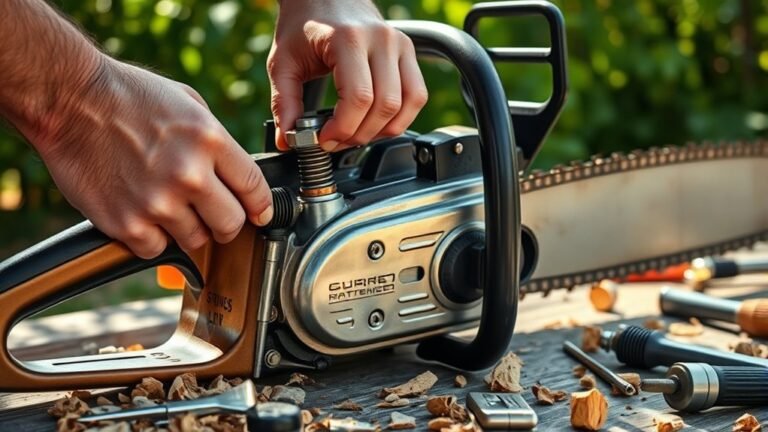
Although you might not notice it right away, your chainsaw chain wears down with each use and needs regular maintenance to keep cutting efficiently. Proper care includes monitoring chain tension and regularly inspecting depth gauges to maintain peak cutting performance.
Sharpening a chainsaw chain is typically necessary after 5 to 10 uses, but factors like cutting hardwood or hitting rocks can dull it faster. Regular maintenance, such as lubrication and adjusting tension, helps extend the chain’s sharpness and lifespan.
Key Signs Indicating It’s Time to Sharpen Your Chain

Keeping an eye on your chainsaw’s performance helps you spot when the chain needs sharpening. If you notice your chainsaw does not cut efficiently, it’s likely time to sharpen your chainsaw.
Monitoring your chainsaw’s efficiency helps you know exactly when it’s time for sharpening.
A dull chain reduces cutting speed and forces you to apply extra pressure, which can dull the chain further.
Watch for these key signs of a dull chain:
- Producing fine sawdust instead of wood chips.
- Cuts that wander, showing the chain isn’t cutting at the correct angle.
- Excessive vibration or overheating during use.
When you see these signs, it’s essential to sharpen a chainsaw promptly to maintain safety and cutting quality.
Don’t wait until the chain is severely dull, as this increases wear and the risk of accidents.
Factors Affecting Chainsaw Sharpening Frequency

Because several factors influence how often you need to sharpen your chainsaw, understanding these can help you maintain peak cutting performance.
Chainsaw maintenance depends on wood type, operator skill, and proper chainsaw care. Softer woods dull chains slower, while hardwoods and heavy-duty tasks demand more frequent sharpening.
Watching for signs of dullness like slower cutting or vibration is key. Adjusting the sharpening angle and file size during maintenance also affects cutting efficiency.
| Factor | Impact on Sharpening Frequency | Key Consideration |
|---|---|---|
| Wood Type | Hardwoods dull chain faster | Adjust sharpening rate |
| Operator Skill | Skilled users sharpen less | Proper cutting methods |
| Chain Condition | Worn chains need frequent care | Use correct file size |
Step-by-Step Chainsaw Sharpening Process
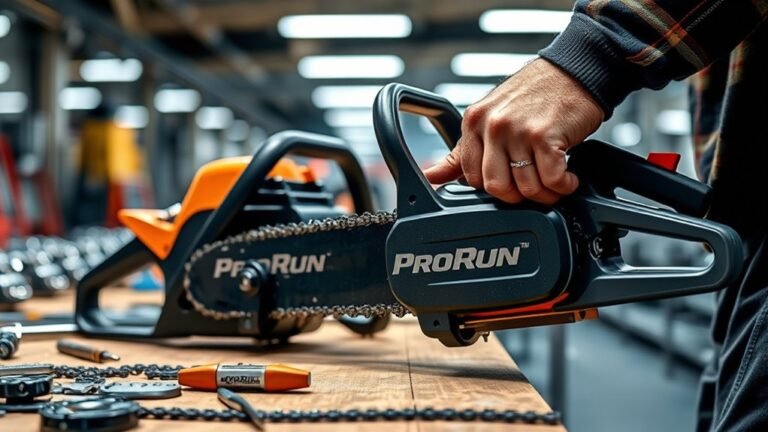
When you sharpen your chainsaw, start by securing it firmly in a vise to prevent any movement during the process. Use a round file that matches your chain’s pitch, paired with a guide to maintain a consistent 30-35° sharpening angle for maximum sharpness.
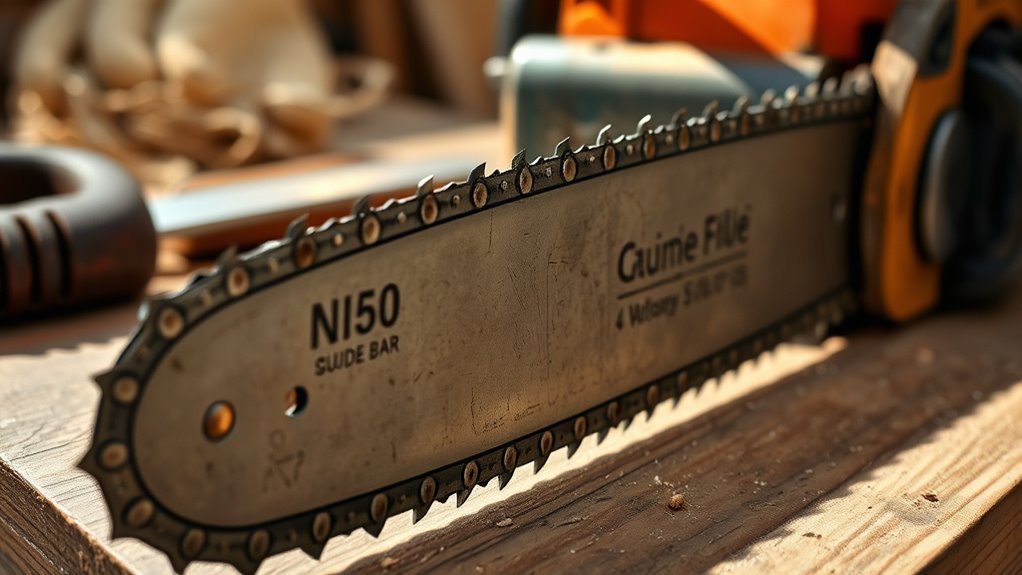
Sharpen each cutter with steady, forward strokes, keeping the number of strokes even to guarantee uniform cutting performance. Don’t forget to file the depth gauges with a flat file, which controls how deep the chain cuts through wood.
Follow a zigzag pattern across the chain to avoid uneven dull spots. It really helps to keep everything balanced and working smoothly.
Key steps to focus on:
- Maintain the correct sharpening angle using a guide
- Use even number of strokes on each cutter
- File depth gauges to keep safe cutting depth on the guide bar
Tips for Extending Chainsaw Chain Lifespan
Although chainsaw chains are designed to endure tough conditions, you can considerably extend their lifespan by regularly inspecting for dullness or damage and maintaining proper tension and lubrication.
Avoid over-sharpening to preserve sharpness and use proper tools for chain maintenance. Prompt chain replacement of worn parts prevents further chain damage and ensures peak performance.
Proper chain tensioning and lubrication reduce wear and extend chain lifespan. Also, avoid hitting rocks or nails to minimize impact damage.
| Tip | Benefit |
|---|---|
| Regular inspection | Detects dullness or damage |
| Proper tensioning | Reduces friction, prevents wear |
| Use proper tools | Maintains sharpness |
| Avoid contact with debris | Minimizes chain damage |
| Timely replacement | Extends overall chain lifespan |
Frequently Asked Questions
How Long Do Chainsaw Chains Last?
Chainsaw chains usually last through 5 to 10 sharpenings. But your chain’s lifespan really depends on a few things.
How often you use it plays a big role. Plus, the type of wood you cut matters too. And don’t forget, how well you maintain and care for it makes a difference as well.
Where Can I Find a Chain Guide Chart for Stihl Chainsaws?
Like a treasure map, you’ll find Stihl chain guide charts in your user manual, on Stihl’s official website, or at authorized dealerships.
Online forums also share downloadable charts to keep your chainsaw sharp and ready.
How Much Does Ace Hardware Charge to Sharpen a Chainsaw Chain?
Ace Hardware usually charges between $10 and $20 to sharpen your chainsaw chain, depending on chain size and location.
You might get discounts with purchases, but it’s best to call your local store for exact fees and services.
Prices can vary, so a quick phone call will help you know what to expect.
Do You Sharpen Chainsaws?
You do sharpen chainsaws—think of it like tuning a guitar before a gig.
Just like strings, your chain needs regular attention to keep cutting crisp and smooth, or else it’ll sound—and work—off key.
Conclusion
Keeping your chainsaw sharp is essential—it can improve cutting efficiency by up to 30%, saving you time and effort. By paying attention to signs like slower cutting and increased vibration, you’ll know exactly when to sharpen.
Regular maintenance not only boosts performance but also extends your chain’s lifespan. Follow the step-by-step guide, and you’ll keep your chainsaw in top shape, ready for any job without unnecessary wear or delays.
Remember, sharpening your chainsaw regularly is key to maintaining optimal cutting power and safety. Whether you’re a professional or a weekend warrior, knowing how often to sharpen your chainsaw can save you money and prevent damage. Stay on top of your chainsaw maintenance, keep it sharp, and enjoy smoother, faster cuts every time you use it.