How to Measure Chainsaw Bar Length in 3 Easy Steps
To measure your chainsaw bar length accurately, start by gathering a tape measure and placing the saw on a flat, stable surface for safety.
Measuring the chainsaw bar length correctly is essential for maintenance and finding the right replacement parts.
Next, measure from the tip of the cutting edge straight to where the bar enters the chainsaw body. Make sure not to include the non-cutting ends in your measurement, as that will give you an incorrect length.
Finally, double-check and record your measurement. It’s best to round to the nearest even inch to ensure accuracy.
If you want to be absolutely sure about precise results and compatibility, there are a few more tips that can help you out.
Key Takeaways
- Place the chainsaw on a flat surface and ensure it is turned off for safety before measuring.
- Measure the bar length from the tip of the cutting edge to where the bar enters the chainsaw body.
- Avoid including the sprocket nose or non-cutting ends in your measurement for accuracy.
- Use a tape measure or ruler and keep it straight along the bar edge during measurement.
- Double-check the measurement and cross-reference with the manufacturer’s markings or owner’s manual.
Gather the Necessary Tools

Before you measure your chainsaw bar, make sure you have a tape measure or ruler ready. This will help you get an accurate length from the tip of the bar to where it enters the chainsaw body. These measurement tools are essential for determining the correct bar length.
Place your cutting equipment—the chainsaw—on a flat surface to keep it stable and safe while you measure. When you’re ready, use the tape measure to measure the bar from tip to the point it enters the body. Be sure to avoid any non-cutting ends or bumpers.
Also, check the manufacturer label or markings on the bar’s tail end. These often indicate the bar length. Having these tools and following these steps guarantees you get a precise measure length for your chainsaw bar.
Measure the Chainsaw Bar Length Accurately
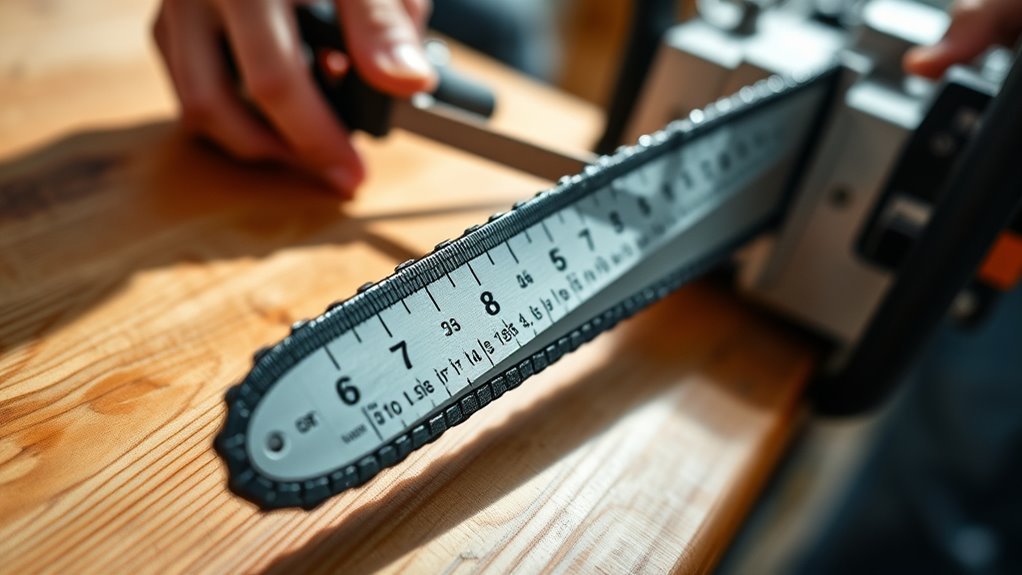
Once you have your measuring tools ready and your chainsaw placed securely, focus on measuring the bar length from the tip of the cutting edge to where the bar enters the chainsaw body. To measure the chainsaw bar accurately, use a tape measure or ruler along the edge, ensuring it stays straight.
Avoid including the sprocket nose or non-cutting parts. Often, the bar length is printed on the side or tip of the bar, giving you a quick reference.
You can also measure the chain by counting the chain drive links. If you’re unsure, just check your owner’s manual or reach out to your nearest dealer for help.
When measuring a chainsaw bar, take multiple readings and round up to the nearest even inch for standard sizing. This way, you’ll make sure you measure the bar correctly every time.
Record and Verify Your Measurements

Although measuring the chainsaw bar carefully is crucial, you should always double-check your readings to guarantee accuracy. Take multiple measurements and verify that they’re consistent.
Record your bar length clearly, rounding up to the nearest even number in inches to align with standard chainsaw bars. Cross-reference your recorded measurement with the specifications printed on the bars or in the owner’s manual to confirm it matches the measurement measured by chain drive.
This step ensures you select the correct replacement part. Also, verify that your measurement fits within the range of cutting equipment compatible with your saw and chain.
Keeping an accurate record of your measurements helps with future maintenance and ordering. By following these steps, you’ll avoid mistakes and ensure your chainsaw performs efficiently.
Frequently Asked Questions
How Do You Measure a Chainsaw Chain to See How Long It Is?
You lay your chainsaw chain flat and straight, then count the drive links or use a ruler to measure from the first to the last rivet.
Double-check the length with your chainsaw’s specs to guarantee a perfect fit.
It’s a simple way to make sure your chain matches up just right before you get started.
What Does LP Mean on a Chainsaw?
LP on a chainsaw usually means “Low Profile,” indicating a chain designed for precise, smaller cuts.
Check your saw’s manual, though, since it can also mean “Limited Power” or refer to specific chain designs for compatibility.
How Often Should I Replace My Chainsaw Bar?
You should replace your chainsaw bar every 3 to 5 years or sooner if you notice wear, damage, or frequent chain derailments.
Regularly inspect it to keep your saw safe and performing well.
It’s a good habit to check your bar often because a well-maintained bar means better cutting and fewer problems down the line.
Can I Put a 20 Inch Bar on a 16-Inch Chainsaw?
You can put a 20-inch bar on a 16-inch chainsaw only if your saw supports it.
Check your manual, sprocket, chain length, and power capacity first—otherwise, you risk damaging your chainsaw or reducing performance.
It’s not just about swapping bars; your chainsaw needs to handle the bigger size to work safely and efficiently.
Conclusion
Now that you know the simple steps to measure your chainsaw bar length, you might think it’s just another quick task. But here’s the twist—getting this measurement right can save you from costly mistakes or dangerous mishaps.
So, take a moment and double-check your numbers. Feeling confident the next time you gear up is worth that little extra effort.
Because when it comes to your chainsaw, precision isn’t just helpful—it’s essential. Measuring your chainsaw bar length accurately ensures you choose the right replacement parts and maintain optimal cutting performance.
Ready to measure like a pro? Just follow these easy steps, and you’ll handle your chainsaw maintenance like a seasoned expert!