How Does the Chain Go on a Chainsaw the Right Way?
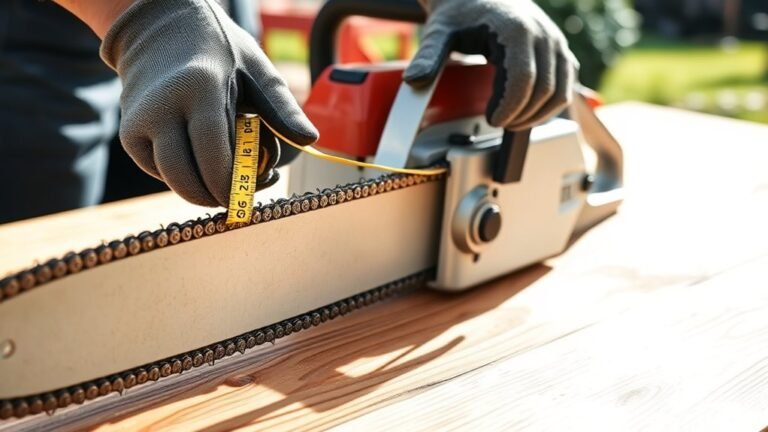
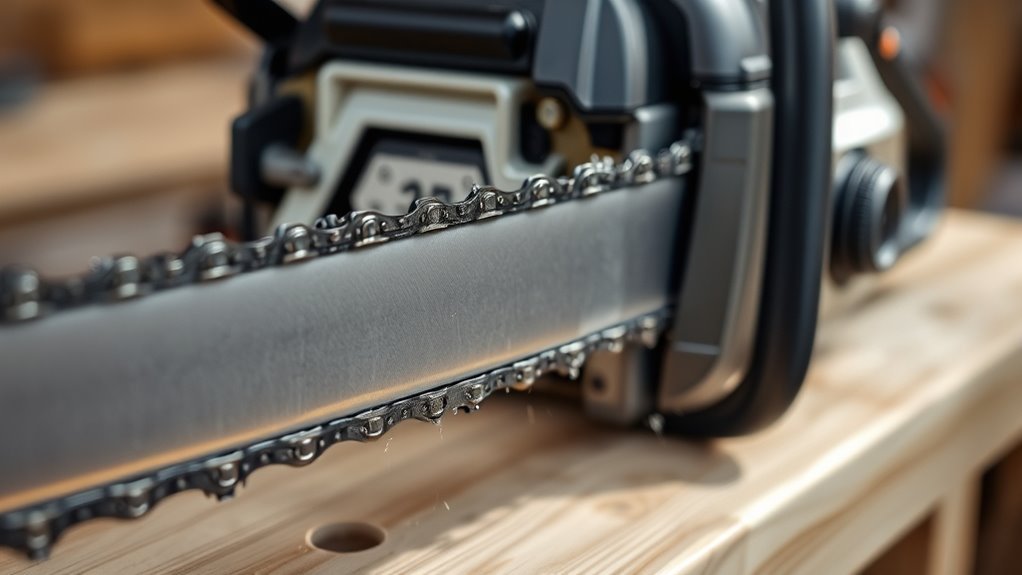
You put the chainsaw chain on with the cutting teeth facing away from the saw body, so they move forward along the top of the guide bar. The drive links should fit snugly into the bar’s groove, and the chain’s arrows point in the rotation direction.
Correct orientation helps the chain cut efficiently and safely without slipping or causing damage.
Keep the chain properly tensioned and lubricated to work smoothly.
If you want to get it right every time, there are key details to keep in mind.
Getting the chain on the right way is super important for both performance and safety.
So, always double-check the direction before you start cutting!
Key Takeaways
- The cutting teeth on the chain should face away from the chainsaw body, pointing toward the guide bar tip for correct cutting direction.
- Drive links must fit securely inside the guide bar groove, ensuring the chain tracks properly around the bar and sprocket.
- Confirm chain direction by checking directional arrows or markings on the chain before installation.
- Ensure the chain moves forward on top of the guide bar and backward underneath for proper rotation.
- After installation, adjust chain tension and apply lubrication for smooth, safe, and efficient operation.
Understanding the Components of a Chainsaw Chain
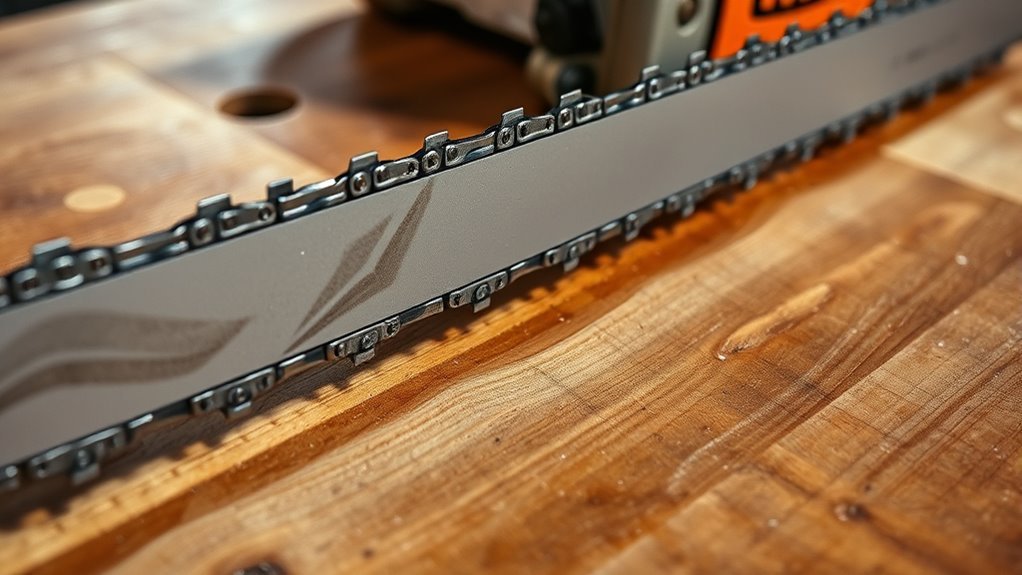
How exactly does a chainsaw chain cut through wood so efficiently? It’s all about the components working together.
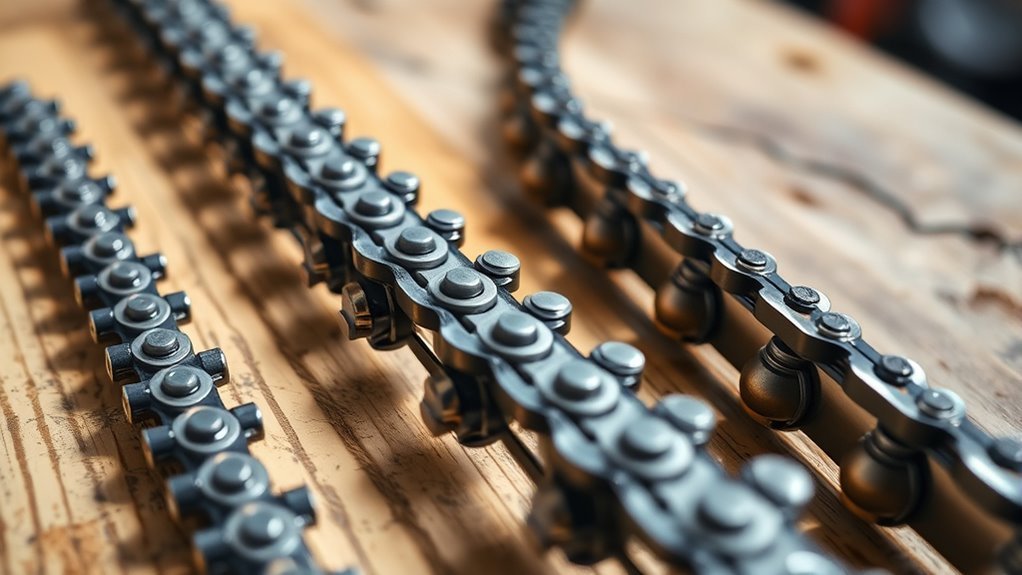
The drive links fit snugly into the guide bar’s groove and engage the sprocket, propelling the chain around the bar. The cutting teeth are the sharp parts that actually slice through wood, while depth gauges control how deeply those teeth bite in, balancing speed and safety.
You’ll notice the chain’s design provides both flexibility and stability, which keeps the motion smooth and durable. Maintaining proper chain tension is vital; too loose, and the chain may slip, too tight, and it can strain the parts.
Understanding these components helps you ensure your chainsaw performs at its best every time.
Why Correct Chain Orientation Matters
Because the chain’s cutting teeth must face the right way, installing the chain with correct orientation is essential for efficient and safe cutting. When you confirm proper orientation, the cutting teeth bite into wood effectively, boosting cutting efficiency and making your work smoother.
If the chain’s reversed, it scrapes rather than cuts, which not only wastes effort but also compromises safety. Incorrect placement can cause the chain to jump off the guide bar, increase vibration, and even lead to dangerous kickback.
The chain should move away from the saw body on the top of the guide bar and toward it on the bottom, maintaining stable operation. By prioritizing proper orientation, you protect yourself and optimize your chainsaw’s performance every time you use it.
How to Identify the Proper Direction of a Chainsaw Chain
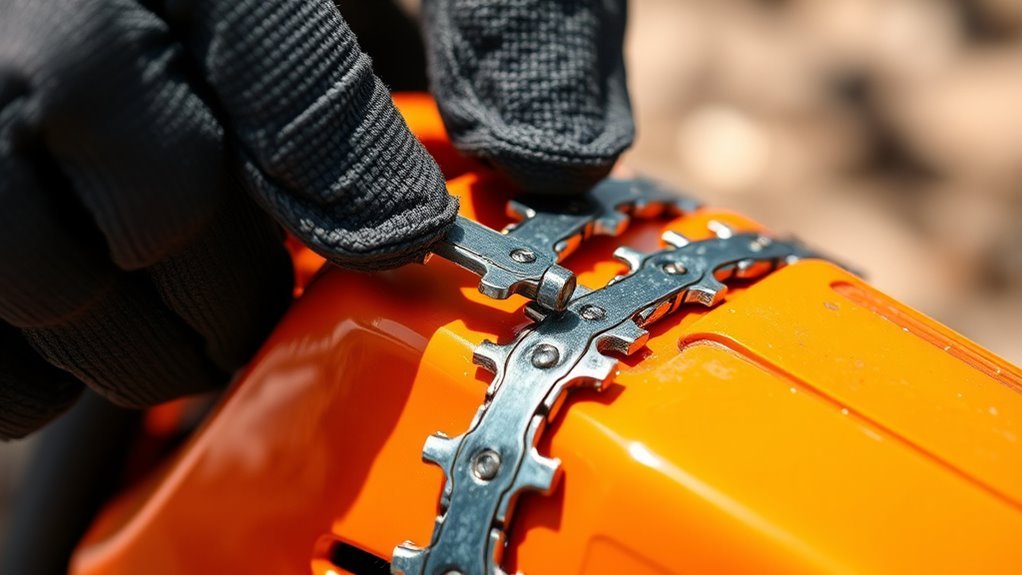
Before installing your chainsaw chain, you’ll want to verify its direction to guarantee safe and efficient cutting. Start by examining the cutting edges—they should face away from the guide bar’s body and point toward the bar tip.
Check the chain or guide bar for arrows or markings indicating the correct direction of rotation. When properly oriented, the chain moves away from the saw body on top and toward it on the bottom during operation.
Make sure the drive links fit snugly into the guide bar groove, so the chain can rotate smoothly without binding. Confirming this proper orientation during chain installation helps maintain cutting performance and prevents damage to your chainsaw.
Following these steps ensures you set up your chain the right way every time. It’s a simple check that saves you from headaches down the line!
Orientation Guidelines for Different Types of Chainsaw Chains
When setting up your chainsaw chain, you’ll want to make sure the cutting edges point away from the saw body toward the guide bar tip.
This rule applies to standard, low-profile, and semi-chisel chains alike for smooth, efficient cutting.
Always double-check the chain’s markings to confirm you’ve got it facing the right way.
It’s a quick step that can save you a lot of hassle down the line!
Standard Chain Orientation
How do you guarantee your chainsaw chain is oriented correctly? With standard chain orientation, the cutting teeth should face toward the tip of the guide bar, matching the chain’s rotation direction.
The drive links need to fit snugly into the guide bar’s groove, with their rounded side facing inward. For correct installation, look for directional arrows on the chain as a guide.
When installed properly, the sharp cutting teeth face outward, away from the saw body. This ensures efficient cutting and safe use.
Remember to check that:
- Cutting teeth point toward the bar tip
- Drive links’ rounded side faces inward
- Directional arrows guide installation
- Chain moves smoothly along the bar
- Top side of chain moves away from you
This way, your chainsaw works effectively and stays safe to use.
Low-Profile Chain Setup
Although low-profile chains have smaller drive links and cutting teeth, you still need to guarantee these teeth face toward the tip of the guide bar for proper cutting. When setting up your low-profile chain, check the direction of teeth carefully—they must point away from the saw body to ensure safety and performance.
Proper alignment means the drive links fit snugly into the guide bar’s groove, allowing the chain to move smoothly and efficiently. Before installation, verify the chain’s markings or arrows to confirm the correct rotation.
Regularly inspect the teeth’s orientation, especially when replacing or adjusting the chain, to maintain ideal cutting power and avoid hazards. Following these steps ensures your chainsaw operates safely and delivers consistent performance with a low-profile chain.
Semi-Chisel Chain Direction
Like low-profile chains, semi-chisel chains require careful attention to the direction of their cutting teeth to guarantee safe and efficient operation. You need to orient the semi-chisel chain so the rounded cutting corners face away from the saw body, pointing toward the tip of the guide bar.
Proper orientation maximizes cutting efficiency and safety.
Keep these in mind when installing your semi-chisel chain:
- Check the chain’s arrows or markings for correct rotation.
- Ensure cutting edges face outward for clean, effective cuts.
- Align drive links smoothly within the guide bar groove.
- Confirm the chain moves toward the guide bar tip.
- Avoid reversing the chain to prevent dull cuts and damage.
Following these guidelines ensures your semi-chisel chain performs at its best.
Signs of Incorrect Chain Installation and How to Fix Them
If your chainsaw chain scrapes the guide bar or sparks excessively, it’s a sign you installed it wrong. You might also notice unusual noises or the chain jumping off during use.
To fix this, turn off your saw, check the chain’s orientation, and adjust the tension before restarting. It’s pretty simple once you know what to look for!
Identifying Installation Errors
When you notice excessive scraping, dragging, or unusual noise while operating your chainsaw, these are clear signs that the chain might be installed improperly. Installation errors often stem from improper chain orientation or incorrect placement on the guide bar.
To spot problems, check the chain’s teeth direction and ensure they face the right way. Misalignment can cause the chain to jump off the guide bar or cut unevenly.
Watch out for these signs: teeth pointing toward the saw body, sharp edges facing away from the saw, sparks or smoke during operation, excessive vibration or slow cutting, and the chain slipping off the guide bar.
If you see these, turn off the saw and carefully adjust the chain according to the proper placement instructions. It’s better to take a moment and fix it than risk damage or injury.
Correcting Chain Orientation
Although installing a chainsaw chain might seem straightforward, incorrect orientation can cause scraping, dragging, and unsafe operation.
To verify correct orientation, check the teeth pointing on the guide bar: the sharp edges should face away from the saw body and move forward during cutting.
Visual indicators of wrong installation include excessive sparks, smoke, abnormal noises, or the chain jumping off.
| Sign | Cause | Fix |
|---|---|---|
| Scraping/dragging chain | Teeth pointing inward | Flip chain to correct teeth direction |
| Excessive sparks/smoke | Friction from wrong fit | Reinstall chain with proper tension |
| Abnormal noise/vibration | Chain misaligned | Adjust chain on guide bar properly |
| Chain jumps off guide bar | Incorrect chain path | Rethread chain following guide bar |
| Teeth pointing wrong way | Wrong chain side up | Reverse chain orientation |
Follow these steps to fix orientation and ensure smooth, safe cutting.
It’s really about taking a moment to double-check before you start. That way, you avoid problems and keep your work safe and efficient.
Steps to Safely Remove and Reinstall a Chainsaw Chain
Before you start removing the chainsaw chain, make sure to disconnect the power source or remove the spark plug to prevent accidental starts. This is super important for your safety.
To safely remove and reinstall the chain, follow these essential steps:
- Loosen the tensioning mechanism and carefully lift the chain off the guide bar, noting its orientation. Take your time with this so you don’t mess up how the chain sits.
- Inspect the chain for damage, rust, or dull teeth; clean the chain and guide bar thoroughly. It’s a good idea to give everything a good once-over before putting things back together.
- Verify the correct chain orientation by checking directional arrows; cutting edges must face away from the saw body. Getting this right ensures the chainsaw cuts properly.
- Reassemble the chain onto the guide bar, ensuring it sits properly. Make sure the chain fits snugly and isn’t twisted.
- Tighten the chain tension correctly and confirm smooth movement with proper lubrication before operating the chainsaw. A well-tensioned and lubricated chain keeps things running smoothly and safely.
Frequently Asked Questions
What Are the Differences Between Different Types of Chainsaw Chains?
You’ll notice chainsaw chains differ in tooth shape and spacing: standard chains cut generally, skip tooth chains cut faster with less vibration, ripping chains cut along the grain.
Low-profile chains suit light work, and semi-chisel chains resist dulling better. It’s all about picking the right chain for the job you need to do.
What Size Bar for Chainsaw?
Measure your task first—choose a bar size that fits your chainsaw and cutting needs. Bars range from 10 to 36 inches; remember, too long a bar can strain your saw.
Match wisely to work smart. Picking the right size helps your saw perform better and last longer.
How to Buy a Chainsaw Chain?
You’ll want to measure your chain’s pitch, gauge, and length first. Then, check your saw’s manual for specs.
Choose a chain type that fits your cutting needs and buy from trusted brands. This helps guarantee safety and quality.
How Does a Chainsaw Chain Work?
Your chainsaw chain works by rotating around the guide bar, with sharp teeth cutting wood fibers. The drive links engage the sprocket, moving the chain smoothly.
Meanwhile, depth gauges control cut depth for efficient, precise cutting. This setup helps you get the job done quickly and safely.
Conclusion
Now that you know how to fit your chainsaw chain the right way, you’ll keep your tool running like a well-oiled machine. Remember, the chain’s sharp edges must face forward on the top of the bar to slice through wood smoothly.
Installing it backward is like trying to row a boat upstream—frustrating and ineffective. Follow the steps carefully, and you’ll cut safely and efficiently every time.
By ensuring the chain goes on your chainsaw the right way, you not only boost performance but also enhance safety. A properly installed chain reduces the risk of kickback and uneven cutting, making your work easier and more precise. So, always double-check the chain direction before starting your job. This small step can turn tough cutting tasks into easy wins, helping your chainsaw deliver the best results every time.