How to Choose the Right Chainsaw File Size for a 3/8-Inch Chain
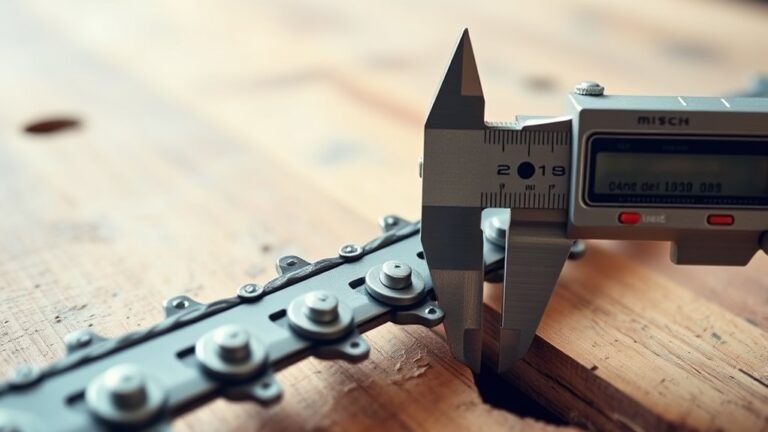
To choose the right file size for a 3/8-inch chainsaw chain, start by confirming your chain’s pitch. You can do this by measuring the distance between three rivets and then dividing that number by two.
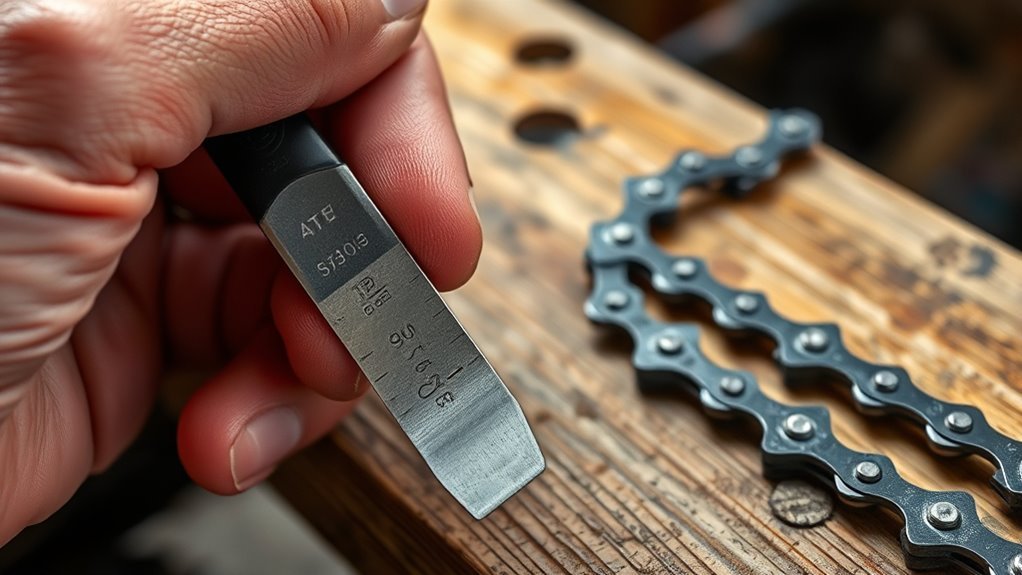
Most 3/8-inch chains typically require a 3/16-inch round file.
However, some chains might need a slightly different size depending on the manufacturer’s specifications. Using the correct file is key—it ensures even sharpening and better cutting performance.
If you want to master proper sharpening techniques and learn how to maintain your chainsaw chain effectively, keep reading.
You’ll find helpful insights ahead that make the whole process easier and more efficient.
Key Takeaways
- Measure the chain pitch by dividing the distance between three rivets by two to confirm it’s 3/8-inch before choosing a file.
- Use a 3/16-inch round file as the standard size for sharpening most 3/8-inch pitch chains.
- Verify the chain’s gauge and manufacturer recommendations to ensure the selected file matches cutting tooth size.
- Employ a file guide to maintain proper sharpening angles (30°-35°) for consistent and safe cutting performance.
- Replace dull files regularly and sharpen the chain after every few hours of use to maintain efficiency and safety.
Understanding Chainsaw Chain Pitch and Gauge
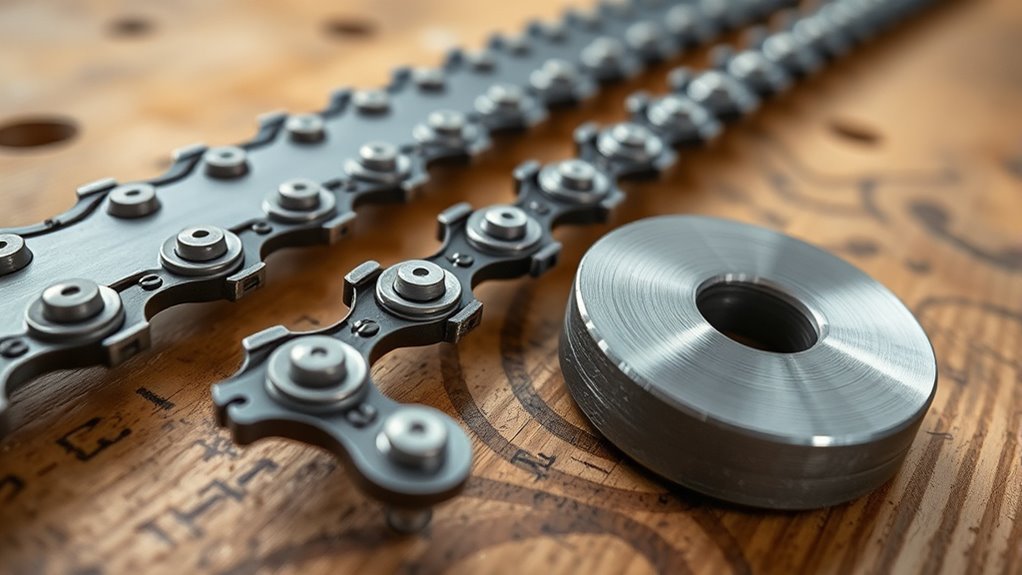
Although chainsaw chains may look similar, their pitch and gauge vary considerably, affecting how you choose the right file size. The pitch measures the distance between three consecutive rivets divided by two, usually in inches—like the common 3/8-inch pitch on many chainsaws. This measurement helps determine which file size fits best for sharpening.
Meanwhile, the gauge refers to the thickness of the drive link that slides into the guide bar, influencing chain compatibility. When you understand both pitch and gauge, you guarantee the file you pick matches the chain perfectly.
For example, a 3/8-inch pitch chain typically requires a 5/32-inch file for ideal sharpening. Grasping these details helps you maintain peak cutting performance and avoid dull, inefficient chains.
Common File Sizes for 3/8-Inch Chains
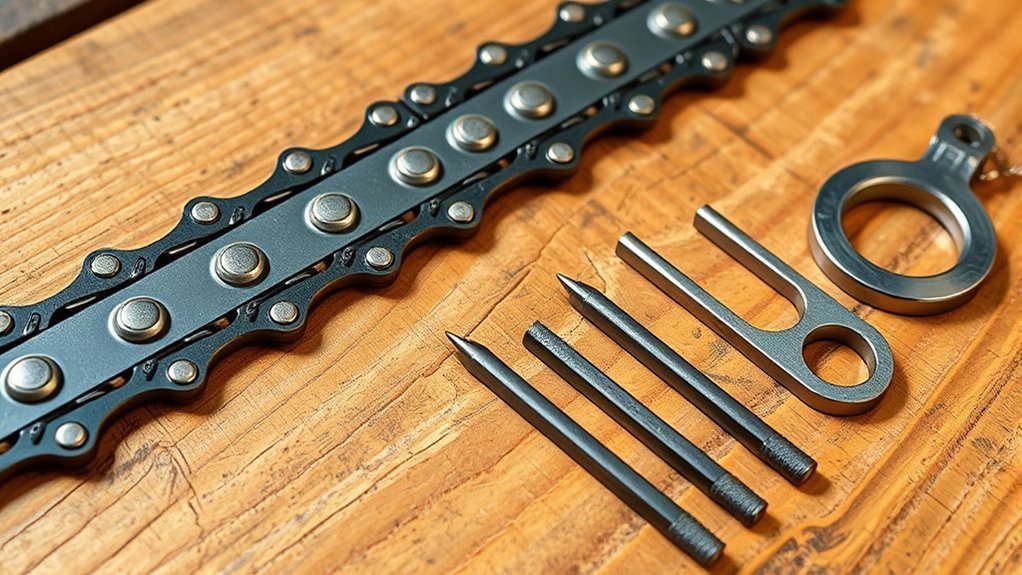
When sharpening a 3/8-inch chain, you’ll most often use a 5/32-inch file, which matches the standard chain pitch.
Some chains might need a 3/16-inch file, depending on their tooth design or cutting purpose.
Always check your chain’s specs to pick the right file size for the best performance and safety.
Standard 3/8-Inch File Size
How do you choose the right file size for sharpening a 3/8-inch chainsaw chain? Most 3/8-inch chains require a 7/32-inch file, which is the standard size recommended by manufacturers. This file size fits most full chisel chains, helping you maintain the proper cutting angles and extend the chain’s life.
However, if you have a semi-chisel 3/8-inch chain, an 11/64-inch file might be better suited to achieve ideal sharpening. Always double-check your chain’s specifications, especially its pitch and gauge, before picking a file size.
Using the correct file size ensures you sharpen efficiently without damaging the chain or shortening its lifespan. In most cases, sticking to the standard 7/32-inch file will keep your 3/8-inch chain cutting smoothly.
Chain Pitch and File
Selecting the right file size depends largely on your chain’s pitch, which measures the distance between the drive links. For a 3/8-inch pitch chain, the ideal file size is typically 5/32 inches.
This size is slightly smaller than the 3/16-inch file used for larger chains, ensuring precise sharpening and excellent cutting performance. Here’s what you need to know:
- The 5/32-inch file is the most common for 3/8-inch pitch chains.
- Different chains might require specific sizes, so always check manufacturer guidelines.
- Using the correct file size maintains your chain’s efficiency and extends its life.
- Avoid using files that are too large or too small to prevent damage or poor sharpening.
Stick to these tips to keep your chainsaw cutting sharp and smooth. It really makes a difference!
File Size Variations
Although 5/32 inch is the most common file size for sharpening 3/8-inch pitch chains, you might find that some chains call for a 3/16 inch or even a 7/32 inch file. The 3/16 inch file typically suits chains with larger or specialized pitches, while the 7/32 inch file may be recommended by certain manufacturers for standard 3/8-inch chains.
It’s essential to verify your chain’s manufacturer specifications before choosing a file size. Using the correct file ensures you maintain proper filing angles, which not only improves cutting efficiency but also extends the chain’s lifespan.
Picking the right file size means you’ll sharpen your chain effectively without damaging it or reducing its performance. So, always match your file size to your specific chain for the best results.
How to Identify Your Chain’s Specifications
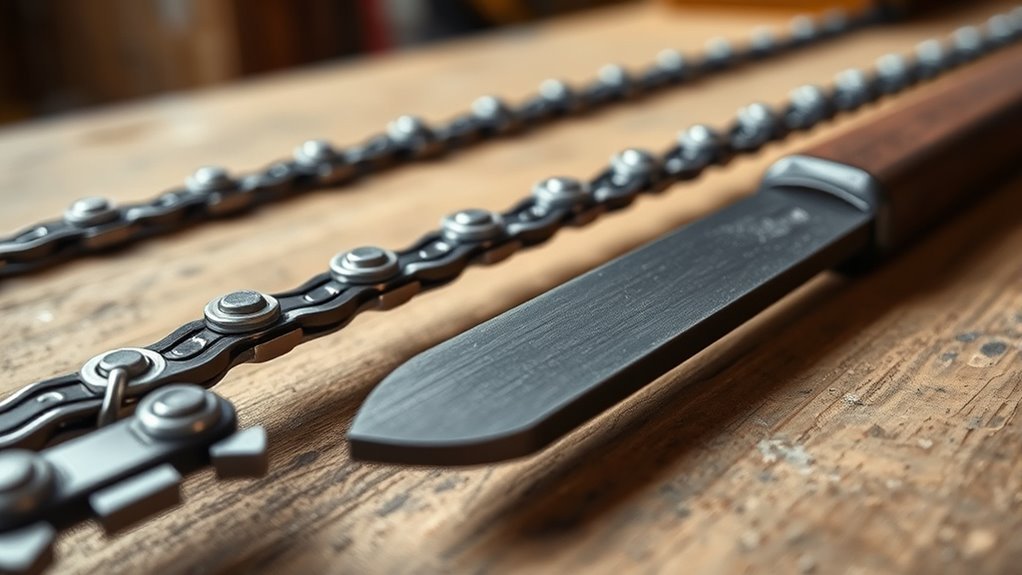
Before you choose a chainsaw file size, you’ll need to identify your chain’s key specifications: pitch, gauge, and the number of drive links. These details help you pick the right sharpening tools and file size.
First, find the pitch. Check the inside of the chain or the bar for a stamp. Pitch measures the distance between three consecutive rivets divided by two (for example, 3/8-inch).
Start by identifying the pitch, found stamped inside the chain or on the bar.
Next, locate the gauge. Look on the sideplate or chain packaging for the chain thickness.
Then, count the drive links. These are the small tabs that fit into the bar’s groove. You can count them directly or just check the specs.
Finally, refer to your user manual. It often lists all chain specifications clearly.
Knowing these specs makes sure you sharpen your chain correctly and safely. So, take your time with this step!
Tools Needed for Accurate Chain Sharpening
To sharpen your chainsaw chain accurately, you’ll need the right tools that match your chain’s pitch and gauge. For a 3/8-inch pitch chain, a round file with a 3/16-inch diameter is ideal.
Make sure the file is sharp, smooth, and free of burrs to shape the cutting teeth effectively. Using a file guide helps maintain consistent sharpening angles, improving accuracy and cutting performance.
Regularly inspect your file for wear and replace it as needed to avoid uneven sharpening. These tools ensure your chain stays sharp and cuts efficiently, extending its lifespan and keeping your work safe and smooth.
Having the right equipment makes all the difference in maintaining your chainsaw’s performance. Trust me, it really pays off in the long run!
Step-by-Step Guide to Measuring Your Chain
When you measure your chainsaw chain accurately, you guarantee you pick the right file size for sharpening. Follow these steps to measure your 3/8-inch chain correctly:
First, locate three consecutive rivets on the chain. Then, use a ruler or caliper to measure the distance between the first and third rivets.
Next, divide this measurement by two to find the chain’s pitch—it should be 3/8 inch for your chain. After that, check the chain gauge, which is the thickness of the drive link, using calipers or refer to the manufacturer’s specs.
Make sure to record your measurements and compare them with the manufacturer’s guidelines. This way, you’ll select the proper file size—usually 3/16 inch for a 3/8-inch pitch chain—giving you precise and effective sharpening results every time.
Manufacturer Recommendations and File Size Variations
Although many chains share similar dimensions, manufacturers often recommend specific file sizes for their 3/8-inch chains. These are commonly around 7/32 inch or 3/16 inch, depending on the pitch and gauge.
For instance, if you have a .325 pitch chain, a 3/16 inch file usually fits best. This aligns perfectly with the chain’s design for maximum sharpening.
Since chain designs vary in gauge and pitch, you might find some require a different file size. That’s why it’s essential to check your manufacturer’s manual or specifications before choosing a file.
Using the recommended file size helps you sharpen efficiently, maintain cutting performance, and extend your chain’s life. This way, your saw runs smoothly every time.
Impact of Using Incorrect File Sizes
Choosing the right file size isn’t just about matching manufacturer recommendations—it directly affects how well your chainsaw performs.
Using an incorrect file size can cause uneven sharpening and reduce cutting efficiency, putting your safety at risk.
Here’s what happens when you don’t use the right file size:
- Uneven sharpening lowers cutting performance and increases kickback risk.
- Excessive wear on the chain or file leads to more frequent replacements.
- Improper tooth angles cause the chain to dull faster during use.
- Inadequate sharpening results in poor cutting and wasted effort.
Maintenance Tips to Extend Chain and File Life
To extend the life of your chainsaw chain and files, you should regularly inspect them for wear. Replace any dull or damaged parts before they cause further issues.
Sharpen your chain after every few hours of cutting. This helps prevent excessive wear on both the chain and files.
Always use the correct file size and maintain the proper filing angle and depth gauge settings. Doing this ensures consistent sharpening and prolongs file life.
Keep your files clean and dry, storing them in a protective case to avoid rust and deterioration.
Troubleshooting Common Sharpening Issues
When your chain isn’t cutting smoothly or seems dull quickly, you might be using the wrong file size for your chain. A 3/8-inch chain typically requires a 3/16-inch file. Using the wrong size can cause uneven cuts and dullness.
To troubleshoot sharpening issues, follow these steps:
- Verify your file matches the chain’s pitch and tooth size, usually 3/16 inch for 3/8-inch chains.
- Maintain the proper sharpening angle, generally between 30° and 35°, to avoid inefficient cuts.
- Inspect the chain for damage or excessive wear that could affect sharpening results.
- Reassess your sharpening technique and file size if problems persist to ensure *effective* cutting performance.
Following these tips keeps your chainsaw sharp and efficient. It really makes a difference when you keep things right!
Frequently Asked Questions
How to Pick Chainsaw File Size?
You pick your chainsaw file size by checking your chain’s pitch and gauge.
Always consult your chainsaw manual or manufacturer’s guide to find the exact file size.
This way, you ensure effective sharpening without damaging your chain.
What Angle to Sharpen 3/8 Chainsaw Chain?
You should sharpen your 3/8-inch chainsaw chain at about a 30° angle, which is the most common and efficient for general cutting.
Keeping this angle consistent boosts cutting performance and extends your chain’s life. It’s a simple step that really makes a difference when you’re out in the woods or working on a project.
Is .325 Pitch the Same as 3/8 Pitch?
No, .325 pitch isn’t the same as 3/8 pitch.
You can’t swap them because their measurements differ, meaning you’ll need different sprockets, guide bars, and files to properly maintain each chain type.
How to Check the Size of a Chainsaw Chain?
Check the pitch, check the gauge, check the drive links. You’ll find pitch stamped or measure rivet distance, gauge marked or measured with calipers, and count drive links.
Always confirm with your chainsaw’s manual for accuracy. It helps to double-check so you get the right size every time.
Conclusion
Choosing the right chainsaw file size for your 3/8-inch chain is like finding the perfect key to open smooth, efficient cutting. Using the right file sharpens your chain’s teeth with precision, turning your saw into a roaring beast ready to tackle any wood.
Skip the guesswork—measure carefully and follow guidelines. Maintaining your tools regularly makes a big difference.
With the right care and the correct chainsaw file size for a 3/8-inch chain, your chainsaw will sing through timber like a finely tuned instrument every time you pull the trigger. Remember, choosing the correct file size ensures sharper cuts, longer chain life, and safer operation. So, invest a little time in selecting the right file, and your chainsaw will reward you with smooth, efficient cutting every time.