Are Battery Chainsaws Any Good and How to Choose Them
Battery chainsaws are great if you want cordless freedom, quieter use, and lighter weight for most cutting tasks. They deliver solid power and decent cutting speed but aren’t ideal for large logs or heavy-duty milling. These tools are perfect for homeowners and casual users who need convenience without the hassle of cords or gas engines.
When choosing a battery chainsaw, consider voltage for power and battery capacity for runtime. The bar length should match the type of cutting you plan to do.
Also, don’t forget to check important safety features that protect you during operation.
Understanding these factors helps you pick the right saw for your needs. Keep exploring to uncover the best models and tips for peak performance.
With the right information, you’ll find a battery chainsaw that makes your work easier and more efficient.
Key Takeaways
- Battery chainsaws offer portability, quiet operation, and zero emissions, making them ideal for light to medium cutting tasks in noise-sensitive areas. They’re super handy if you want something easy to carry around without the noise and fumes of gas models.
- When choosing one, look for a higher voltage, typically between 40V and 82V, plus enough battery capacity. This ensures you get enough power and longer runtime for tougher jobs.
- It’s also smart to pick chainsaws with ergonomic designs and lightweight builds. Features like chain brakes and low-kickback chains really help keep you safe and comfortable while working.
- Don’t forget to check how long the battery lasts and how quickly it recharges. You want a chainsaw that can keep up with your work without too many breaks.
- Brands like Stihl, Milwaukee, and Makita are top choices. They offer reliable battery chainsaws with different power levels, durability, and features to match what you need.
Advantages of Battery Chainsaws
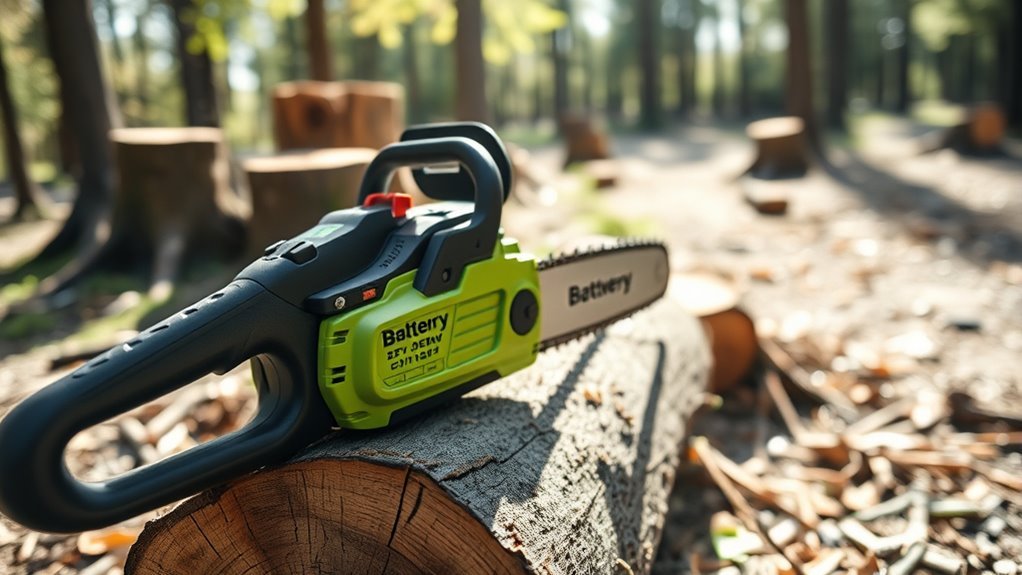
Although you might be used to petrol chainsaws, battery chainsaws offer impressive portability since they don’t require cords, making them perfect for remote or hard-to-reach spots. You’ll appreciate their cordless design, which lets you move freely without worrying about power outlets or tangled cables.
Modern battery chainsaws deliver cutting power that rivals petrol models, with chain speeds reaching up to 30 meters per second. They’re also quieter and produce zero emissions, so you can work in noise-sensitive areas without disturbing neighbors or harming the environment.
Plus, lightweight designs—some under 10 pounds—reduce fatigue during extended use. Advances in battery technology mean you get longer runtimes and efficient cutting performance, allowing you to tackle multiple tasks on a single charge without compromising power or convenience.
Limitations Compared to Gas-Powered Models

While battery chainsaws offer great convenience, they don’t quite match the raw power and endurance of gas-powered models. You’ll notice that battery saws usually have lower cutting power, with chain speeds around 25-30 m/sec. Gas saws, on the other hand, deliver higher performance and torque.
This difference really shows when tackling tough jobs like milling or cutting large logs. Battery chainsaws also have limited run time—typically allowing 40-60 cuts per charge—and they need long recharge periods. Plus, the heavier batteries can make the saws bulkier and harder to handle during extended use.
Key Features to Evaluate in Battery Chainsaws

When choosing a battery chainsaw, you’ll want to focus on power and performance to guarantee efficient cutting.
Battery life and charging speed are vital so you can work longer without interruptions.
Don’t forget ergonomics and safety features, which keep you comfortable and protected during use.
Power and Performance
Because battery chainsaws now reach chain speeds up to 30 m/sec, matching petrol models, you can expect efficient cutting performance for most tasks.
When choosing a battery-powered chainsaw, consider key factors like chain speed, bar length, and motor voltage. Higher voltage systems, typically between 40V and 82V, deliver more torque, helping you handle tougher jobs with ease.
The bar length affects cutting capacity—longer bars tackle larger logs but may reduce maneuverability. Also, pay attention to the chain quality; professional-grade narrow gauge or carbide chains boost cutting efficiency and durability.
Evaluating performance benchmarks such as cuts per watt-hour alongside chain speed gives you a clearer picture of how well the saw suits your needs without compromising power or precision.
Battery Life and Charging
How long your battery chainsaw runs on a single charge can make all the difference during a project. Battery capacity, typically measured in watt-hours, directly affects runtime—higher capacity batteries like 9.4Ah at 82V provide longer cuts and better performance on demanding tasks.
Charging time varies considerably; fast chargers can refill batteries in about 30 minutes, while standard chargers might take over 1 hour 20 minutes. This impacts how quickly you can get back to work.
Keep in mind that battery life declines with use and age, so avoid fully draining the battery and store it properly to extend its longevity. Also, check if the battery is compatible with other tools you own, as some brands offer system-based batteries that add convenience across devices.
Ergonomics and Safety Features
While choosing a battery chainsaw, you’ll want to focus on ergonomics and safety features that make your work easier and protect you from injury. Look for models with comfortable handle designs, balanced weight distribution, and textured grips to reduce fatigue and improve control during use.
Safety features like chain brakes, low-kickback chains, and hand guards are essential for preventing accidents. Also, pay attention to easy-to-access controls and tool-less chain tension systems, which let you make quick adjustments without hassle.
Lightweight chainsaws, such as the Ryobi at 14.9 lbs, enhance maneuverability and reduce strain during extended projects. Prioritizing ergonomics and safety features will help you maintain better control and work confidently in various environments, keeping both efficiency and safety top of mind.
Understanding Voltage and Battery Capacity
When choosing a battery chainsaw, you’ll want to understand how voltage and battery capacity affect its performance. Voltage, which ranges from 20V to 82V, directly impacts the power and cutting ability of the saw.
Higher voltage means more power, making 60V or 80V models ideal for tougher, professional tasks. Battery capacity, measured in ampere-hours (Ah), doesn’t increase power but extends runtime.
A larger capacity lets you work longer before recharging, allowing more cuts or extended use. Together, voltage and battery capacity determine how powerful and long-lasting your chainsaw will be.
Balancing these two factors helps you pick the right tool for your cutting needs, ensuring you get both enough power and sufficient runtime for the job at hand.
Importance of Bar Length for Different Tasks
Choosing the right bar length for your chainsaw can make a big difference in how efficiently you cut through wood. If you pick a bar that matches the size of your task, you’ll work faster and tire less.
Let’s look at which bar lengths suit different jobs to help you get the best performance. It’s all about matching the tool to the task!
Bar Length Task Matching
How do you know which bar length suits your cutting task best? Proper bar length task matching is key to balancing cutting capacity and maneuverability.
Choosing the right bar length lets you work efficiently without overstraining your battery chainsaw.
Larger bars (12-16 inches) handle heavy-duty jobs like storm cleanup and hardwood cutting with greater cutting capacity.
Smaller bars (6-8 inches) excel in tight areas, pruning, and light yard work, offering superior maneuverability.
Shorter bars improve control during overhead or precision cuts, reducing user fatigue.
Using a bar length suited to your task prevents motor strain and potential damage.
Matching bar length to the job ensures peak performance and safety every time.
Impact on Cutting Efficiency
Because the bar length directly affects cutting speed and control, picking the right size can substantially boost your chainsaw’s efficiency.
With a battery-powered chainsaw, choosing a longer bar size (12-16 inches) lets you cut larger logs and storm debris faster. This reduces the number of passes you need to make and enhances your work efficiency.
On the other hand, a smaller bar (6-8 inches) offers better precision in tight spaces and light yard tasks. It helps minimize fatigue and gives you increased control.
Using the correct bar size not only improves cutting speed but also prevents motor overload and chain binding. This ensures smoother operation and a longer tool life.
Ultimately, matching bar length to your task maximizes safety, cutting efficiency, and overall productivity with your battery-powered chainsaw.
Weight and Ergonomics Considerations
Although power and battery life are essential, you’ll find that weight and ergonomics play an equally important role in how comfortable and efficient a chainsaw feels during use. When choosing a battery chainsaw, consider these factors:
- Ryobi’s 40V HP model weighs just 14.9 lbs, making it light and easy to handle.
- Greenworks 82V HOG offers excellent ergonomics with a well-designed handle that reduces strain.
- Milwaukee’s dual-battery saw is heavier at 17.4 lbs, which might cause fatigue.
- Proper handle placement and shape improve control and comfort.
- Overall balance affects maneuverability; lighter saws like Ryobi are agile, while heavier ones provide stability.
Focusing on weight, ergonomics, handle design, and balance ensures you pick a saw that feels right for your tasks.
It’s all about finding the right fit for your needs so you can work comfortably and efficiently.
Safety Features and Protective Gear
When using a battery chainsaw, you need to rely on essential safety mechanisms like chain brakes and handguards to keep accidents at bay.
Wearing protective gear such as helmets, gloves, and safety glasses will shield you from flying debris and chain slips.
Combining these features with proper precautions helps you stay safe and in control during every cut.
Essential Safety Mechanisms
How do battery chainsaws keep you safe during operation? They come loaded with essential safety features designed to minimize risks. For instance, a chain brake instantly stops the chain during kickback or sudden moves.
Safety lockouts prevent accidental starts, while low-kickback chains reduce the chance of dangerous rebounds. Here are key safety mechanisms to look for:
- Chain brake to halt the chain instantly
- Safety lockouts or trigger interlocks to avoid unintentional activation
- Low-kickback chains that lessen kickback risks
- Handguards protecting your hands from debris and chain
- Regular maintenance checks ensuring all safety features work properly
Recommended Protective Equipment
You should always wear the right protective gear when using a battery chainsaw to stay safe and comfortable. Essential safety gear includes a helmet with a face shield, safety goggles, hearing protection, gloves, and specialized chainsaw pants or chaps.
This protective equipment guards you against cuts, improves grip, and reduces vibration impact. It’s all about keeping you safe while making the job easier.
Don’t forget to check your chainsaw’s safety features before use. The chain brake is especially important—it instantly stops the chain if kickback occurs, preventing serious injury.
Other safety mechanisms like kickback reduction, anti-vibration handles, and safety lockout switches also enhance chainsaw safety. By combining reliable safety gear with well-maintained equipment, you’ll protect yourself effectively and make every cutting task safer and more efficient.
Performance Testing and Runtime Expectations
Although battery chainsaws have traditionally lagged behind gas models, recent performance tests show they can match or even exceed expectations in chain speed and cutting ability. When considering battery charge and runtime, here’s what you should know:
Chain speeds can reach up to 30 m/sec, rivaling gas saws. A full battery charge typically allows 40 to 66 cuts, depending on the cutting tasks. Recharge times vary from 59 minutes to over 1 hour 21 minutes, which affects work continuity.
Efficiency, measured in cutting inches per watt-hour, differs widely; some models achieve 43 in/WH. Properly equipped battery chainsaws handle demanding jobs but require planning around battery capacity and recharge intervals.
Understanding these performance testing results helps set realistic runtime expectations for your projects. So, keep these points in mind when you’re choosing and using a battery chainsaw.
Top Brands and Model Comparisons
Battery chainsaws have made significant strides in performance, but choosing the right one depends largely on the brand and model features. Top brands like Stihl, Husqvarna, Makita, Milwaukee, and Greenworks offer options tailored to different needs.
Choosing the right battery chainsaw hinges on brand and model features tailored to your specific needs.
For professional users, Stihl’s MSA 70 C-B and MSA 300 C-O stand out with lightweight designs and chain speeds up to 30 m/sec. Milwaukee models excel in endurance and quiet operation, also hitting chain speeds near 30 m/sec.
Greenworks provides professional-grade features at a more affordable price, such as aggressive felling spikes on the HOG 24”. Makita’s 36V XGT series offers versatility and quick recharge times, appealing to pros and serious DIYers alike.
Comparing these battery chainsaws helps you pick the best fit for your tasks and budget. It’s all about matching what you need with what each brand delivers.
Maintenance Tips for Longevity and Performance
To keep your chainsaw running smoothly and extend its lifespan, regular maintenance is essential. You’ll want to focus on these key tasks to ensure top performance and safety:
Clean debris from the bar groove and sprocket to prevent chain slippage. Sharpen the chain regularly to maintain a sharp chain and reduce motor strain.
Check the battery pack’s capacity and replace it if runtime drops markedly. Also, inspect safety features like the chain brake and safety lockout before each use.
Store your chainsaw in a dry place and clean it thoroughly after every job. Following these tips helps you get the most out of your battery chainsaw while keeping it safe and reliable for years to come.
Frequently Asked Questions
Are Electric Chainsaws as Powerful as Gas?
Yes, electric chainsaws can be as powerful as gas ones, especially high-voltage models. You’ll get comparable chain speed and torque for many tasks.
Plus, they operate more quietly and produce no emissions, making them a solid choice. It’s definitely worth considering if you want something efficient and eco-friendly.
What Is a Good Small Battery Chainsaw?
Like a trusty sidekick, a good small battery chainsaw weighs around 2-3 pounds and sports a 6-8 inch bar. It also offers safety features, which is always a plus.
You’ll find it perfect for light pruning, trimming, and easy handling. It makes those quick jobs feel like a breeze!
Will an Electric Chainsaw Cut Through a Tree?
Yes, you can cut through small to medium trees with an electric chainsaw. Just pick one with enough power and chain speed.
And always use proper safety gear to protect yourself while working. It’s important to stay safe out there!
What Is the Most Reliable Battery Chainsaw?
You’ll find the most reliable battery chainsaws from brands like Milwaukee, Greenworks, and Husqvarna. Milwaukee excels in endurance, making it a great choice if you need something that can keep going for a long time.
Greenworks strikes a nice balance between speed and reliability. It’s perfect if you want something that’s both fast and dependable.
On the other hand, Husqvarna offers lightweight, consistent performance that’s ideal for professional use. So, if you need something easy to handle but still powerful, Husqvarna’s got you covered.
Conclusion
Battery chainsaws offer convenience, quiet operation, and low maintenance, making them ideal for light to medium tasks. While they may lack the raw power and extended runtime of gas models, they excel in portability and ease of use.
They’re also great for those who want something more environmentally friendly. When choosing one, consider voltage, battery capacity, bar length, and safety features. These factors can really make a difference in performance and comfort.
With proper care, you’ll enjoy reliable performance and efficient cutting. Plus, battery chainsaws are known for their long-lasting use, which means you can tackle your projects confidently and safely. So, if you’re looking for a tool that balances power with convenience and eco-friendliness, a battery chainsaw might just be the perfect choice for you.