How to Mix Chainsaw Gas in 3 Easy Steps
To mix chainsaw gas properly, you need just three easy steps.
First, gather fresh gasoline and two-stroke oil designed specifically for air-cooled engines. Using the right type of oil is key to keeping your chainsaw running smoothly and avoiding engine damage.
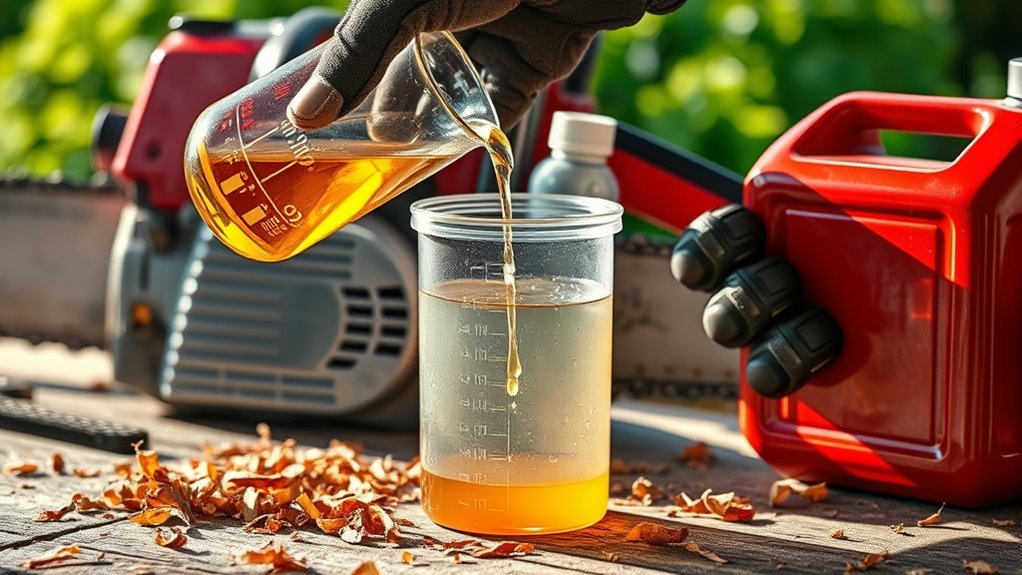
Next, carefully measure your gas and oil using the correct ratio—commonly 50:1. Pour both into a clean, approved container to ensure safety and prevent contamination.
Finally, secure the lid tightly and shake the mixture vigorously for at least 30 seconds. This helps blend the fuel and oil evenly.
Getting your fuel mix right isn’t just about performance; it also extends the life of your chainsaw. Keeping these steps in mind makes prepping your chainsaw quick and safe.
Key Takeaways
- Use fresh, ethanol-free gasoline and two-stroke oil labeled for air-cooled engines. Make sure you have the right type of oil for best results.
- Measure gasoline and two-stroke oil accurately according to the recommended fuel-to-oil ratio. Getting this right is key to keeping your chainsaw running smoothly.
- Pour oil into gasoline in a clean, approved container to avoid contamination. Always use a proper container to keep things safe.
- Secure the container lid tightly and shake vigorously for at least 30 seconds. This helps mix everything thoroughly.
- Check the mixture for uniform color and consistency before use. If it looks right, you’re good to go!
Gather the Right Materials for Mixing Chainsaw Fuel

Before you start mixing chainsaw fuel, make sure you gather all the right materials. You’ll need clean gas, ideally ethanol-free gas, to guarantee a fresh fuel mix that keeps your engine running smoothly.
Start with clean, ethanol-free gas for a fresh mix that keeps your chainsaw running smoothly.
Use measuring cups or pre-measured oil bottles to get the precise amount of two-stroke fuel oil per 1 gallon of gasoline. Avoid using motor oil or oils meant for water-cooled engines; always choose two-stroke oil labeled for air-cooled engines.
Have an approved gasoline container ready to store your mixture safely and prevent contamination. Don’t forget safety gear like gloves and a funnel to avoid spills when transferring fuel to your chainsaw’s fuel tank.
Using the right materials ensures your chainsaw performs efficiently and lasts longer. It’s worth taking the time to get it right!
Measure and Combine Gasoline With Two-Stroke Oil
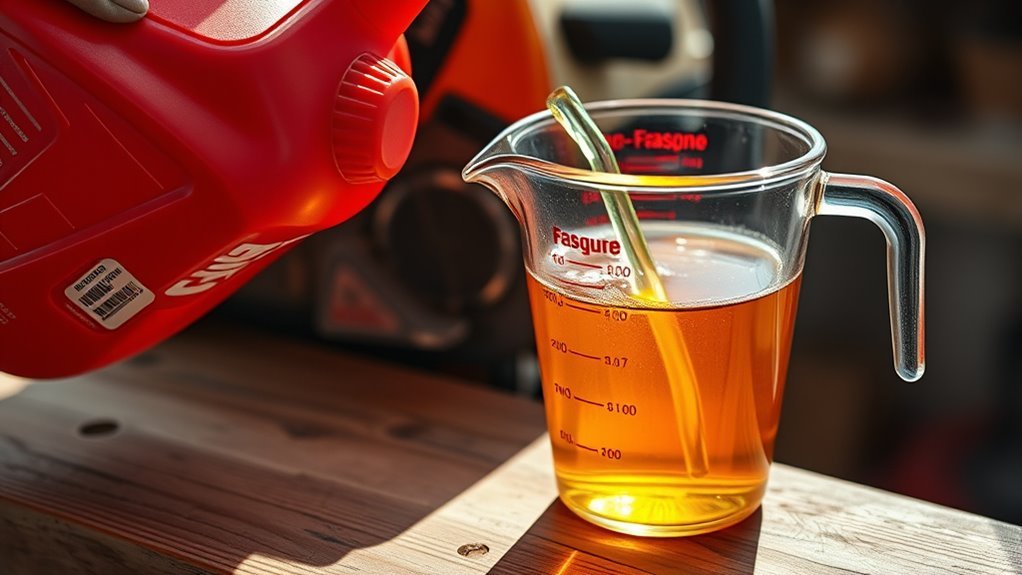
Once you have all your materials ready, it’s time to measure and combine the gasoline with two-stroke oil carefully. Always use a clean, approved fuel container to prevent contamination.
Start by measuring the exact amount of fresh gas needed for your chain saw’s fuel volume. Then, add the correct ounces of oil based on the recommended fuel-to-oil ratio—commonly 2.6 ounces of two-stroke oil per gallon for a 50:1 mix.
Carefully pour the oil into the gasoline container to avoid spills. Double-check your measurements to guarantee you’re mixing fuel accurately.
Properly measuring and combining gasoline with two-stroke oil is vital for maximum engine performance and longevity. This precise mixing helps keep your chain saw running smoothly and efficiently.
Secure and Shake the Mixture for Optimal Blending

After adding the oil to the gasoline, make sure you securely tighten the container lid to prevent leaks during shaking. This step is vital to keep your workspace safe and avoid spills.
Once the container is secure, shake the mixture vigorously for at least 30 seconds. Use a horizontal or circular motion to guarantee the oil and gas blend thoroughly.
Shake the mixture vigorously for 30 seconds using horizontal or circular motions to blend oil and gas thoroughly.
Shaking well helps distribute the oil evenly throughout the fuel, which is essential for your chainsaw’s peak performance. After shaking, check the mixture’s color and consistency; it should appear uniform with no visible separation.
If needed, give it a few more vigorous shakes until fully blended. Properly securing and shaking the container guarantees a consistent mixture that protects your chainsaw’s engine.
Frequently Asked Questions
What Is the Best Way to Mix Chainsaw Gas?
The best way to mix chainsaw gas is to measure gasoline and oil precisely. Add oil first, then gasoline.
Shake the mix well in a clean container to make sure it’s blended properly. Use fresh fuel for the best performance.
Always follow your chainsaw’s recommended ratio to keep it running smoothly and avoid damage. It really makes a difference!
Does It Matter if I Use 40:1 or 50:1?
Using 50:1 fuel reduces oil by 20% compared to 40:1, which matters because too little oil causes engine wear, and too much leads to fouling.
Always stick to your chainsaw’s recommended ratio for best results. It really helps keep your engine running smoothly.
Is It Better to Put Too Much or Too Little Oil in a 2-Stroke?
It’s better not to put too much or too little oil. Too much causes smoke and fouling; too little risks engine damage.
Stick to the recommended ratio to protect your chainsaw and keep it running smoothly. That way, you avoid problems and get the best performance.
What Is the Correct Ratio for Mixing 2-Stroke Fuel?
You should mix 50 parts gasoline to 1 part 2-stroke oil for most chainsaws. Always check your manual, though, since some models need ratios like 32:1 or 40:1 to run properly.
It’s really important to get the ratio right. Using too much oil can cause smoke and buildup, while too little can damage the engine. So, take a moment to double-check before you start mixing!
Conclusion
Now that you’ve gathered your materials, measured your gasoline and two-stroke oil accurately, and securely shaken the mixture, you’re ready to power up your chainsaw safely and efficiently.
Mixing fuel correctly isn’t just a step—it’s the foundation for smooth operation and engine longevity. Think of it like painting: the right blend creates a clear, lasting image, while the wrong mix smudges the result.
By following these simple steps to mix chainsaw gas, you ensure your equipment runs strong every time. Proper chainsaw gas mixing helps prevent engine damage and boosts performance, making your cutting tasks easier and safer.
Remember, the key to a well-maintained chainsaw starts with the right fuel mix. So, take the time to mix chainsaw gas carefully, and your chainsaw will thank you with reliable power and durability.