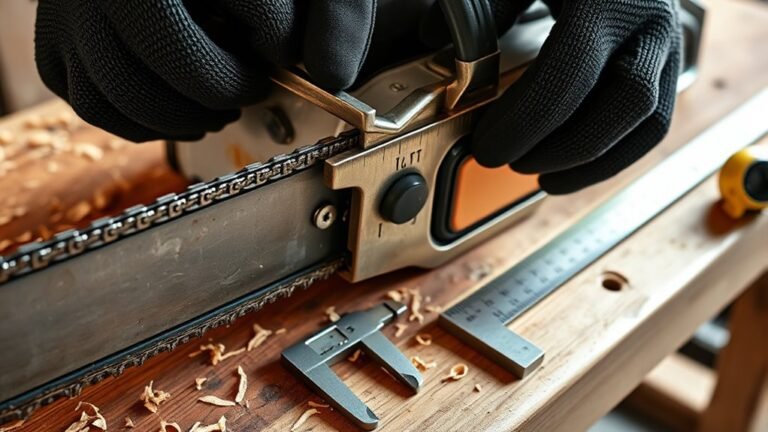
Which Way Does a Chain Go on a Chainsaw in 3 Easy Steps
Before handling the chain on your chainsaw, always disconnect the power source and engage the chain brake for safety. This step is crucial to prevent any accidental starts while you’re working.
Next, position the chain so the sharp cutting edges face forward. Make sure it wraps around the guide bar tip in the direction it spins. This ensures the chain cuts efficiently and correctly.
Finally, fit the drive links snugly into the guide bar groove. Then, tension the chain until it’s tight but still moves smoothly. Follow these steps closely, and you’ll set yourself up for safe, efficient cutting.
There’s more to know for perfect installation and maintenance, but mastering these basics is a great start!
Key Takeaways
– Disconnect power and engage the chain brake before handling the chainsaw chain for safety.
Safety first, right? Always make sure the saw is completely off and the chain brake is on before you start working on it.
– Identify the chain’s cutting teeth direction; sharp edges face forward toward the guide bar tip.
Basically, the sharp parts of the teeth should point away from the saw and towards the end of the guide bar.
– Position the chain on the guide bar with drive links fitting snugly into the groove.
Make sure those drive links sit perfectly inside the guide bar groove so everything lines up nicely.
– Confirm cutting teeth point away from the saw body and follow the chain’s rotation direction.
Double-check that the teeth are facing the right way and that the chain will spin in the correct direction when you power it up.
– Tension the chain snugly using the adjustment mechanism, ensuring smooth movement without sagging.
Finally, tighten the chain just enough so it’s snug but can still move smoothly without any slack.
Safety Measures Before Handling the Chainsaw Chain
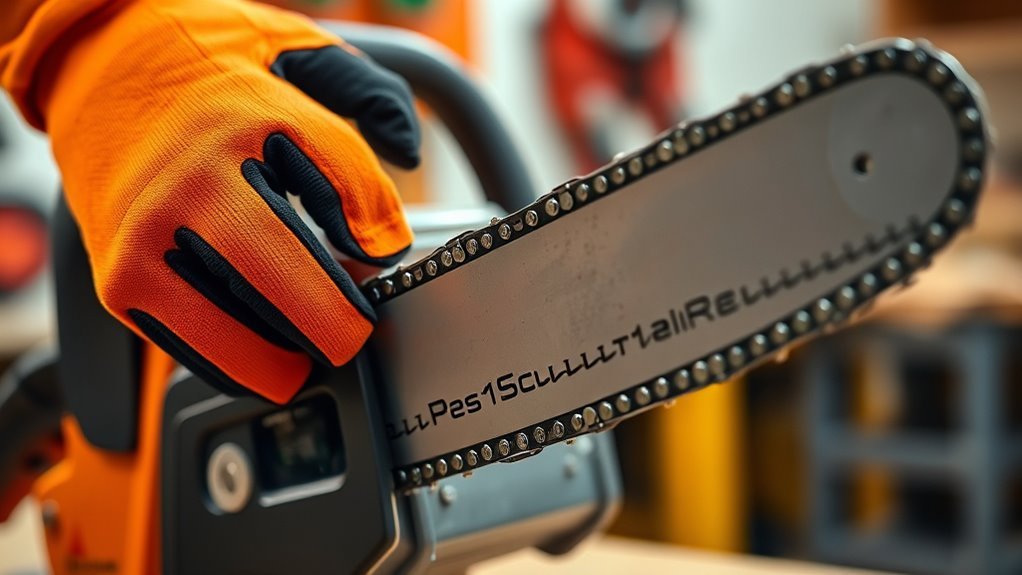
Before you handle the chainsaw chain, always disconnect the power source—whether that means removing the battery or unplugging the tool—to prevent accidental startups.
Always disconnect the power source before handling the chainsaw chain to avoid accidental startups.
Next, activate the chain brake to lock the chain and immobilize it, reducing injury risks during chain handling. Make sure the chainsaw is completely off and cooled down if gas-powered to avoid burns.
Wear durable safety gloves and other protective gear to shield your hands from sharp blades and maintain a firm grip. Use proper tool usage and follow manufacturer instructions closely to ensure safe, correct chain installation.
These safety precautions help protect you and keep your chainsaw in good condition. So, prioritize these steps every time you work on the chain to stay safe and efficient.
Identifying the Correct Chain Orientation
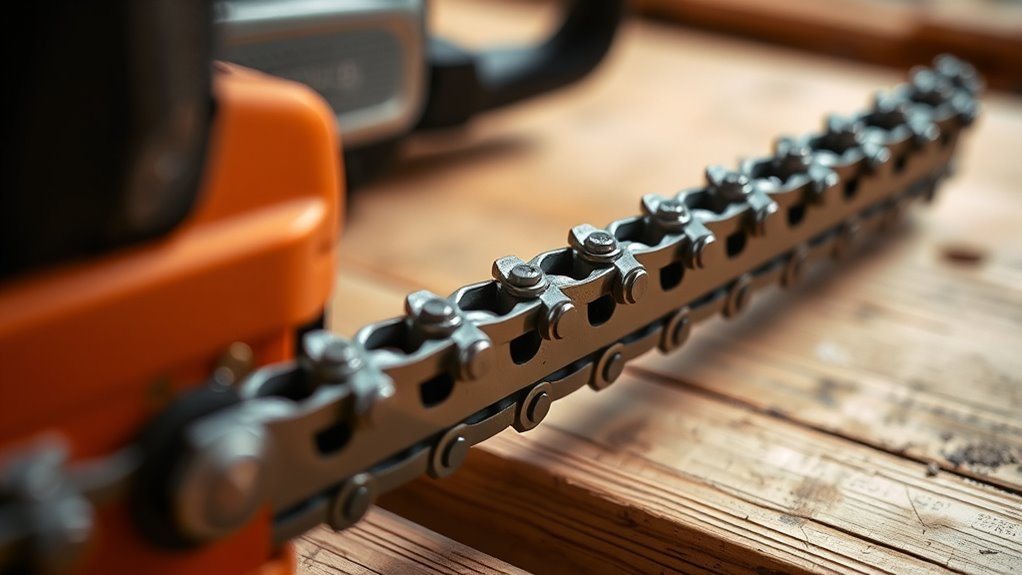
To install the chainsaw chain correctly, you’ll need to identify its proper orientation by checking the direction of the sharp cutting edges. Make sure the sharp cutting edge faces away from the saw body and toward the tip of the guide bar.
Look for directional arrows stamped on the chain links to confirm the correct direction. The cutting teeth on top should point forward, matching the chain’s natural curve.
When you place the chain, ensure the drive links fit snugly into the groove of the guide bar. Before chain installation, double-check the sharp edges and any markings align with the chain’s intended rotation.
If the chain feels off or doesn’t sit right in the guide bar groove, you’ve likely got the orientation wrong and should adjust it accordingly. It’s a quick fix, so don’t worry if it takes a couple of tries!
Installing and Tensioning the Chainsaw Chain Properly

Although installing the chainsaw chain may seem straightforward, ensuring proper tension is just as essential for safe and efficient operation. When installing, make sure the cutting teeth face the tip of the guide bar to match the saw’s drive direction.
Once in the correct placement, adjust chain tension carefully.
Follow these steps for installing and chain tensioning:
- Verify the chain’s directional arrow or teeth orientation before installing on the bar.
- Position the chainsaw chain on the guide, ensuring cutting teeth face forward.
- Use the tensioning screw or quick tension device to pull the chain snug against the bar.
- Check that the chain moves smoothly by hand but isn’t loose enough to sag during saw cuts.
Proper chain tensioning prevents accidents and improves cutting efficiency. So, don’t rush it—take your time to get it right.
Frequently Asked Questions
How to Tell Which Direction a Chain Goes on a Chainsaw?
You tell the chain’s direction by checking the teeth; they should face forward, away from the saw’s body, pointing toward the bar’s tip.
Look for arrows on links or make sure the chain fits smoothly into the guide bar groove.
If it feels off or doesn’t sit right, flip it around. It’s pretty easy once you get the hang of it!
Is There a Correct Way to Put a Chain on a Chainsaw?
Yes, there’s a correct way to put a chain on a chainsaw. You’ll want the cutting edges facing forward on the top of the bar.
Make sure the drive links fit snugly into the groove. This helps ensure safe, efficient cutting.
Can a Chainsaw Chain Be Put on Wrong?
Absolutely, you can put a chainsaw chain on wrong—it’s like trying to eat soup with a fork!
If you do, the chain won’t cut properly, sparks fly, and safety goes out the window.
Always double-check!
What Happens if I Put the Chainsaw Chain on the Wrong Way Round?
If you put the chainsaw chain on wrong, it won’t cut properly, may cause sparks and smoke, jam or jump off, and increase kickback risk.
You’ll get rough cuts and dull the chain faster. It’s really not worth the hassle!
Conclusion
Now that you know which way the chain goes, think of it as fitting the teeth of a gear in motion—each link working in harmony to power your cuts safely and smoothly.
By respecting the chain’s direction and tension, you’re not just installing a part; you’re setting a rhythm, like the heartbeat of your chainsaw.
Handle it with care, and you’ll keep your work sharp and your safety intact. Properly installing the chainsaw chain ensures efficient cutting and reduces the risk of accidents.
Remember, the right chain direction and tension are key to maintaining your chainsaw’s performance and longevity.