7 Steps to Size a Chainsaw Bar Correctly
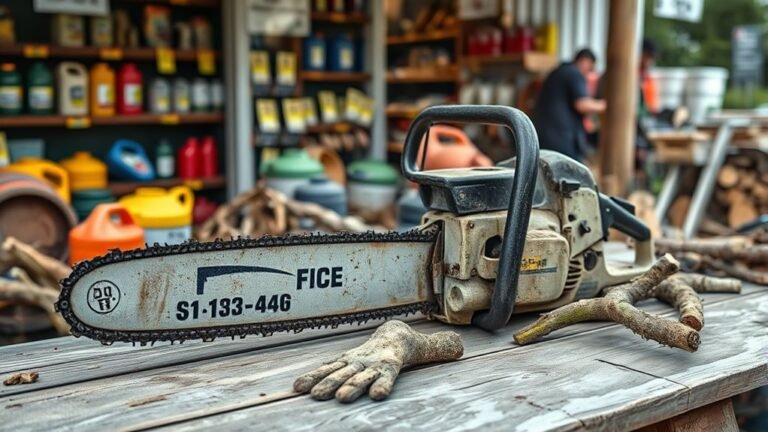
To size your chainsaw bar correctly, start by locating the printed length near the mounting hole. This number gives you a quick reference for the bar size.
Next, grab a tape measure and measure the bar from tip to tail, making sure to keep it straight.
Now, count the drive links on the chain to double-check the size. This helps confirm that your measurements are spot-on.
If you need, convert your measurements between inches and centimeters to match the specs you find.
Always take a moment to verify your findings with the manufacturer’s specifications. This step is crucial to ensure both safety and a proper fit for your chainsaw.
Don’t forget to check the bar for any signs of wear or damage before making your final decision.
If you’re unsure at any point, consider consulting a professional to confirm your sizing.
Keep going to uncover helpful tips for perfect sizing and get the most out of your chainsaw!
Key Takeaways
– Locate the printed bar length near the mounting hole for initial size reference.
This gives you a quick starting point before measuring.
– Measure the bar length from tip to tail using a tape measure, keeping it straight and level.
It’s important to keep it straight so you get an accurate reading.
– Count the number of drive links on the chain to verify bar size when markings are unclear.
This helps especially if the printed length is hard to read or worn off.
– Convert measurements between inches and centimeters accurately to maintain consistent units.
Make sure you’re consistent with the units you’re using throughout.
– Confirm all measurements with manufacturer specifications or product documentation for compatibility.
Always double-check to ensure the bar matches your chainsaw model.
Locate the Printed Bar Length on the Bar

Where can you find the printed bar length on your chainsaw? You’ll usually spot it on the tail end of the chainsaw bar, right near the mounting hole.
Look closely for clear, printed numbers that specify the bar length, often marked in inches (“) or centimeters (cm). These markings help you measure the correct size without guesswork.
If the printed information looks faded or worn, grab a flashlight or magnifying glass to make it easier to read. Always confirm that the printed bar length matches your chainsaw’s specifications before buying a replacement.
This quick check guarantees you get the right fit and avoid compatibility issues when swapping out your chainsaw bar.
Measure the Bar Length Using a Tape Measure

Although you can often find the bar length printed on the chainsaw, measuring it yourself with a tape measure guarantees accuracy. To measure, place the tape at the tip of the guide bar, extending it straight to the tail’s tip.
Make sure the tape is level without bending or sagging to capture the true bar length. Record your measurement in inches or centimeters, then double-check from the same points to confirm consistency.
Finally, compare your measurement with any printed markings or manufacturer specs for accuracy.
| Step | Action | Tip |
|---|---|---|
| 1 | Place tape at bar tip | Keep tape straight |
| 2 | Extend to bar tail tip | Avoid bends or sagging |
| 3 | Record and double-check length | Compare with printed length |
Count the Number of Drive Links on the Chain

To size your chainsaw bar accurately, start by counting the number of drive links on the chain. Lay the chain flat and straight to avoid overlapping, which guarantees you count each drive link correctly.
These links are the individual segments connected by rivets that fit into the guide bar. While you can measure the chain’s length with a ruler or tape measure, counting drive links often gives you a more direct and reliable size reference.
This method is especially helpful if the bar length marking is missing or unclear. Once you know the number of drive links, you can match it to specific chain sizes using manufacturer charts, helping you select the right bar for your chainsaw.
Convert Measurements Between Inches and Centimeters
When sizing your chainsaw bar, you’ll need to convert measurements between inches and centimeters accurately. Multiply inches by 2.54 to get centimeters, or divide centimeters by 2.54 to revert to inches.
Keeping your measurements consistent ensures you pick the right bar size every time. It’s a simple step, but it makes all the difference!
Inch to Cm Conversion
Since chainsaw bar sizes often come in inches while some measurements use centimeters, you’ll need to convert between these units precisely.
The inch to cm conversion is straightforward: one inch equals exactly 2.54 centimeters. To measure the chainsaw bar correctly, follow these steps:
- Determine the bar length in inches by measuring from the tip to the base.
- Multiply the inch measurement by 2.54 to get the length in centimeters.
- Use a calculator or conversion chart to verify your calculation for accuracy.
Accurate inch to cm conversion guarantees you select the right chainsaw bar and maintain compatibility with your tool. This step is crucial for effective sizing and excellent chainsaw performance.
Cm to Inch Conversion
You’ve learned how to convert inches to centimeters, and now it’s time to reverse the process. To convert a measurement from cm to inch, simply divide the length in centimeters by 2.54, since 1 inch equals 2.54 cm.
This quick calculation helps you estimate the chainsaw bar length accurately when your measurement is in cm but you need the size in inches. Precise cm to inch conversion is essential for choosing the right replacement parts for your chainsaw.
To avoid errors, use a calculator or an online conversion tool when switching between these units. Keeping your measurements exact ensures your chainsaw bar fits perfectly and performs safely.
Measurement Consistency Tips
Although converting between inches and centimeters might seem straightforward, maintaining consistency in your measurements is essential to avoid ordering the wrong chainsaw parts. When you measure the chainsaw bar length, stick to one unit system throughout the entire process.
To ensure accurate conversion and measurement consistency, follow these tips:
- Multiply inches by 2.54 to convert to centimeters and divide centimeters by 2.54 to convert to inches.
- Use a reliable conversion calculator or chart to avoid errors during conversion.
- Double-check your converted length before purchasing replacement parts to confirm accuracy.
It’s a good idea to be careful with these steps. That way, you won’t run into issues when replacing parts. Just keep it consistent, and you’ll be all set!
Confirm Measurements With Manufacturer Specifications
Before finalizing your chainsaw bar size, always verify your measurements against the manufacturer’s specifications. Start by checking the manufacturer’s label or markings on the bar for its specified length, usually in inches or centimeters.
Next, compare your measurements with the details found in the user manual or product documentation to guarantee accuracy. If the bar length isn’t clearly marked or you’re unsure, don’t hesitate to contact the manufacturer’s customer service for clarification.
Confirming that your measured bar length matches the manufacturer’s recommended size is essential for compatibility, safety, and maximum performance. Using the manufacturer specifications as your final reference helps you avoid purchasing the wrong size and ensures your chainsaw operates effectively without risking damage or injury.
Identify Signs of Wear or Damage on the Bar
When inspecting your chainsaw bar, watch for visible wear like chipped or uneven cutting edges along the rail and tip. These signs often indicate the bar needs attention.
You should also check for excessive sawdust or debris buildup in the bar groove, which can signal internal wear or damage.
Next, look out for any bends or warps in the bar. These cause improper chain tracking and affect performance.
Also, keep an eye out for cracks or splits, especially near mounting holes. These are critical damage points and usually mean you need a replacement.
Additionally, worn sprocket noses or guide rail wear marks suggest the bar is nearing the end of its lifespan. Catching these signs early helps keep you safe and your chainsaw working efficiently.
Consult a Dealer or Professional for Verification
If you’re unsure about your chainsaw bar length, consulting a dealer or professional is the best way to get an accurate measurement. A dealer can perform proper verification by inspecting the bar in person, using specialized tools to measure when markings are unclear or missing.
This ensures you select the correct replacement parts and avoid damage. Professionals can also spot modifications or custom sizes that standard measurements miss. When in doubt, visiting a certified dealer or service center guarantees precise sizing.
| What a Dealer Does | Why It Matters |
|---|---|
| Inspects the bar directly | Accurate measurement |
| Uses specialized tools | Measures unclear markings |
| Verifies bar modifications | Ensures compatibility |
| Confirms replacement parts | Prevents damage |
| Provides professional advice | Saves time and costly errors |
Frequently Asked Questions
How to Correctly Measure a Chainsaw Chain?
You count the drive links on your chain while it’s clean and flat to measure it correctly.
If you’re unsure, use a chain gauge or caliper, and always double-check with the manufacturer before buying replacements.
It helps to be extra careful here so you get the right fit for your chainsaw.
After all, the right chain keeps things running smoothly and safely!
How Often Should I Replace My Chainsaw Bar?
You should replace your chainsaw bar every 3 to 5 years or sooner if you notice wear, warping, or damage.
Regularly inspect and clean it to extend its life, but always prioritize safety and performance when deciding to replace it.
Keeping an eye on how the bar looks and functions can save you from bigger problems down the line.
Can I Put a 20 Inch Bar on a 16-Inch Chainsaw?
Think of your chainsaw as a race car: you can’t just slap on bigger tires without upgrades.
You can fit a 20-inch bar on a 16-inch saw only if the motor and mounts can handle the extra load.
What Is the Actual Length of a 20 Inch Chainsaw Bar?
A 20-inch chainsaw bar measures about 20 inches from tip to mounting point, though slight variations exist.
You can check its true length by measuring directly or verifying the printed size on the bar’s tail. That way, you know exactly what you’re working with.
Conclusion
By following these simple steps, you’ll size your chainsaw bar accurately every time. It’s funny how the printed length, your tape measure, and those tiny drive links all come together to tell the same story.
Just when you think you’ve nailed it, double-check with the manufacturer or a pro—you might discover something new about your saw. So, don’t rush; trust the process, and your chainsaw will thank you with every cut.
Properly sizing your chainsaw bar is key to getting the best performance and safety from your tool. Take your time, use these steps, and you’ll be confident that your chainsaw bar fits perfectly every time. That’s how you make every cut smoother and safer.